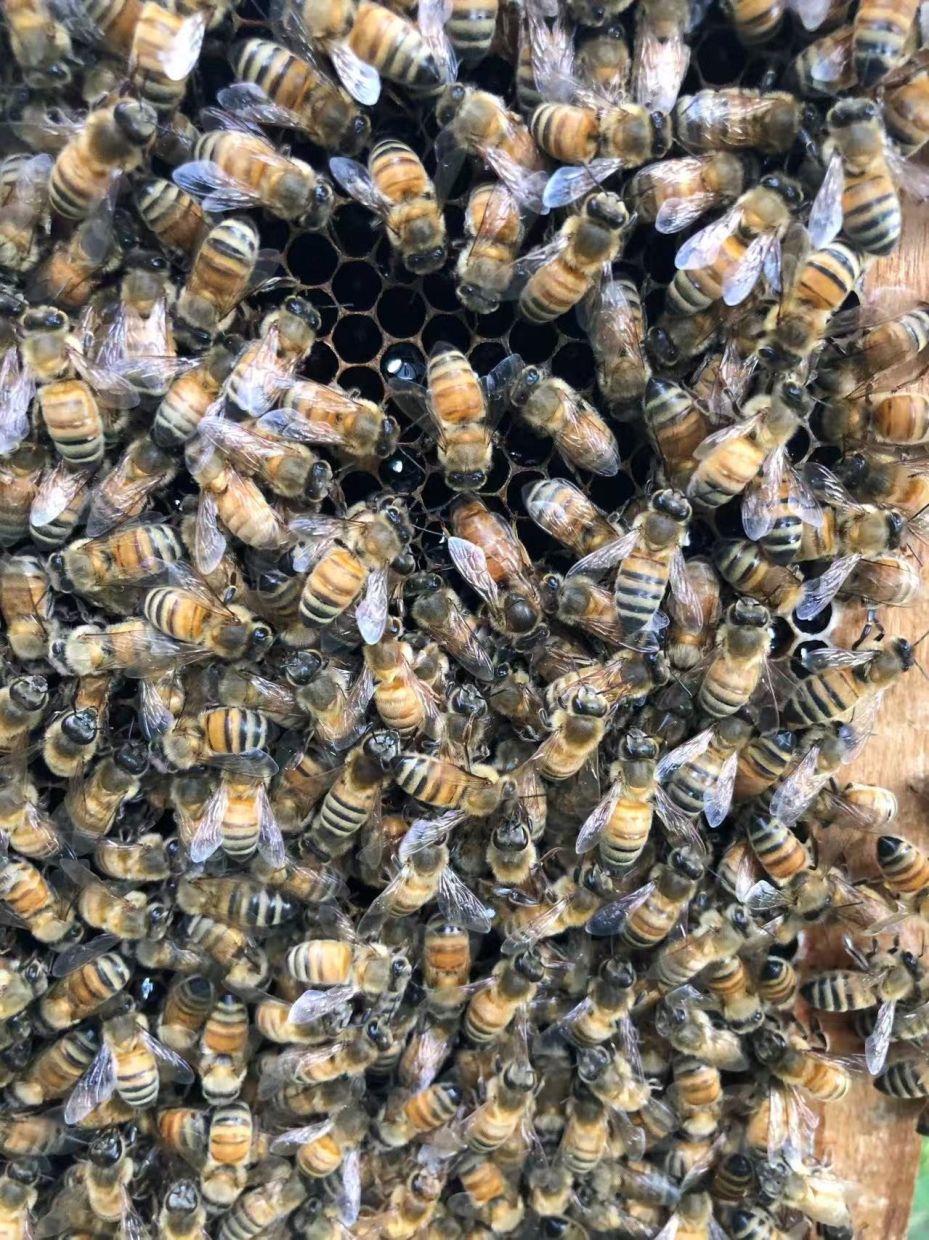
A honeybee colony faces a fundamental biological puzzle: how does it transform an ordinary fertilised egg into a queen capable of bearing thousands of offspring, while identical eggs become sterile workers? For generations, researchers attributed this remarkable developmental shift entirely to nutrition—specifically, a protein-rich secretion called royal jelly that worker bees feed to selected larvae. But a groundbreaking study published in Nature suggests the answer is far more sophisticated, involving not just what a future queen eats, but where and how she develops. The research, led by Kai Wang of the Institute of Apicultural Research at the Chinese Academy of Agricultural Sciences, reveals that worker bees construct a highly engineered "smart incubator" whose physical and chemical properties are just as critical to royal development as the diet itself.
The biology of honeybee caste determination has long fascinated scientists because it demonstrates how a single species can produce radically different body types and behavioural roles from genetically identical starting material. All honeybees begin life as eggs laid by the queen, and initially, the distinction between a future queen and a future worker is environmental rather than genetic. The colony makes this fateful choice by selecting which larvae will receive abundant royal jelly—a nutrient-dense substance secreted from glands in worker bees' heads—and which will receive standard larval food, a mixture of honey and pollen. This dietary difference triggers cascading developmental changes that result in larger body size, longer lifespan, and reproductive capability in queens, while workers develop into smaller, sterile individuals designed for the colony's labour.
Yet Wang's team discovered that nutrition alone tells only half the story. The physical structure in which the larva develops—the wax cell itself—carries unexpected significance. Honeybee colonies build three types of wax chambers. The majority serve as hexagonal storage cells for honey or pollen, or as nurseries for worker and drone larvae. But colonies construct a third, distinctive architecture exclusively for future queens: elongated cells resembling peanut shells that hang vertically downward from the honeycomb. Beekeepers have observed these structures for centuries as harbingers of swarming or queen succession, but typically dismissed them as passive containers. Wang's research demonstrates they are anything but passive.
The experimental evidence proved striking. Larvae exposed to standard worker-cell wax showed dramatically poorer development into queens, even when provided with royal jelly. Mortality rates soared, and survivors never achieved proper queen characteristics. This result upended the conventional wisdom that royal jelly was the singular determinant of queenship. The team identified several distinctive properties of queen-cell wax that distinguish it from worker-cell material. The royal chambers are constructed from wax with a softer consistency, a higher melting point, and a distinctly different chemical composition that produces what researchers characterised as a unique chemical "perfume." These properties appear to function together as an integrated developmental system.
The physical qualities of queen-cell wax likely facilitate the larva's growth trajectory in concrete ways. The softer walls may allow the developing larva to expand without constraint, preventing compression that could disrupt normal development. The elevated melting point ensures the chamber maintains structural integrity under the higher internal temperatures associated with intensive brood care. But perhaps most intriguingly, the chemical environment within the cell may act as a hormonal trigger, signalling to the larva's developing endocrine system that it should follow a royal rather than worker developmental pathway. This mechanism parallels how environmental cues in other species activate latent genetic programmes, suggesting honeybees exploit chemical sensing as a developmental instruction system.
Producing queen-cell wax demands extraordinary physiological effort from worker bees. The young workers assigned to this task maintain thoracic temperatures exceeding 39 degrees Celsius—a self-induced fever that enables them to secrete and shape the special wax material. Wang characterised these workers as "tiny living furnaces," deliberately cycling their metabolism into a heightened state to produce the superior building material. Genetic analysis revealed that these construction workers exhibited distinct patterns of gene expression, indicating a temporary reallocation of cellular resources toward wax synthesis. Remarkably, these dedicated builders are not a permanent specialised caste but ordinary young workers undertaking a temporary emergency assignment, with gene expression patterns that revert once the task is complete.
The implications of this discovery extend well beyond pure biology. Honeybee queen quality directly determines colony health and productivity, factors of enormous economic significance given that managed honeybees pollinate more than 80 major agricultural crops globally. The vast majority of commercial beekeeping operations depend on artificial queen rearing, in which beekeepers transfer larvae into artificial cells, feed them royal jelly, and hope for successful development. Understanding the natural architecture that colonies spontaneously construct offers beekeepers a blueprint for improving artificial queen production. If the specific chemical and physical properties of natural queen cells can be identified and replicated, beekeepers could engineer incubation systems that more closely mimic natural conditions, potentially producing stronger, healthier queens less prone to disease and early death.
The timing of this insight coincides with a critical period for global beekeeping. Beekeepers in the United States and elsewhere report disturbing colony losses driven by multiple stressors including disease, parasites, pesticide exposure, and nutritional stress. Weak queens contribute substantially to colony failure, as they produce insufficient workers to maintain hive populations or rear adequate food stores. Enhanced understanding of how colonies naturally produce high-quality queens could inform breeding programmes aimed at selecting for traits associated with colony resilience. By identifying the precise molecular signals within queen-cell wax, researchers might develop interventions that boost queen vigour and longevity, ultimately supporting the pollinator populations that global agriculture depends upon.
Wang emphasised that the findings challenge what he termed "deeply rooted dogma" regarding nutritional determinism in honeybee development. The discovery that physical and chemical aspects of the rearing environment rival diet in importance suggests that developmental plasticity in social insects operates through integrated environmental sensing rather than simple genetic programming. The research team has not yet identified the precise molecular mechanisms—whether specific volatile chemicals act as hormonal cues, or whether physical properties like wall softness trigger mechanosensory pathways. The next research phase will focus on isolating these molecular switches, determining which chemical scents or tactile qualities communicate to the larva's developing nervous system that it occupies a royal station.
Wang and colleagues speculate that similar principles may operate throughout the social insect world. Termite mounds, wasp paper nests, and the elaborate wax structures of stingless bees may all serve functions beyond mere shelter, actively shaping colony member development through environmental engineering. This perspective repositions the physical architecture of social insect colonies from passive backdrop to active participant in phenotypic determination. The honeybee colony thus functions as a true superorganism, with individual workers collectively manipulating their physical environment to orchestrate the development of their successor queen. As Wang reflected, the finding illustrates that while nutrition remains important, the quality of one's environment ultimately determines one's destiny—a principle that extends far beyond the honeycomb.