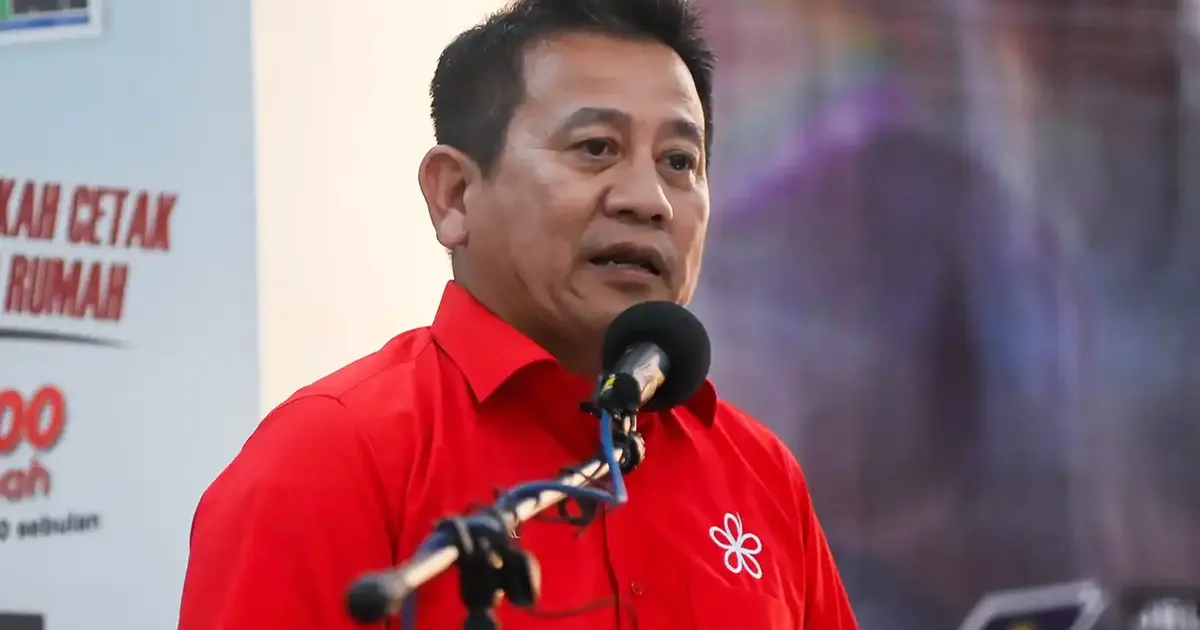
The information chief of Bersatu has publicly questioned the conduct of PAS within the Perikatan Nasional coalition, asserting that a recent reorganisation of leadership positions reveals an increasingly autocratic approach by the Islamist party to consolidate its authority over the bloc. Tun Faisal Ismail Aziz made these remarks in response to the reshuffle, which sparked visible tension between coalition partners and raised questions about power distribution and decision-making processes within the arrangement.
The dispute underscores an emerging fault line in the Perikatan Nasional partnership, which has served as the backbone of Malaysia's current political configuration since 2021. What was initially constructed as an alliance of three parties—Bersatu, PAS, and Gerakan—has evolved into an increasingly complex relationship marked by strategic jockeying and competing visions for leadership and policy direction. The reshuffle has exposed underlying anxieties about whether smaller partners retain meaningful influence or function primarily as supporting members subordinate to PAS's agenda.
Tun Faisal's critique carries significance beyond routine coalition squabbling because it reflects Bersatu's growing apprehension about its position relative to PAS. As the party that historically held greater political prominence through former Prime Minister Mahathir Mohamad and later through Muhyiddin Yassin's premiership, Bersatu has experienced a gradual shift in the power balance. The information chief's decision to articulate these concerns publicly suggests that private negotiations have failed to produce satisfactory outcomes, compelling the party to air grievances through media channels.
The accumulation of authority by PAS within Perikatan Nasional reflects broader electoral mathematics and organisational dynamics. PAS commands the largest parliamentary representation among coalition members and has demonstrated superior organisational coherence compared to its partners. This structural advantage has translated into disproportionate influence over coalition decision-making, particularly regarding the selection of candidates and allocation of ministerial portfolios. The reshuffle appears to have formalised what already existed informally, triggering objections from Bersatu leadership who preferred the previous ambiguity.
The accusation of authoritarian behaviour is particularly pointed given the nature of Malaysian coalition politics, where consensus and consultation typically characterise the public narrative around multi-party arrangements. By using terminology associated with unilateral decision-making, Tun Faisal is signalling that standard consultation procedures were either bypassed or rendered meaningless. This framing carries reputational implications for PAS, which has consistently presented itself as committed to democratic principles, albeit within an Islamic framework.
From a Malaysian perspective, this friction matters considerably because the stability of any ruling coalition depends upon member parties perceiving fair treatment and meaningful participation. Perikatan Nasional's durability cannot be taken for granted if coalition partners believe they are being marginalised rather than engaged as genuine stakeholders. Historical precedent in Malaysian politics demonstrates that coalitions fracture when smaller parties conclude they are being exploited without corresponding benefits. Bersatu's criticism suggests such calculations may already be underway within party leadership circles.
The reshuffle also intersects with Malaysia's broader political trajectory following the 2022 general election. The formation of a government that excluded Pakatan Harapan and relied instead on Perikatan Nasional combined with support from selected Federal Territory members represented a significant reconfiguration of power. Sustaining this arrangement requires careful management of inter-coalition tensions, something that increasingly appears to be straining the relationships between parties. If friction becomes acute, the government's parliamentary numbers could become precarious, compelling it to seek additional support or risk confidence-and-supply votes.
Within Southeast Asia, Malaysian political developments carry regional implications given the nation's economic importance and influence among ASEAN neighbours. Coalition instability at home can distract political leadership from regional engagement and policy coordination. Malaysia's ability to play a constructive role in regional forums depends partly upon domestic political stability. Extended periods of coalition tension consume diplomatic and administrative resources that might otherwise be directed towards regional priorities and cross-border initiatives.
Bersatu's public complaint also highlights the challenge of maintaining coalition discipline when member parties possess different ideological foundations and constituency bases. PAS draws strength from religiously-motivated voters and has built institutional strength through extensive grassroots networks connected to Islamic organisations. Bersatu, by contrast, originated as a multi-ethnic party lacking the same organisational infrastructure and has struggled to define a distinctive identity since splitting from UMNO. This structural inequality translates into unequal leverage within coalition negotiations.
Looking forward, the extent to which these tensions escalate depends on whether Bersatu perceives available alternatives to its Perikatan Nasional membership. Should Pakatan Harapan prove receptive to overtures from disaffected Bersatu members, or should independent-minded Bersatu politicians calculate that their interests lie elsewhere, the coalition could face defections. Conversely, Bersatu might accept a subordinate position as preferable to the electoral uncertainties that would accompany coalition withdrawal or dissolution.
The immediate challenge for Perikatan Nasional leadership involves addressing Bersatu's grievances sufficiently to prevent further public criticism and potential defections, while preserving PAS's substantive influence over coalition direction. This delicate balancing act requires acknowledging concerns about procedural fairness without fundamentally redistributing power. Success remains uncertain, and the coming months will indicate whether coalition tensions can be managed through behind-the-scenes negotiations or whether they will continue surfacing in public statements that undermine coalition cohesion.

