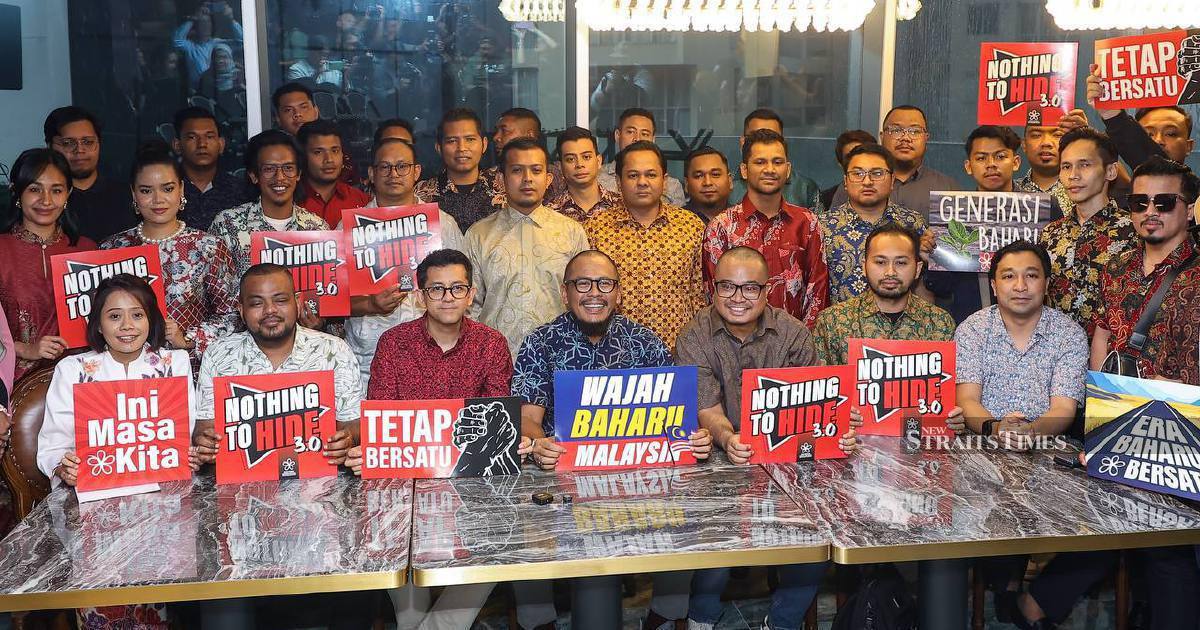
The political alliance between PAS and Bersatu faces a critical test as tensions mount within the Perikatan Nasional (PN) coalition, but at least one prominent Bersatu figure believes the partnership can survive the current turbulence. Mohd Ashraf Mustaqim Abdul Munir, the Kota Siputeh state assemblyman, has signalled optimism that the two Islamic-leaning parties can patch up their differences and restore functional working relations.
Ashraf's measured confidence comes at a time when observers have grown increasingly concerned about the stability of PN, the coalition that swept to prominence in Malaysian politics following its role in the Sheraton Move and subsequent formation of the Perikatan Nasional government. The alliance brings together diverse political interests and ideological positions, making cohesion an ongoing challenge. The growing distance between PAS and Bersatu threatens to undermine this delicate balance, with each party pursuing distinct agendas while maintaining the facade of partnership.
In articulating his perspective on the current difficulties, Ashraf employed an analogy that captures the complex dynamics of coalition politics. He compared the fractious relationship to a married couple locked in constant disagreement while remaining under the same roof, suggesting that despite surface-level conflict, the fundamental commitment to cohabitation persists. This metaphor underscores a critical reality in Malaysian politics: parties within a coalition may harbour significant grievances and competing interests, yet find it strategically advantageous to remain formally aligned rather than split openly.
The historical relationship between PAS and Bersatu has proved complicated and contextual. The two parties share certain constituencies and overlapping voter bases, particularly among Muslim-majority areas and conservative Muslim voters. However, they diverge substantially on governance philosophy, resource distribution, and tactical priorities. Bersatu, founded in 2016 by Mahathir Mohamad, emphasises multiethnic nationalism and Bumiputera concerns, whilst PAS advocates a more explicitly Islamic political agenda and has traditional strongholds in rural constituencies.
Recent tensions within PN have surfaced over several substantive issues affecting both parties' political standing and ministerial positions. Control over state governments, allocation of parliamentary constituencies for electoral contests, and differences over policy direction have all contributed to the growing friction. For Malaysia's fractious political landscape, where coalitions frequently fracture or reconfigure, the ability of senior figures like Ashraf to publicly express confidence in repair mechanisms carries symbolic weight. Such statements attempt to manage perceptions and prevent minor disagreements from metastasising into existential threats to the partnership.
The broader context of Malaysian coalition politics makes Ashraf's optimism both understandable and uncertain. Since 2018, the country has witnessed dramatic realignments, with Pakatan Harapan fragmenting, Perikatan Nasional rising, and various configurations of government formation testing constitutional conventions. In this volatile environment, parties often calculate that remaining within an imperfect coalition serves their interests better than precipitating a collapse that might lead to electoral disadvantage or irrelevance. Bersatu and PAS, whilst sometimes at odds, share a mutual interest in preventing dominance by either UMNO within PN or the opposition Pakatan Harapan alliance.
Asraf's position as a state-level assemblyman gives him a particular vantage point on coalition dynamics. State assemblies frequently serve as testing grounds for national coalition arrangements, where tensions and cooperation play out in more immediate, tangible ways. The Kota Siputeh seat, located in Perak, sits in a state where PN has complex control arrangements, making local political actors acutely aware of how national friction affects state-level governance and resource allocation. Ashraf's measured optimism may reflect confidence in local-level mechanisms for managing tensions before they escalate nationally.
The precedent for coalition repair in Malaysian politics exists but remains contested. Previous realignments have sometimes been orderly and negotiated, whilst others have been acrimonious and sudden. The specific structures through which Bersatu and PAS might negotiate reconciliation remain unclear, though both parties have experience using backdoor negotiations and back-channel communications to resolve disputes without public escalation. Senior leadership from both parties, including ministerial-level figures, would likely need to engage in substantive discussions about the distribution of political benefits and the direction of coalition policy.
For Malaysia's broader political ecosystem, the health of PN directly influences the national political balance. A fractured PN might strengthen Pakatan Harapan's position, but it could equally lead to unpredictable parliamentary mathematics and further government instability. Regional observers also watch PN's cohesion closely, as Malaysian coalition politics frequently has ripple effects throughout Southeast Asia's political networks. The alignment or misalignment of Malaysian parties affects cross-border party networks and regional diplomatic relationships.
Whilst Ashraf's optimism deserves to be noted, scepticism remains warranted. Coalition loyalty in Malaysian politics often proves situational, dependent on electoral calculations, ministerial incentives, and perceived power dynamics. The fact that tensions have become visible enough for state assemblymen to comment publicly suggests underlying problems have deepened beyond the negotiation stage. Repair may be possible, but only if both PAS and Bersatu leadership recognise that maintaining the coalition serves their mutual interests better than the alternatives currently available.

