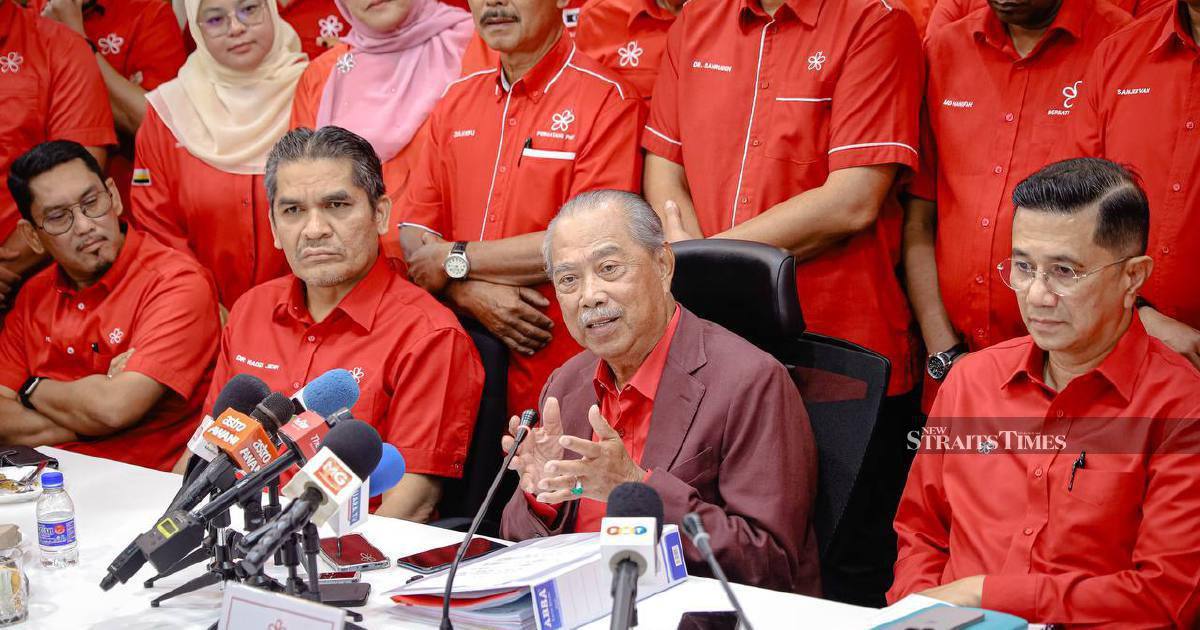
Bersatu is prepared to contest against its Perikatan Nasional partner PAS during Johor's state elections if circumstances force both parties to fight for the same constituencies, according to party president Tan Sri Muhyiddin Yassin. The statement reflects the ongoing tensions within Malaysia's ruling coalition over seat negotiations ahead of the Johor polls, suggesting that despite their alliance at the federal level, the two parties remain competitors at state elections where divisions of political turf remain contentious.
The willingness to face off against PAS marks a significant acknowledgement that seat-sharing agreements remain fragile, particularly in a state where both parties harbour ambitions to strengthen their respective positions. Johor has historically been a crucial political battleground, and control over legislative seats directly translates to influence over state governance and resource allocation. Bersatu's public signal that it will not back down from electoral competition underscores the party's determination to protect its interests in what many view as a bellwether state for Malaysian politics.
Muhyiddin's comments come at a time when coalition partners across Malaysia's political spectrum are engaged in delicate negotiations over seat allocations for state-level contests. The Perikatan Nasional, which governs at the federal level through a loose arrangement with UMNO and other parties, has faced recurring challenges in maintaining unity when it comes to state elections. Previous contests have seen disagreements emerge when parties felt their allocated seats did not reflect their perceived organisational strength or popular support in specific areas.
The broader context of Malaysian coalition politics makes such disputes inevitable. While parties maintain formal alliances for stability at the national level, state elections are viewed through a different lens, where local political dynamics, incumbency factors, and regional power brokers play outsized roles. In Johor, where UMNO traditionally held sway but where Bersatu and PAS have gradually expanded their bases, these tensions become particularly acute. Both parties view the state as offering opportunities for advancement, making compromises on seat allocations increasingly difficult.
Bersatu's position in Johor reflects its broader strategic thinking within Malaysian politics. As a party that emerged from UMNO but has sought to carve out an independent political space, Bersatu faces the challenge of demonstrating its viability while maintaining coalition partnerships. Johor provides an opportunity to showcase the party's organisational capabilities and appeal to voters, particularly among constituencies where the party has invested in grassroots work. Surrendering contested seats without electoral competition could undermine these efforts and weaken Bersatu's negotiating position in future coalition arrangements.
PAS, conversely, has experienced substantial growth in recent years, particularly through expanding support among younger urban voters and establishing stronger organisational networks in states like Johor. The party's success in the 2023 general election accelerated its prominence within federal politics, but PAS remains eager to convert this into sustained state-level control. For PAS, protecting contested seats in Johor is equally critical to maintaining momentum and demonstrating to its supporters that the party can deliver tangible political gains beyond symbolic representation in government.
The possibility of direct contests between Bersatu and PAS in Johor would reshape campaign dynamics significantly. Unlike contests against opposition parties, which emphasise ideological differences and governance records, intra-coalition contests are typically more personal and focused on local grievances and candidate credentials. Such competitions can generate friction that proves difficult to repair, particularly if the losing party feels disadvantaged by seat allocation processes or perceives unfair treatment from coalition mechanics. This dynamic has historically complicated post-election coalition repairs and government formation.
For Malaysian voters in Johor, such scenarios create interesting strategic dilemmas. Constituencies facing contests between Bersatu and PAS would witness two parties from the same federal coalition competing vigorously, effectively allowing voters to distinguish between them based on local factors rather than national political narratives. This could produce more nuanced results than polarised two-coalition contests, potentially reflecting genuine local sentiment rather than broader national trends. However, it also introduces unpredictability into state-level outcomes, as results cannot be easily predicted from federal election patterns.
The implications extend beyond Johor itself. How Bersatu and PAS resolve their seat allocation disputes in this state will provide crucial signals for other upcoming state elections and future federal coalition arrangements. If negotiations fail and direct contests emerge, the experience will demonstrate whether such intra-coalition competitions can be managed without causing lasting damage to working relationships. Conversely, successful accommodation of competing interests could establish precedents for managing similar tensions in other states.
Muhyiddin's public readiness to face PAS also reflects evolving power dynamics within the coalition. By signalling confidence in Bersatu's electoral prospects against a significantly larger coalition partner, the Bersatu president is projecting strength and potentially preparing supporters for the possibility of contested seats. This rhetorical positioning serves multiple purposes: it demonstrates to party members that leadership will not meekly accept unfavourable seat allocations, it signals to PAS that Bersatu will not be marginalised without a fight, and it prepares the political ground in case negotiations ultimately fail.
The coming months will reveal whether this rhetoric translates into actual seat allocation disputes or whether backroom negotiations ultimately produce acceptable compromises. Johor's election timeline and the specific outcomes of seat negotiations between Bersatu and PAS will determine whether voters ultimately witness direct contests between these coalition partners. The resolution of this matter will carry significant weight in shaping Malaysian politics at both state and federal levels going forward.