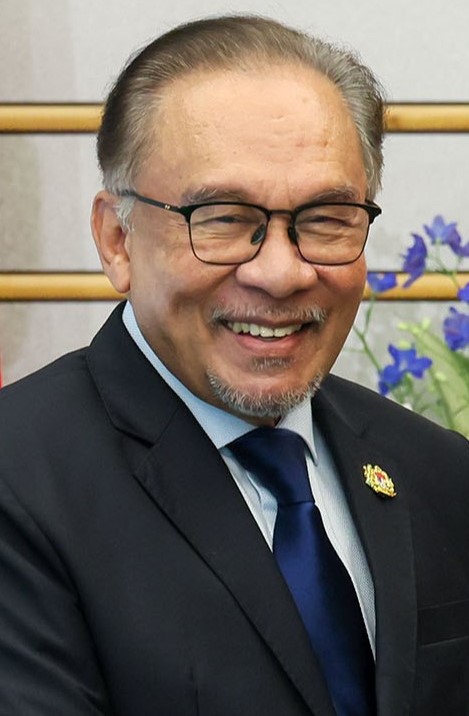
Tan Sri Muhyiddin Yassin has moved to quell speculation about Bersatu's future within Perikatan Nasional, declaring at a press conference that the party intends to remain a component member of the coalition and will field candidates under the PN banner in the upcoming Johor and Negeri Sembilan state elections scheduled for July 11 and August 1 respectively. The party president made the statement after chairing the Supreme Leadership Council meeting at Bersatu headquarters, speaking with characteristic firmness about the party's long-term direction.
Muhyiddin's remarks carry particular significance given the recent deterioration in PN's internal cohesion. His insistence that Bersatu cannot be removed unilaterally from the coalition represents a direct pushback against suggestions that other PN component parties, particularly PAS, might seek to exclude Bersatu from the alliance. The president emphasized that any departure from the coalition would have to follow constitutional procedures and require consensus among all participating parties, not the unilateral action of a single member.
The timing of this declaration reflects ongoing tension within PN following PAS's recent announcement that it has terminated all forms of political cooperation with Bersatu. This rupture marks a significant development in Malaysian opposition politics, where PAS has historically been a major player alongside Bersatu in building the Perikatan Nasional platform. The breakdown underscores the fragility of opposition coalitions in Malaysia, where personality clashes and ideological differences frequently overshadow shared electoral objectives.
Bersatu's decision to proceed with the PN logo in the two state contests carries practical and symbolic weight. For voters in Johor and Negeri Sembilan, the PN branding signals continuity and party discipline despite internal fractures. The strategy also protects Bersatu from the reputational damage that might accompany a contested split from the coalition, allowing the party to maintain the political narrative that it remains a committed member despite PAS's withdrawal. This calculated move preserves Bersatu's position as a responsible coalition partner even as its relationship with other PN members deteriorates.
The presence of senior party figures at the press conference—including vice-presidents Datuk Dr Radzi Jidin and Datuk Seri Ahmad Faizal Azumu, as well as secretary-general Datuk Seri Mohamed Azmin Ali—was itself a message of unity within the party. Such carefully orchestrated demonstrations of solidarity are crucial in Malaysian politics, where internal divisions can rapidly spiral into defections or splinter movements. The show of force from Bersatu's top leadership indicates that Muhyiddin maintains firm control over the party apparatus.
For Malaysian readers and observers, this situation illuminates the precarious balance that opposition coalitions must maintain. The collapse of cooperation between PAS and Bersatu suggests deeper strategic disagreements that extend beyond personality conflicts or minor policy disputes. Such friction within PN complicates the opposition's ability to present a unified alternative to the Barisan Nasional-led government, historically a prerequisite for effectively challenging incumbent administrations in Malaysian electoral contests.
The constitutional arguments invoked by Muhyiddin regarding removal procedures reflect the increasingly legalistic tone of Malaysian political disputes. Rather than relying on behind-the-scenes negotiations or backroom compromises, parties now frequently appeal to constitutional provisions and procedural requirements to legitimize their positions. This shift suggests a maturing, if fractious, approach to intra-coalition management, though it also indicates that conflicts have become too serious to resolve through traditional informal mechanisms.
Bersatu's commitment to contesting the Johor and Negeri Sembilan elections under the PN logo also has electoral implications beyond these two state contests. By maintaining coalition discipline in these contests, the party preserves its viability as a kingmaker in potential future coalition arrangements at the federal level. If Bersatu were to break from PN or be expelled, its negotiating power in any post-election federal coalition talks would diminish considerably. The party's decision to stay the course, therefore, reflects longer-term strategic calculations about its role in Malaysian politics beyond the immediate electoral horizon.
The broader context of these tensions includes the complex electoral arithmetic of Malaysian politics, where no single party commands a clear majority and coalition building remains essential for government formation. Bersatu's relatively modest electoral base makes it dependent on coalition partners, yet its role in the 2020 transition and its historical connection to UMNO members who defected give it disproportionate influence within opposition circles. Muhyiddin's firm stance reflects this paradox: Bersatu cannot afford to alienate coalition partners, but it also cannot allow itself to be marginalized within PN.
The Johor and Negeri Sembilan state elections will provide the first major test of how these internal PN divisions translate into electoral outcomes. These contests will reveal whether voters view the coalition as still functional and unified, or whether the evident splits between component parties erode support among voters who value coalition stability. The results may also determine whether PAS and Bersatu can rebuild bridges before the next federal election, or whether the current rupture becomes permanent.
Muhyiddin's message ultimately seeks to project stability and continuity despite manifest instability. Whether this narrative proves convincing to party members, coalition partners, and voters remains an open question. The weeks leading up to the Johor and Negeri Sembilan contests will likely witness further maneuvering as the parties test the limits of their continued association and explore whether reconciliation remains possible.