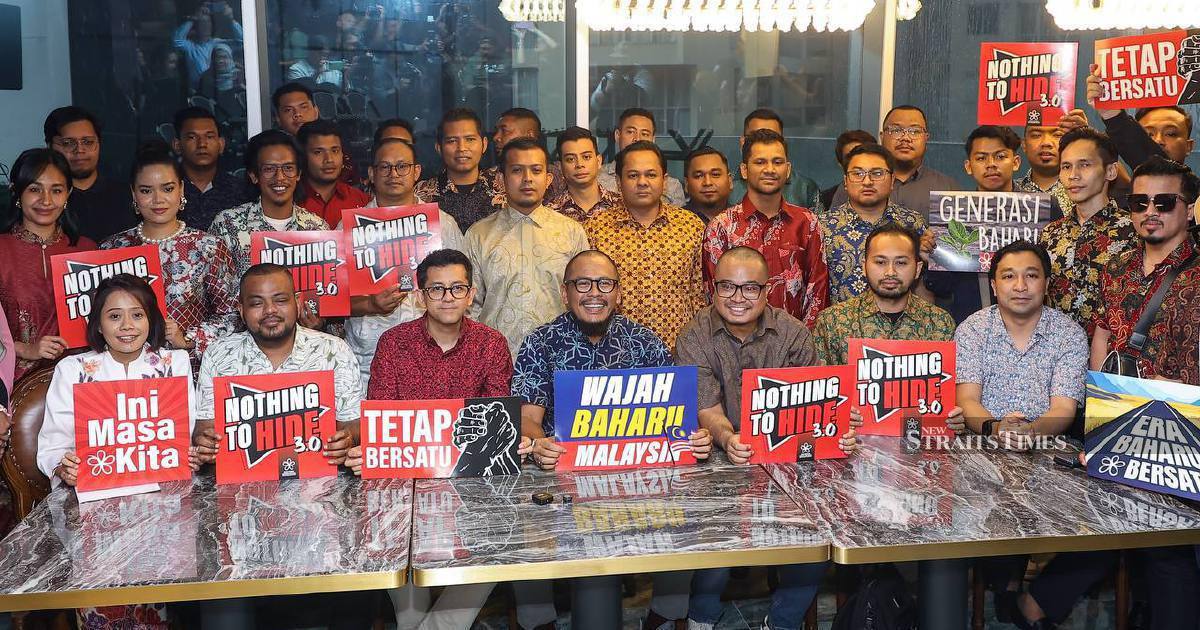
Mohd Ashraf Mustaqim Abdul Munir, the Kota Siputeh state assemblyman, has struck an optimistic tone regarding the relationship between Bersatu and Pas, two pillars of the Perikatan Nasional (PN) coalition that have weathered a period of visible strain. His remarks come at a time when observers have closely scrutinised the stability of Malaysia's ruling partnership, which has faced repeated tests since its formation.
The assemblyman's characterisation of the Pas-Bersatu dynamic as akin to domestic partners engaged in persistent household disagreements offers a revealing lens on the coalition's internal mechanics. Rather than framing recent tensions as existential threats to the PN alliance, this analogy suggests that friction between the two parties, while conspicuous to observers, remains manageable and ultimately survivable within their broader political partnership. The metaphor implies continuity and coexistence despite apparent discord.
This framing carries particular significance given the coalition's need to project unity and competence to the electorate. The PN government, which replaced Pakatan Harapan in 2020 and was subsequently reformed after Anwar Ibrahim's reshuffle, has periodically faced questions about its internal cohesion. Disputes between component parties over ministerial portfolios, policy direction, and ideological positioning have occasionally surfaced in public discourse, generating headlines that could undermine confidence in government stability.
Bersatu and Pas occupy different spaces within Malaysia's political landscape, reflecting distinct constituencies and worldviews. Pas, with its roots in Islamic-oriented politics, draws particular strength in the northern and east coast states, while Bersatu, founded by Mahathir Mohamad's faction in 2016, appeals to a broader urban and multi-ethnic voter base. These differences inevitably create policy tensions, whether regarding Islamic law implementation, economic management, or resource allocation.
The recent friction between the two parties has manifested across several contentious issues that reflect their divergent priorities and electoral bases. State-level governance questions, national policy frameworks, and leadership perceptions have all contributed to visible disagreements that Malaysia's political commentariat has dutifully documented. Yet the suggestion that such tensions are now being productively managed indicates that coalition management mechanisms, whether formal or informal, appear to be functioning.
The broader regional context adds weight to such reconciliatory signals. Southeast Asia's political environment has grown increasingly fluid, with coalition governments across Thailand, Indonesia, and the Philippines frequently navigating similar intra-alliance disputes. Malaysia's PN, while experiencing friction, has demonstrated greater durability than several comparable arrangements, suggesting that underlying structural factors binding Bersatu and Pas together outweigh their periodic disagreements.
For Malaysian voters and businesses, the reassurance that coalition tensions remain within manageable bounds carries practical implications. Government stability directly affects policy continuity, investment climate, and administrative effectiveness. A coalition perceived as fracturing would likely generate economic uncertainty, complicate legislative processes, and potentially destabilise the implementation of medium-term development initiatives. Conversely, signals of renewed harmony, even if somewhat stylised through matrimonial metaphor, help stabilise expectations about governmental persistence.
The timing of such reassurances also warrants scrutiny. Political parties regularly calibrate their public statements about internal relationships to influence media narratives and voter perceptions. By characterising tensions as minor domestic squabbles rather than systemic dysfunction, Bersatu leadership simultaneously acknowledges that friction has been real while insisting that it poses no existential threat to the coalition. This balancing act serves to reset expectations without admitting weakness.
Pas leadership has similarly signalled a desire to move past recent tensions, though both parties have legitimate grievances regarding distribution of influence and resources within the PN structure. Whether these reconciliatory signals reflect genuine resolution or merely tactical positioning will become clearer through observable actions over coming months. Policy divergences that generated recent friction—such as debates over law enforcement priorities, Islamic affairs administration, and state government coordination—remain structurally present and likely to resurface.
The Kota Siputeh assemblyman's optimism should therefore be understood as a political statement intended to stabilise markets, reassure investors, and project competence rather than as objective proof that underlying tensions have evaporated. Malaysian politics has repeatedly demonstrated that coalition governments can function effectively despite genuine disagreements between component parties, provided that the incentives to maintain the partnership outweigh those encouraging dissolution.
Looking ahead, the PN coalition's durability will depend less on the absence of friction—which is virtually impossible in any multi-party arrangement—and more on the capacity of senior leaders across Bersatu and Pas to manage grievances through established channels, make necessary compromises, and maintain public unity while negotiating differences privately. The married couple metaphor, while imperfect, captures this reality: cohabitation requires negotiation, but cohabitation itself remains the baseline expectation.

