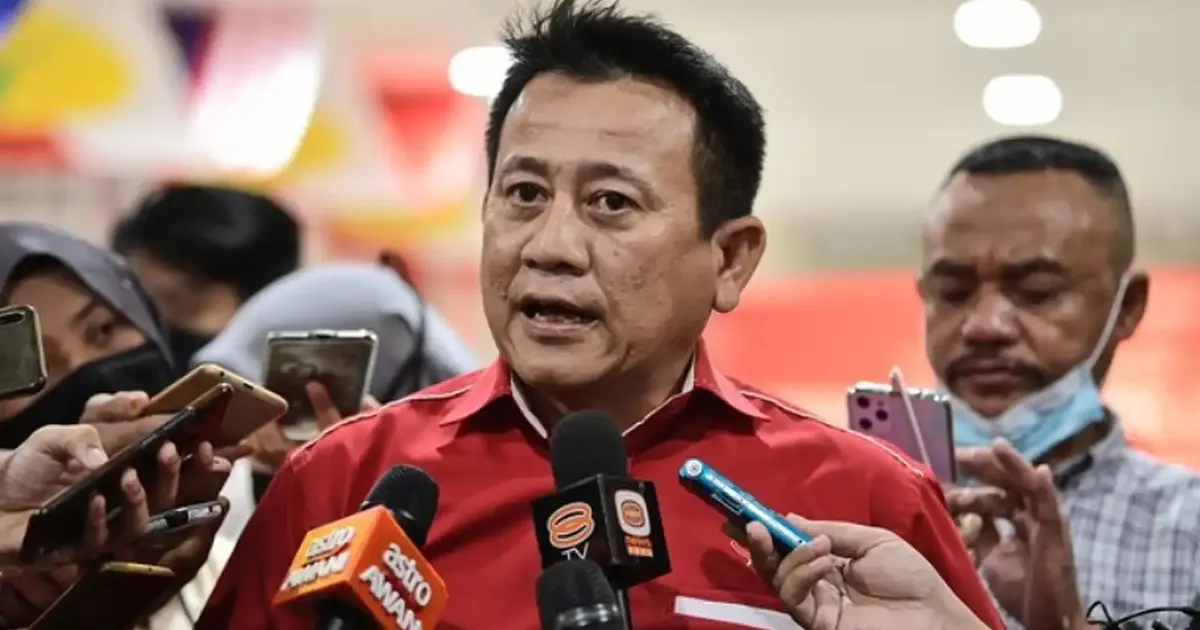
Bersatu has moved to dispel mounting speculation about its role in the ongoing admission tussle within Perikatan Nasional, insisting through party information chief Tun Faisal Ismail Aziz that it did not engineer any blockade against Pejuang's membership bid. The clarification represents the Bumiputera-focused coalition member's attempt to manage perceptions following recent tensions over which political parties should be granted entry into the opposition alliance.
The denial carries particular weight given Bersatu's influential position within the PN structure, where party loyalties and internal alignments carry substantial consequences for coalition cohesion. Tun Faisal's statement suggests that earlier reports attributing obstructionism to Bersatu may have oversimplified a more nuanced disagreement between coalition components regarding expansion criteria. This distinction matters considerably in Malaysian politics, where coalition stability depends on members believing decisions stem from principled criteria rather than factional manoeuvring.
According to Tun Faisal, Bersatu's actual concern centred on Parti Wawasan Negara's application rather than Pejuang's prospects for membership. This repositioning indicates that the fundamental dispute within PN involves competing applications and differing views on party selection standards, rather than a straightforward rejection of any single political outfit. The clarification implies internal coalition discussions have become more granular, examining which organisations genuinely align with PN's ideological positioning and strategic interests.
Perhaps more significantly, Tun Faisal warned that Parti Wawasan Negara's potential admission could catalyse internal fractures within Perikatan Nasional itself. His concern suggests that coalition members harbour divergent views about compatible partners, with some parties viewing certain applicants as threats to existing power arrangements or incompatible with established policy positions. Such fragmentation risks would naturally alarm coalition architects intent on presenting PN as a disciplined and unified alternative government.
Bersatu's emphasis on Parti Wawasan Negara's problematic candidacy rather than opposition to Pejuang represents a strategic rhetorical move in coalition dynamics. By redirecting focus toward a different party, Bersatu positions itself as a stabilising force within PN rather than an obstacle to coalition expansion. This narrative carries implications for how other coalition members assess Bersatu's future behaviour regarding other membership applications.
The timing of Bersatu's clarification coincides with broader debates within Perikatan Nasional regarding its long-term direction and composition. As PN positions itself as a credible opposition force and potential government-in-waiting, questions about which parties constitute its base become increasingly consequential. Malaysian voters evaluating opposition alternatives scrutinise coalition stability carefully, understanding that internal dissonance often presages electoral difficulties and governance challenges.
For Pejuang specifically, Bersatu's denial effectively removes the party from the list of obstacles to its PN membership ambitions. This development potentially clears procedural pathways for Pejuang's application, provided no other coalition members raise similar objections. Such a resolution would represent an important strategic victory for a relatively newer political entity attempting to establish credibility within Malaysia's fractious opposition landscape.
The distinction between blocking Pejuang and opposing Parti Wawasan Negara carries deeper implications for how Malaysian coalitions operate during periods of political flux. Perikatan Nasional, having emerged as the primary opposition alliance following the 2022 political realignment, faces constant pressure to maintain internal discipline whilst appearing inclusive and forward-thinking. These competing demands often produce precisely the kind of disputes now playing out regarding admission standards.
Bersatu's warning about Parti Wawasan Negara triggering internal conflict suggests specific coalition members harbour concerns about that party's ideological orientation, strategic reliability, or factional affiliations. Without revealing these concerns explicitly, Tun Faisal's statement alerts other PN components that admission decisions carry real consequences for coalition functionality. Such implicit signalling represents standard coalition management in competitive Malaysian political environments.
The broader context reveals ongoing evolution within Perikatan Nasional as it consolidates following its 2022 emergence. Earlier coalitions that shaped Malaysian politics—whether governmental or oppositional—faced similar expansion pressures, requiring frameworks distinguishing between compatible and incompatible partners. PN's current experience suggests the coalition remains in formative stages, establishing parameters that will govern its trajectory through upcoming electoral cycles.
Southeast Asian coalition politics generally demonstrates that opposition alliances prove more unstable than governmental coalitions, largely because member parties lack the cohesive discipline that executive responsibility imposes. Bersatu's management of expansion questions through nuanced clarification rather than categorical rejection reflects sophisticated awareness of these dynamics. The party signals openness to growth whilst maintaining that admission decisions hinge on legitimate compatibility assessments rather than factional preference.
Looking forward, Bersatu's positioning likely influences how Perikatan Nasional handles future applications from other political organisations. By establishing that membership debates centre on substantive coalition-building concerns rather than arbitrary exclusion, Bersatu creates precedents for evaluating subsequent candidates. Such precedent-setting proves crucial for opposition coalitions hoping to appear democratic and merit-based to potential supporters and coalition members.