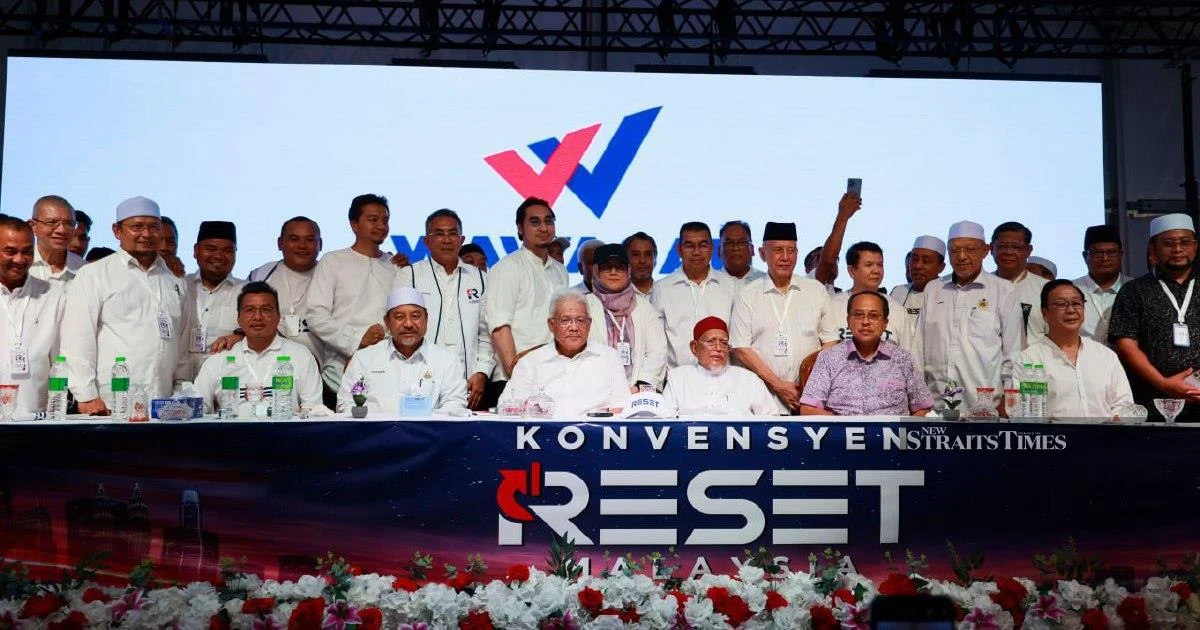
Perikatan Nasional plunged into uncertainty this week when Bersatu, one of its principal member parties, questioned whether the coalition's leadership had acted within its constitutional powers in admitting a new political group. The challenge emerged in the aftermath of an emergency gathering of the PN Supreme Council held late Monday evening, during which Wawasan was granted membership in the multiparty alliance.
The dispute centres on procedural questions about how the PN chairman exercised authority at the hastily convened meeting. Bersatu's position suggests that the admission process lacked the transparency and consensus-building that typically characterises such significant decisions within established political coalitions. In Malaysian coalition politics, where power is fragmented across multiple parties with competing interests, the manner in which decisions are made often proves as consequential as the decisions themselves.
Wawasan's entry into PN represents an attempt to broaden the coalition's political base and electoral appeal ahead of anticipated electoral contests. However, the manner of its incorporation has become a source of internal tension. Bersatu's questioning of legality indicates that at least one major component party feels sidelined in the process, raising concerns about whether adequate consultation occurred before the admission was formalised.
The emergency nature of the Monday night meeting suggests that someone within PN's leadership structure wanted to move swiftly on this matter, potentially to prevent opposition voices from marshalling alternative positions. In coalition politics, the ability to set agendas and control the timing of decisions can determine outcomes. By convening an emergency session rather than scheduling the matter for a regular Supreme Council gathering, the PN chairman appeared to prioritise speed over deliberation.
For Malaysian political observers, this episode underscores the inherent fragility of coalition arrangements. While PN was formed to provide an alternative political vehicle for parties like Bersatu and others seeking to challenge the Pakatan Harapan government, the coalition has frequently struggled with internal discipline and unity. Member parties retain significant autonomy and tend to prioritise their individual interests when coalition positions threaten their political standing or electoral prospects.
The Wawasan admission also reflects broader strategic calculations within Malaysian politics. Bringing new parties into existing coalitions can strengthen numerical representation in Parliament and state assemblies, but it can equally dilute the bargaining power of existing members. Bersatu's challenge may therefore reflect anxieties about how Wawasan's participation will affect the distribution of ministerial portfolios, committee assignments, and electoral seat allocations within PN.
From a governance perspective, the incident raises important questions about coalition transparency. Political alliances function most effectively when member parties understand and accept the decision-making procedures that govern their operations. A Supreme Council operating through emergency meetings, or relying on interpretations of constitutional authority that some members dispute, risks undermining the cohesion that coalitions require to remain electorally competitive.
The timing of Bersatu's objection also carries strategic significance. By publicly questioning the legality of the process, Bersatu signals that it will not accept unilateral decisions from the PN chairman without scrutiny. This posturing serves multiple purposes: it demonstrates Bersatu's strength within the coalition, alerts other member parties to potential procedural problems, and positions Bersatu as a guardian of coalition governance standards.
For Malaysian voters and observers monitoring coalition stability, this episode illustrates why political alliances formed primarily around electoral competition rather than shared ideological commitments often experience turbulence. PN emerged as a pragmatic response to the 2018 political earthquake, but it has consistently struggled to develop the institutional mechanisms and party discipline that sustain long-term coalition coherence. The Wawasan admission controversy reflects these underlying structural weaknesses.
The resolution of this dispute will likely depend on whether PN's leadership chooses to revisit the admission process through more conventional procedures, or whether the coalition will simply proceed despite Bersatu's objections. Either outcome carries risks. Capitulating to Bersatu's demands might embolden other member parties to challenge future leadership decisions, while proceeding regardless could deepen internal fractures and prompt Bersatu or others to consider political realignment.
Looking ahead, this controversy may also influence how PN approaches future coalition expansion or major policy decisions. If the coalition's leadership recognises the legitimacy of Bersatu's procedural concerns, subsequent decisions might be subjected to more rigorous collective scrutiny. Conversely, if the leadership dismisses these objections, the incident may accelerate the coalition's internal deterioration and force member parties to recalibrate their political strategies accordingly.

