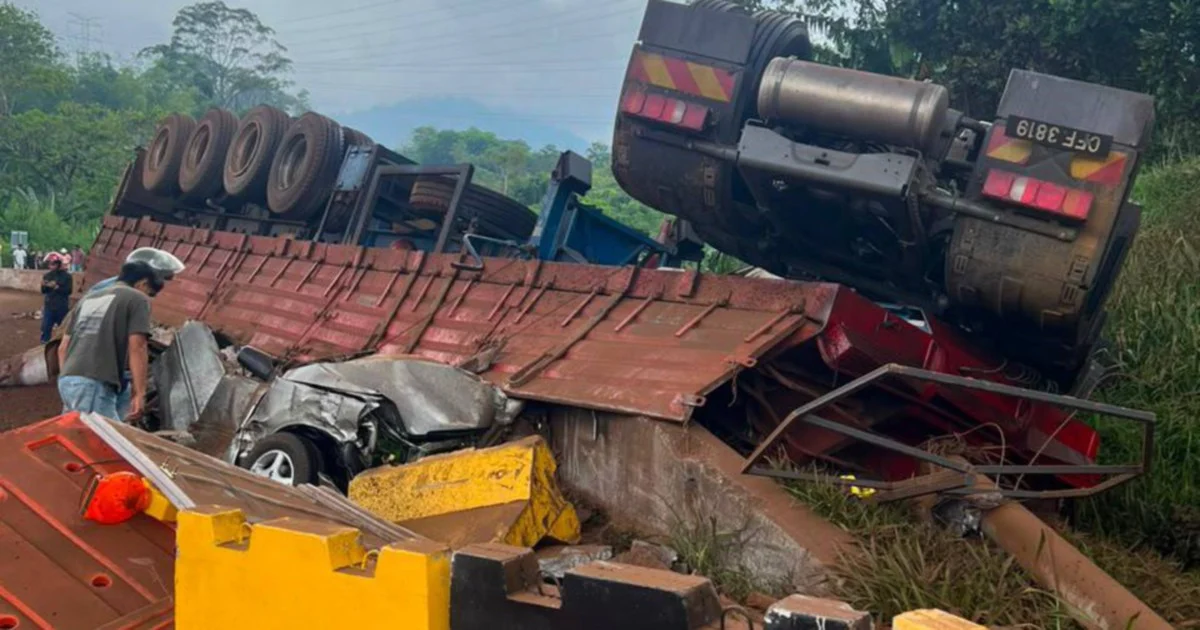
A trailer driver released on police bail on Tuesday remains under investigation following a devastating collision on the Karak Expressway near Bentong that resulted in four deaths on June 14. The release marks a significant development in the case as enforcement agencies prepare their prosecution file, with the driver's conditional freedom allowing him to maintain daily activities while remaining subject to police inquiries.
The fatal incident, which occurred along one of Malaysia's busiest expressway corridors connecting the Klang Valley to the east coast, underscores the persistent dangers posed by heavy vehicle operations on high-speed routes. The Karak Expressway, spanning approximately 250 kilometres, serves as a critical commercial and passenger transport artery, and accidents involving large trucks in this corridor have historically resulted in substantial casualties due to the speed differentials and manoeuvrability challenges inherent to vehicles of that scale.
Police bail conditions typically impose restrictions on the accused's movement and activities, requiring regular reporting to designated police stations. This mechanism allows investigative teams to maintain oversight while gathering evidence, conducting witness interviews, and reconstructing the collision sequence without detaining the suspect throughout the entire inquiry period. The decision to release the driver reflects standard procedural practice in Malaysia's criminal justice system, particularly when preliminary assessments suggest no immediate flight risk and sufficient evidence collection measures are already in place.
The June 14 incident prompted immediate response from emergency services and transported the deceased to medical facilities, where post-mortem examinations were subsequently conducted to establish definitive causes of death. Investigations into heavy vehicle fatalities typically examine multiple factors including vehicle maintenance records, driver fatigue levels, road conditions at the time of impact, weather circumstances, and mechanical functionality of braking systems and steering apparatus.
Trailer accidents on Malaysian expressways remain a persistent public safety concern, with the Road Safety Institute Malaysia regularly documenting preventable collisions linked to inadequate vehicle maintenance, driver negligence, and enforcement gaps. The Karak Expressway, despite its economic importance, has experienced numerous serious incidents over the decades, prompting periodic calls from safety advocacy groups for enhanced compliance monitoring and stricter penalties for breaches of vehicle roadworthiness standards.
The investigation's scope will extend beyond immediate liability to encompass systemic factors contributing to such tragedies. Authorities typically examine whether the driver possessed valid commercial driving credentials, whether mandatory rest period requirements were observed, and whether the trailer underwent required safety inspections before deployment. These elements collectively inform whether charges relate to negligence, dangerous driving causing death, or other relevant penal provisions under Malaysian traffic legislation.
The release of the driver on bail does not constitute acquittal or exoneration but rather reflects the legal principle that detention during investigation is not automatically presumed necessary. Prosecutors will compile their case file over subsequent weeks, determining whether sufficient evidence supports criminal charges and what level of culpability the evidence substantiates. The bail status permits the driver to seek legal representation and prepare his defence while remaining available for ongoing police questioning if required.
For the families of the deceased, the investigative process represents a complex period combining grief management with engagement with legal procedures. Malaysian law permits families to engage through victim assistance units and, in some circumstances, to participate in court proceedings or submit statements regarding impact and sentencing considerations should prosecution proceed to conviction.
The expressway corridor surrounding Bentong has witnessed multiple significant incidents in recent years, generating discussion among transport policy analysts regarding speed management, vehicle spacing enforcement, and emergency response capacity along this critical route. The incident adds to statistical evidence prompting discussions about whether current regulatory frameworks adequately address heavy vehicle operations during peak congestion periods when multi-vehicle collisions become more probable.
As the investigation progresses, the driver remains subject to bail conditions that will restrict his activities and mandate regular police contact. The prosecution will determine the appropriate charges based on available evidence, and the courts will eventually assess culpability through established legal procedures. This case will likely contribute to ongoing policy discussions surrounding heavy vehicle safety, driver licensing standards, and enforcement mechanisms that authorities employ to prevent future tragedies on Malaysian expressways serving millions of commuters and commercial vehicles annually.

