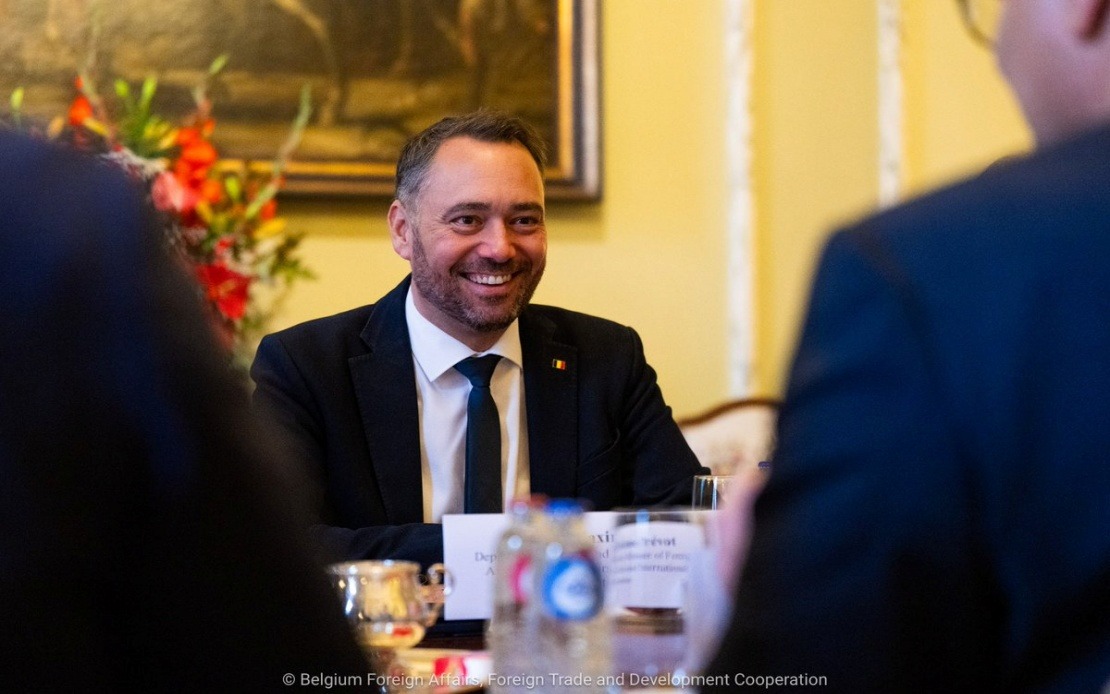
Belgium's Deputy Prime Minister and Foreign, European Affairs and Development Cooperation Minister Maxime Prévot will be in Malaysia for a two-day visit beginning Thursday, signalling the country's growing interest in strengthening economic and strategic partnerships across Southeast Asia. The visit, which the Malaysian Foreign Ministry confirmed this week, represents Prévot's inaugural trip to Malaysia since assuming his ministerial portfolio in February 2025 and underscores Belgium's commitment to deepening bilateral engagement beyond traditional European circles.
The centrepiece of Prévot's agenda involves a bilateral meeting scheduled for July 2 with Malaysian Deputy Prime Minister Datuk Seri Fadillah Yusof, who holds the concurrent portfolio of Energy Transition and Water Transformation Minister. This pairing is particularly significant, as it places renewable energy and sustainable development at the heart of discussions between two nations seeking to navigate the global energy transition. Through this high-level engagement, both governments aim to identify concrete opportunities for collaboration in sectors that will define economic competitiveness over the coming decades.
Three strategic sectors dominate the planned conversations. Renewable energy cooperation represents the flagship agenda item, reflecting global momentum towards decarbonisation and Malaysia's positioning as an emerging hub for clean energy technology and manufacturing. The inclusion of rare earth elements signals Belgium's interest in securing supply chain diversification for critical minerals essential to the green energy transition, batteries, and advanced electronics. Malaysia's significant rare earth resources and processing capabilities make it an attractive partner for European nations seeking to reduce dependence on concentrated global suppliers. The halal industry dimension reflects Malaysia's established credentials as the world's leading halal hub, a market of growing international interest as Muslim-majority populations and halal-conscious consumers expand across continents.
Beyond sectoral specifics, the visit provides a forum for examining the broader Malaysia-European Union relationship at a time when both sides are recalibrating their strategic approaches. Officials are expected to discuss regional developments and international issues of mutual concern, suggesting that conversations will extend into geopolitical territory, including trade dynamics, security considerations, and multilateral governance in the Indo-Pacific region. Belgium's role within the EU governance structure grants this dialogue additional significance for Malaysia's engagement with European decision-making circles.
Prévot's itinerary extends beyond formal government meetings. He will deliver a ministerial address at the 39th Asia-Pacific Roundtable, an annual gathering hosted by the Institute of Strategic and International Studies (ISIS) Malaysia that convenes senior policymakers, academics, and strategic thinkers for dialogue on regional challenges and opportunities. His participation underscores Belgium's recognition of the Asia-Pacific's centrality to global affairs and provides a platform for articulating European perspectives on regional security, economics, and governance to an influential Malaysian and international audience.
The visit also includes a formal audience with Sultan Nazrin Muizzuddin Shah, the Sultan of Perak, a protocol that reflects the diplomatic weight accorded to this engagement and Malaysia's respect for state-level protocols in ceremonial matters. Such royal audiences typically carry symbolic significance in host countries and often precede deeper substantive discussions between governmental and business representatives.
The economic context underlying these discussions is substantial. Bilateral trade between Malaysia and Belgium reached RM9.74 billion in 2025, with Malaysian exports accounting for RM6.85 billion and Belgian imports comprising RM2.89 billion. This trade profile demonstrates Malaysia's competitive advantages in specific sectors that Belgium values, whether in manufacturing, processed goods, or raw materials. The trade imbalance tilted towards Malaysian exports reflects the country's export-oriented economy and Belgium's role as a gateway to broader European markets.
Beyond commerce, Belgian business investment in Malaysia underscores confidence in the country's economic fundamentals and investment climate. As of 2025, 67 projects with Belgian participation had received approval, representing RM5.1 billion in cumulative investments and the potential creation of 4,605 jobs. These figures suggest established Belgian presence across multiple sectors, from manufacturing to services, and indicate that this visit aims not merely to establish new relationships but to deepen existing ones through government-level support and policy coordination.
For Malaysia, this visit arrives at a moment when the country is actively positioning itself as a critical node in Asian supply chains, a clean energy manufacturing destination, and a gateway for global companies seeking Southeast Asian operations. Belgium's interest in renewable energy and rare earths aligns with Malaysia's own strategic priorities under the Energy Transition and Water Transformation agenda, creating natural convergence points for partnership. The halal industry component reflects Malaysia's successful branding of itself as the custodian and promoter of international halal standards, a soft power asset increasingly recognised by policymakers seeking to tap growing global halal markets.
From Belgium's perspective, strengthening ties with Malaysia serves multiple strategic objectives. The country seeks to diversify supply chains away from traditional Asian suppliers, secure access to critical materials for its green energy transition, and strengthen EU presence in one of Asia's most dynamic economies. Malaysia's role in ASEAN, its strategic location in global shipping lanes, and its growing technological sophistication make it an attractive partner for a European nation seeking to expand its Asian footprint during a period of geopolitical realignment.
The visit comes amid broader European efforts to forge deeper connections with individual Southeast Asian nations through bilateral channels, complementing larger EU-ASEAN frameworks. This approach allows for more tailored discussions suited to specific national interests and capabilities, potentially yielding more focused cooperation agreements than blanket regional initiatives. Belgium's dispatch of a senior minister reflects the seriousness with which Brussels views Malaysia as a partner in Europe's strategic Asian engagement.
For Malaysian observers and policymakers, this visit exemplifies the country's expanding diplomatic reach and its appeal to major global players across ideological and geographical lines. It demonstrates Malaysia's success in cultivating relationships beyond its immediate region and its ability to attract ministerial-level engagement from advanced economies. The agenda—renewable energy, rare earths, and halal cooperation—reflects sectors where Malaysia possesses genuine competitive advantages and where international collaboration can unlock mutual benefits.
As both nations prepare for substantive discussions, the practical outcomes will likely include preliminary agreements on cooperation frameworks, business matchmaking opportunities, and potentially joint initiatives in research and development, particularly in renewable energy technologies and sustainable rare earth processing. The visit, therefore, represents not merely a diplomatic courtesy but a substantive engagement that could shape bilateral cooperation trajectories for years to come, benefiting businesses, workers, and consumers in both nations.

