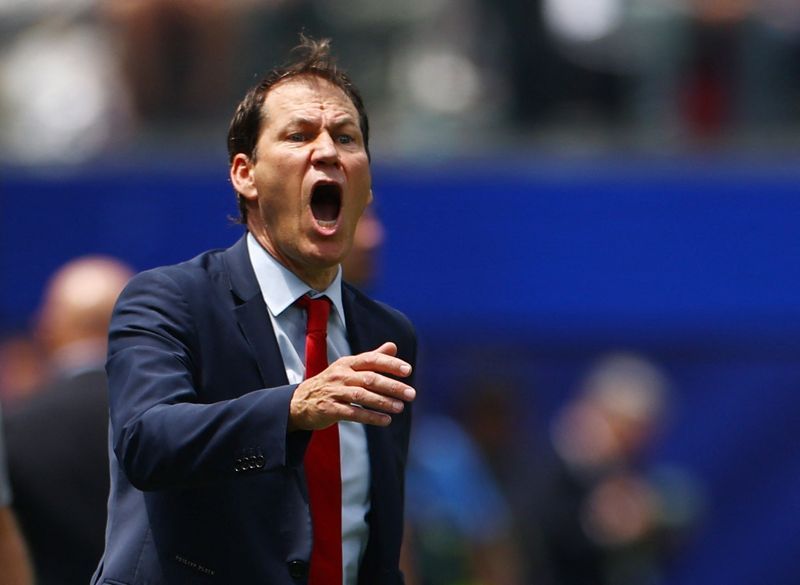
The future of Belgium coach Rudi Garcia has become increasingly uncertain after his controversial decision to replace goalkeeper Thibaut Courtois in Friday's World Cup quarter-final match against Spain, a 2-1 loss that has reignited debate about his tactical judgement and management philosophy. The substitution, made after 71 minutes, proved fateful when replacement goalkeeper Senne Lammens parried a low drive from Pau Cubarsi, allowing Mikel Merino to capitalise in the 86th minute and seal victory for the Spanish side. The incident has dominated post-match analysis across Belgium and raised fundamental questions about whether Garcia possesses the strategic acumen required to guide the national team forward.
Courtois, widely regarded as one of world football's elite goalkeepers, felt capable of continuing despite experiencing a minor leg complaint. Garcia, however, took the decisive step of removing him from the field, citing concerns that the player was not performing at full physical capacity. This rigid adherence to his stated policy—that only completely fit players should feature—has drawn sharp criticism from Belgian football analysts and commentators who questioned whether substituting a goalkeeper of Courtois's calibre during a knockout match represented sound tactical thinking. The decision appears particularly questionable given that Courtois's primary vulnerability would not have been physical limitations but rather the specific circumstances that led to Spain's winning goal.
Belgian media personality Peter Vandenbempt articulated the frustration felt by many observers, questioning the logic of removing the world's finest goalkeeper during a World Cup quarter-final specifically because he could no longer deliver precise long passes. Vandenbempt suggested that Garcia's inflexible approach to team management, while consistent with his stated principles, lacked the nuance required at the highest levels of international football. The commentator highlighted a tension between maintaining absolute fitness standards and recognising that elite players like Courtois possess sufficient self-awareness to manage minor injuries during crucial matches. This criticism reflects a broader concern that Garcia's managerial style prioritises dogmatic adherence to rules over contextual decision-making.
Garcia has defended his approach with clarity and conviction, explaining that his fitness requirement has applied consistently throughout the World Cup campaign. He argued that the tactical system deployed by Belgium relied heavily on long passes from Courtois to attacking players Charles De Ketelaere and Romelu Lukaku, making the goalkeeper's physical condition directly relevant to match strategy. The coach maintained that his primary concern was preventing a minor injury from deteriorating into a more serious problem that might have sidelined Courtois for subsequent matches. This explanation reveals Garcia's perspective that short-term competitive results should not override long-term player welfare, a principle that many coaches would applaud in principle but that critics argue was misapplied in this particular context.
Garcia's contract with the Belgian Football Association is scheduled for review before the end of the month, when his current agreement expires. His tenure, which commenced in early 2025, was explicitly designed to restore stability and purpose to the Belgian program following the period under Domenico Tedesco, whose departure was accompanied by widespread descriptions of a toxic and emotionally draining atmosphere within the squad. Garcia inherited an underperforming team that had lost confidence and direction, and his initial mandate focused on securing competitive achievements in the Nations League and World Cup qualification—both accomplished objectives that provided a foundation for his continued tenure.
The quantitative record compiled by Garcia across 20 international matches—12 victories, six draws, and two defeats—demonstrates respectable performance at aggregate level. This statistical foundation suggested that he had successfully stabilised the program and positioned Belgium for sustained competitive success. However, statistics alone cannot capture the manner in which results were achieved or the strategic coherence displayed during crucial matches. Belgium's World Cup campaign reflected inconsistency and fragility, with the team requiring multiple recovery efforts to advance from the group stage. A draw with Egypt and another with Iran preceded a victory over New Zealand that secured top position in their group, an unconvincing path through what should have been a manageable section.
Belgium's last-16 encounter against Senegal further illustrated the team's vulnerability and the ambiguity surrounding Garcia's tactical decisions. With the team trailing 2-0, Garcia withdrew several key players from the pitch, a move that preceded an improbable Belgian comeback. Whether this substitution demonstrated prescient tactical adjustment or whether Senegal simply surrendered through defensive carelessness remains contested. The episode encapsulates the broader uncertainty surrounding Garcia's management—he can point to moments of good fortune and recovery, but whether these reflect genuine coaching excellence or tactical opportunism remains an open question that will likely influence federation officials in their assessment of his future.
Conversely, Garcia has achieved undeniable successes during the tournament that demonstrate his capacity to deliver positive results. Belgium's demolition of the United States, winning 4-1 against the co-host nation, showcased attacking prowess and coordination. Additionally, Garcia has successfully integrated promising young players into the senior setup, with Nathan Ngoy and Nicolas Raskin delivering impressive performances that suggest the team's development trajectory remains positive. These achievements suggest that the coach has identified talent and created conditions for its expression, a valuable contribution to Belgian football that should not be entirely overshadowed by the disappointing exit.
The Belgian Football Federation faces a consequential decision that extends beyond Garcia's individual performance or one controversial substitution. Officials must determine whether the coach represents the appropriate figure to lead the evolution of Belgian football toward the 2028 European Championship, a tournament that offers an important opportunity for the national team to reassert itself among European football's elite. Questions have persisted throughout Garcia's tenure regarding his tactical approach, the effectiveness of his substitution patterns, and whether his overall management style aligns with the needs of the Belgian program. The narrow loss to Spain, while a discrete sporting disappointment, has crystallised these doubts and created space for federation officials to reconsider their strategic direction.
Beyond the technical and tactical dimensions, the decision about Garcia's future reflects broader considerations about Belgian football's trajectory. The team entered this World Cup with expectations of significant achievement, carrying the legacy of a talented generation that had previously performed consistently on the international stage. The failure to progress beyond the quarter-final stage, especially through a match in which marginal tactical decisions arguably influenced the outcome, has disappointed both supporters and administrators. Federation officials will need to weigh whether Garcia deserves another opportunity to develop his project or whether structural changes would better serve Belgium's competitive ambitions. The controversy surrounding the Courtois substitution provides the immediate catalyst for this reassessment, though deeper questions about Garcia's suitability for the role have accumulated throughout his tenure.

