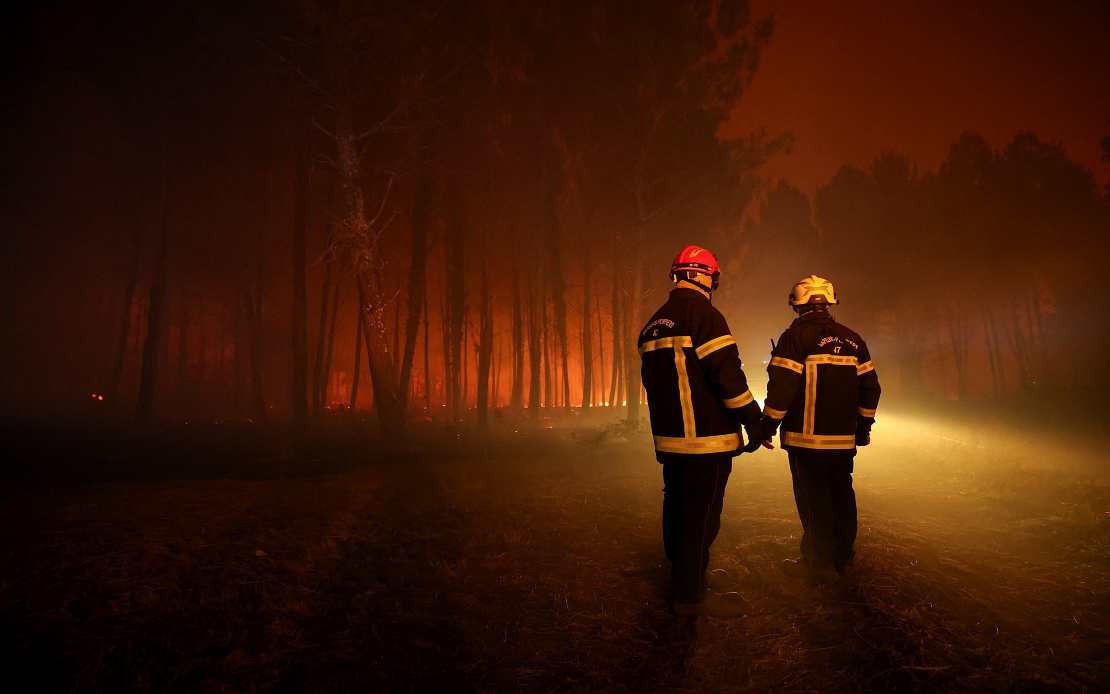
Belgium is contending with an unprecedented environmental crisis as a massive wildfire continues to ravage the eastern High Fens nature reserve, marking the country's most destructive fire in recorded history. By Saturday evening, the blaze had consumed roughly 2,700 hectares of land, prompting authorities to order the evacuation of approximately 600 residents from surrounding communities. The scale of destruction far exceeds any previous wildfire event documented in Belgium, with regional officials describing the situation as a significant threat to public safety and environmental integrity across the border region.
The fire ignited around 2 pm on Friday within the High Fens nature reserve, located near the Belgian-German border, and rapidly spiralled beyond initial containment expectations. What began as a localized incident transformed throughout Friday and into Saturday as weather patterns and topographical challenges complicated suppression efforts. The office of the governor of Liege reported that the burned area had expanded dramatically from approximately 1,600 hectares during daylight hours, underscoring how quickly the situation deteriorated despite intensive firefighting operations. This expansion illustrates the unpredictable and aggressive nature of wildfires under adverse weather conditions, a pattern increasingly familiar to emergency services across Europe.
Historical data underscores just how extraordinary this event is for Belgium. Records maintained by the European Forest Fire Information System indicate that the previous benchmark wildfire occurred in 2011, consuming nearly 1,400 hectares. The current fire has nearly doubled that figure, representing a watershed moment for Belgian disaster management and environmental monitoring. This comparison reveals not only the record-breaking magnitude of the present crisis but also suggests potential shifts in climate patterns and vegetation combustibility that warrant closer examination by policymakers and environmental scientists throughout the region.
The evacuation process has extended beyond residential areas to encompass tourism and recreational facilities. Local authorities directed holiday visitors to depart the region while simultaneously mobilizing emergency protocols for a children's summer camp operating in the vicinity. Changing wind directions and dense smoke plumes created unpredictable hazard zones, making early and precautionary evacuation the prudent administrative response. These measures reflect the lessons learned from previous European disasters and the commitment of Belgian authorities to prioritize human life over property or economic continuity.
Physical geography has emerged as a critical complicating factor in the firefighting campaign. The rugged and mountainous terrain characteristic of the High Fens nature reserve has severely limited the ability of conventional ground-based firefighting methods to engage the blaze effectively. Emergency crews face significant obstacles in accessing critical zones, whilst the undulating landscape channels wind and smoke in unpredictable patterns. The interaction between topography and prevailing wind conditions has repeatedly hampered operational effectiveness, forcing coordinators to adopt alternative strategies and rely increasingly on aerial resources.
Recognizing the magnitude of the challenge, Belgium invoked the European Union Civil Protection Mechanism on Saturday, formally requesting international assistance from neighbouring and allied nations. The European Commissioner for Preparedness and Crisis Management announced that firefighting aircraft dispatched to Belgium originated from the Czech Republic, Sweden, and the Netherlands. This multinational mobilization demonstrates the interconnected nature of contemporary European crisis response and the willingness of states to transcend bilateral arrangements when facing environmental emergencies of continental significance. Such cooperation reflects established protocols whilst acknowledging that no single nation possesses adequate resources for disasters of this scale.
The operational response has marshalled unprecedented cross-border coordination involving personnel and equipment from Belgium, Germany, and Luxembourg. Professional firefighting units from across the Belgian territory have converged on the High Fens region, whilst military assets have been redeployed to support civilian emergency operations. Local agricultural communities have contributed equipment and manpower, demonstrating grassroots solidarity during crisis circumstances. This comprehensive mobilization represents a substantial commitment of national resources and reflects the seriousness with which authorities regard the developing situation.
Meteorological conditions have proven instrumental in both igniting and perpetuating the wildfire. Belgium experienced a pronounced heat spell during the week preceding the incident, with temperatures reaching 37 degrees Celsius across substantial portions of the country by Friday. These elevated temperatures combined with reduced moisture levels to create conditions of extreme fire vulnerability. The combination of atmospheric heat, desiccated vegetation, and wind activity created a perfect storm for rapid fire propagation, a scenario that climate scientists increasingly warn will become more frequent across temperate Europe in coming decades.
For Malaysian and Southeast Asian observers, this Belgian crisis offers significant cautionary lessons regarding climate adaptation and disaster preparedness. Although Belgium's temperate forest ecosystems differ substantially from tropical environments, the underlying principles of emergency response, evacuation coordination, and international assistance remain universally applicable. Southeast Asian nations, particularly those prone to transboundary environmental crises such as haze events or flooding, can draw insights from Belgium's mobilization of EU mechanisms and its emphasis on early evacuation. Furthermore, the escalating severity of weather-related disasters across traditionally temperate regions suggests that climate change impacts are accelerating more rapidly than many policy frameworks anticipated, necessitating enhanced preparedness throughout the global community.

