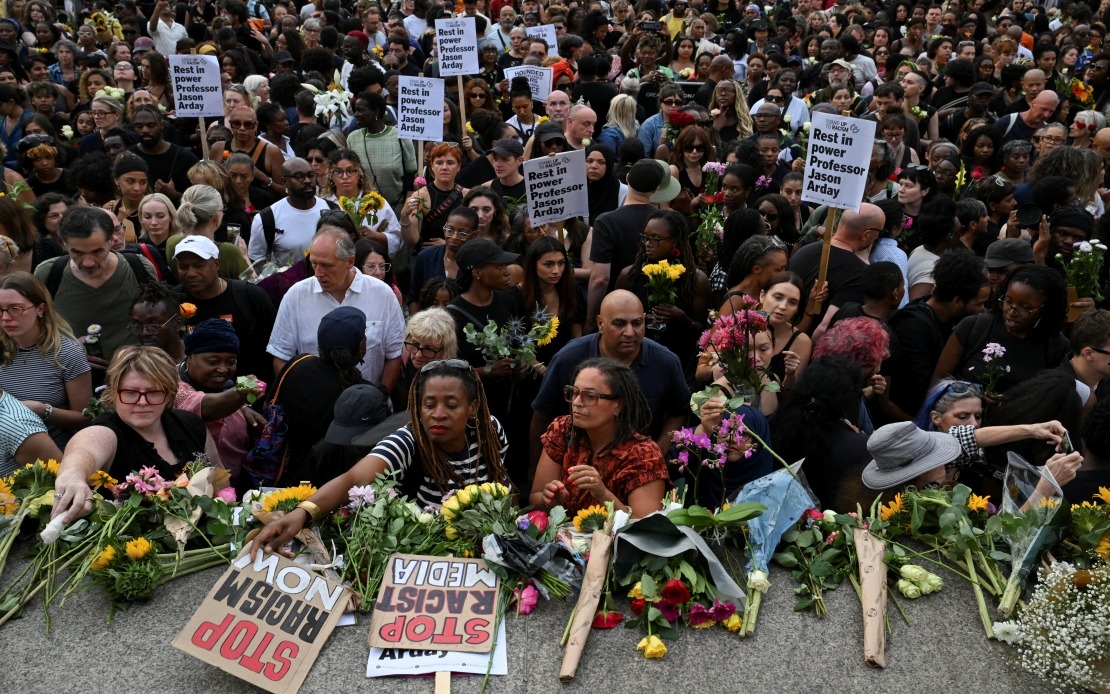
A Belgian university has taken disciplinary action against a postdoctoral researcher who levelled plagiarism allegations against Jason Arday, a prominent Cambridge academic who died last month. Nathan Cofnas, employed by Ghent University's department of philosophy and moral sciences, has been suspended pending further investigation into his conduct during the controversy that ultimately led to Arday's resignation from the University of Cambridge.
The case encapsulates a fraught intersection between academic rigour, institutional politics, and personal tragedy. Cofnas, who identifies as an advocate for "race realism," publicly accused Arday of plagiarism in July, triggering scrutiny that extended beyond the original allegations to encompass questions about the Cambridge professor's academic credentials and biographical narrative. Arday, who had made history in 2023 as Cambridge's youngest Black professor when appointed to the sociology of education post, resigned from his position on August 5 following the mounting pressure. Barely a week later, on August 14, the 41-year-old was discovered dead at his south London residence. Police classified the death as unexpected but not suspicious.
Ghent University's decision to suspend Cofnas reflects broader institutional tensions about how universities should balance competing responsibilities. In a joint statement, rector Petra De Sutter and vice-rector Herwig Reynaert acknowledged the university's commitment to academic freedom while simultaneously asserting that this freedom carries limits and responsibilities. The statement emphasised that freedom of expression in scholarly settings cannot override protections for individuals against discrimination and harassment. The university said it was treating Cofnas's recent public statements "very seriously" but declined to disclose specific details about the investigation or anticipated next steps, citing the need to avoid prejudging outcomes.
Cofnas's history provides context for institutional wariness. In 2024, he lost a research fellowship at Emmanuel College, Cambridge, following publication of a blog post arguing that Black people possess lower average intelligence than white people and that a true meritocracy would result in "close to zero" Black professors at Harvard. That episode established him as a controversial figure in academic circles, someone whose scholarly positions sit at the contested boundary between permissible intellectual debate and assertions many regard as pseudoscientific racism.
Arday's trajectory illustrates why his death reverberated so profoundly through academic and broader communities. Born to Ghanaian immigrant parents, he grew up in a working-class south London household and overcame substantial personal obstacles. He was nonverbal until age eleven and did not acquire literacy skills until eighteen, yet went on to become a respected scholar and the institution's first Black sociology professor. His public reflections on autism and learning difficulties resonated with many, presenting a narrative of triumph over adversity. When questions emerged about elements of his academic record and personal story, they struck at the heart of his identity and professional standing.
The plagiarism allegations themselves emerged in July and created a cascade of consequences. Beyond the specific charges Cofnas raised, scrutiny intensified regarding the circumstances of Arday's appointment and the accuracy of various claims associated with his scholarly work and background. This multilayered investigation created intense pressure on the professor, who ultimately chose resignation as his response. In his resignation statement, Arday emphasised that stepping down should not be construed as acknowledging the narratives circulating about him, suggesting he maintained his position regarding the accuracy of his record while concluding that continuing in post had become untenable.
The University of Cambridge subsequently announced plans to investigate the circumstances of Arday's appointment, a move indicating institutional concern about how the hiring process functioned and what due diligence had been conducted. This investigation came only after Arday's death, raising questions about whether earlier intervention might have altered the trajectory of events. For Malaysian and Southeast Asian observers, the case underscores how institutional processes and academic accountability mechanisms can sometimes activate only when situations have escalated beyond redemption.
Ghent University's handling of Cofnas reveals the complexity institutions face when addressing researchers who make serious allegations but whose own statements appear to reflect controversial ideological commitments. The suspension indicates the university found grounds for concern regarding his conduct, yet the university simultaneously affirmed its dedication to open debate and intellectual freedom. This balancing act reflects evolving standards in European and international academia, where freedom of expression is valued but increasingly understood as coexisting with responsibility not to promote discrimination.
The case also illuminates how social media has transformed academic disputes. Cofnas's announcements of his suspension were posted on X (formerly Twitter), ensuring public visibility and immediate dissemination. This transparency contrasts with historical academic controversies that played out through slower institutional and professional channels. The acceleration and publicisation of what might once have remained internal university matters creates different dynamics and pressures, particularly for individuals at the centre of disputes.
For the Southeast Asian academic community, the incident offers sobering lessons about institutional vulnerability and the importance of robust processes around both hiring and handling of allegations. Universities throughout the region are increasingly internationalising their faculty and student populations, creating environments where questions of diversity, merit, and representation become increasingly salient. The Cambridge case demonstrates that these discussions, while necessary, require careful institutional stewardship to prevent harm to individuals and erosion of academic trust.
The death of Arday has prompted reflection about whether aggressive public campaigns against academics, regardless of their underlying merits, can create psychological and emotional conditions that contribute to tragic outcomes. Ghent University's statement that Arday's death "should prompt reflection" suggests recognition that institutional actors bear some responsibility for the environments they create and permit to develop. This perspective, emphasising collective responsibility rather than attributing outcomes solely to individual actions, represents an important shift in how institutions conceptualise their duties to members of their communities.
As investigations proceed and universities worldwide consider implications, several unresolved questions persist. The extent to which plagiarism allegations were substantiated remains somewhat opaque, as does the precise nature of other questions about Arday's record. The relative culpability of various actors—the researcher making accusations, institutional processes, media reporting, and online commentary—continues to invite interpretation. What remains clear is that the episode illustrates the stakes involved when academic accountability processes intersect with questions of race, diversity, and representation in elite institutions.

