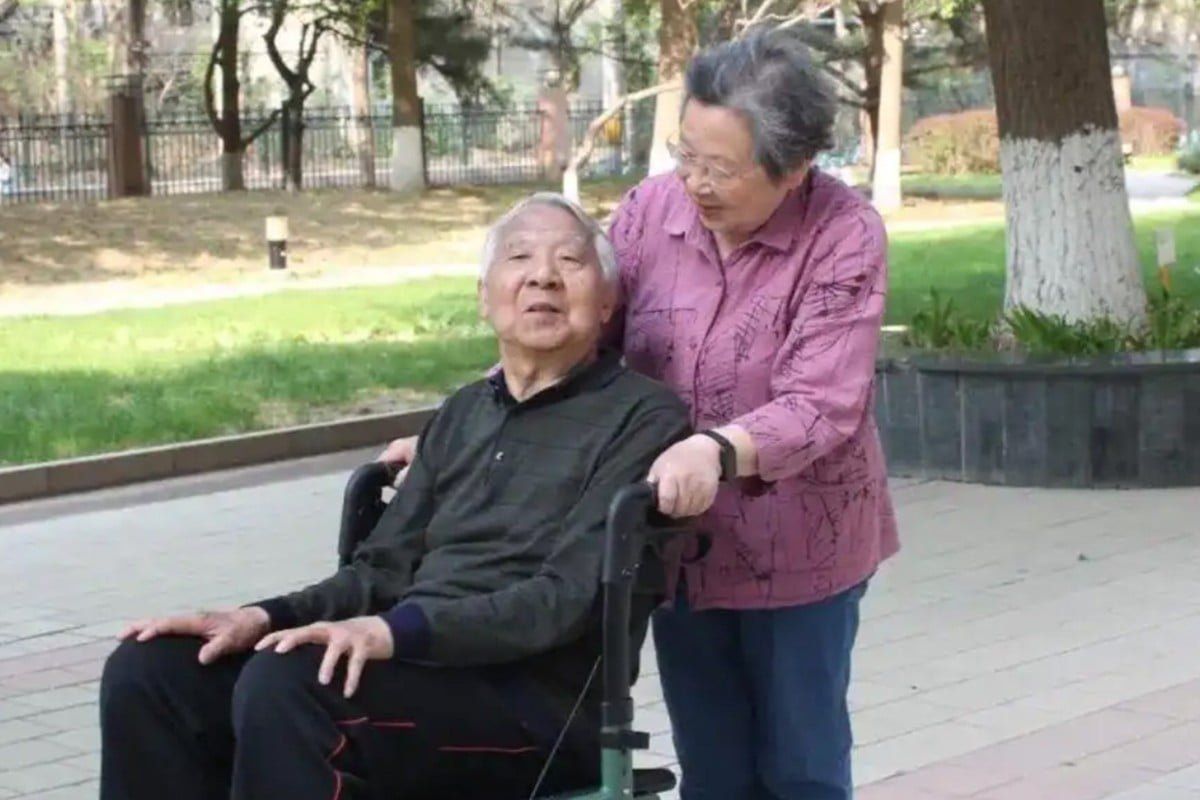
In Beijing, a 90-year-old woman named Wen Bo has become an unlikely symbol of compassion and resilience, capturing the hearts of millions through her meticulous care of her husband, who is battling Alzheimer's disease. What began as a personal journey of devotion has blossomed into a digital movement, with her documented experiences offering profound insights into the nature of dignity, love, and the profound challenges of dementia care that increasingly confront families across Asia's rapidly ageing societies.
Wen and her husband's relationship spans more than six decades, beginning when they were classmates in secondary school. After maintaining a long-distance courtship that tested their commitment, they married in 1960 and built a life marked by vitality and adventure. Throughout their decades together, they cultivated an active lifestyle that included swimming, walking, and international travel throughout China and beyond. Their partnership produced two sons and appeared to exemplify the kind of enduring companionship that many aspire to achieve.
In 2023, however, their trajectory shifted dramatically when Wen's husband began exhibiting signs of cognitive decline and physical deterioration. Memory loss and incontinence eventually led to a formal diagnosis of Alzheimer's disease, a condition that would fundamentally reshape their daily existence. Rather than placing her husband in an institutional setting or imposing the burden on their adult sons—who are occupied with their own families and professional responsibilities—Wen made the deeply personal decision to serve as his full-time caregiver. This choice reflected not merely practical calculation but a philosophical commitment to maintaining his presence within their shared home and intimate life.
With the assistance of a domestic helper who handles cooking and household management, Wen has structured her days entirely around her husband's needs and wellbeing. As his cognitive abilities have declined, he has lost the capacity to remember his medications, experiences progressive mobility challenges, and no longer inquires about his grandchildren—milestones that underscore the disease's insidious progression. Recognizing that professional medical knowledge alone would prove insufficient, Wen embarked on an intensive autodidactic journey, teaching herself about Alzheimer's through books and online resources with the determination of someone confronting an existential challenge.
Her caregiving regimen combines cognitive stimulation with physical activity. Daily, she engages her husband in mathematics problems, puzzles, and painting exercises, interspersed with physical training designed to maintain his remaining mobility and neurological function. This approach reflects contemporary understanding that mental and physical engagement may slow cognitive decline, a principle Wen has implemented with remarkable consistency and patience. The results, though modest by conventional medical standards, carry profound significance within their household: her husband's deterioration has progressed at a notably slower pace than typical Alzheimer's trajectories, and he retains sufficient independence to operate his electric wheelchair without assistance.
Wen has chosen to document her caregiving journey through diary entries shared on RedNote, a Chinese social media platform that has emerged as a space for intimate life narratives. Her account of teaching her husband arithmetic—describing how on August 23 he completed a test with only one error, though requiring more time than previously—has resonated with millions of readers. These seemingly mundane domestic moments carry emotional weight precisely because they represent victories against the relentless erosion of cognitive function. Her followers have responded with overwhelming support, recognizing in Wen's dedication something transcendent about human commitment and vulnerability.
At the core of Wen's philosophy lies a conviction that people with Alzheimer's must not be reduced to their diagnosis. She worries perpetually that her husband may forget her name and therefore reminds him nightly before sleep to call upon her whenever he needs assistance. "He has to remember my name. I am his wife. I should be the last person he forgets," she articulated in an interview, a statement that encapsulates the emotional stakes of her caregiving and her refusal to permit the disease to erase the foundational relationship that has defined her adult life. She deliberately involves her husband in simple household tasks, allowing him to proceed at his own pace rather than simply doing things for him, thereby preserving his sense of agency and utility.
Wen articulates a philosophical framework for dementia care that emphasizes psychological and emotional dimensions often overlooked in purely medical discussions. "Self-respect, a sense of existence, and the feeling of being needed are essential for individuals with Alzheimer's disease," she has stated, reflecting a perspective that locates dignity not in cognitive capacity but in relational and social recognition. She has indicated that should her husband's condition deteriorate beyond her capacity to manage at home, she would consider hospice care, acknowledging the realistic limits of even devoted caregiving without abandoning her commitment to his comfort and autonomy.
Wen's narrative unfolds against the demographic transformation reshaping contemporary China. The country's population of citizens aged 60 and older surpassed 320 million individuals by the end of the previous year, representing over one-fifth of the total population—a proportion that places China among the world's most rapidly ageing societies. This demographic shift carries profound implications not merely for public health infrastructure but for family structures and cultural expectations regarding elder care. The traditional model whereby younger generations absorbed responsibility for aging parents has fractured under pressures of urbanization, geographic dispersal, and economic necessity, leaving families to improvise care arrangements without clear institutional frameworks.
For younger Chinese navigating anxieties about their own aging and the care of their parents, Wen's example offers an alternative vision of what advanced age might encompass. One social media commenter reflected this sentiment, noting that "Grandma Wen's posts always bring me comfort. She shows me what an ideal later life could look like: being with the person you love while living independently." Another user expressed gratitude for the practical guidance and confidence Wen's experiences provided regarding future parental care. These testimonies reveal how individual caregiving narratives can circulate as models, offering psychological reassurance and practical knowledge to strangers navigating similar challenges.
Wen's prominence on Chinese social media also reflects broader transformations in how elder care and family obligation are publicly discussed and negotiated. Her willingness to document both the tenderness and the exhaustion of caregiving—to present aging not as a problem requiring removal but as a relational experience deserving of attention and resources—challenges stigmas that often shroud dementia and disability. Her story suggests possibilities for dignity and connection even amid cognitive decline, a message that carries particular weight in societies where aging populations increasingly live outside traditional household structures.
As China confronts its demographic destiny, the practical and philosophical lessons embedded in Wen's caregiving become increasingly relevant. Her insistence that people with Alzheimer's retain claims to respect, autonomy, and meaningful participation in daily life offers a counterweight to utilitarian frameworks that may reduce elderly individuals to economic burdens. In demonstrating that love expressed through patient, sustained, and creative engagement can modify disease trajectories while preserving human dignity, Wen has contributed something valuable to contemporary discussions about what societies owe their aging members and what aging might become when stripped of shame and isolation.

