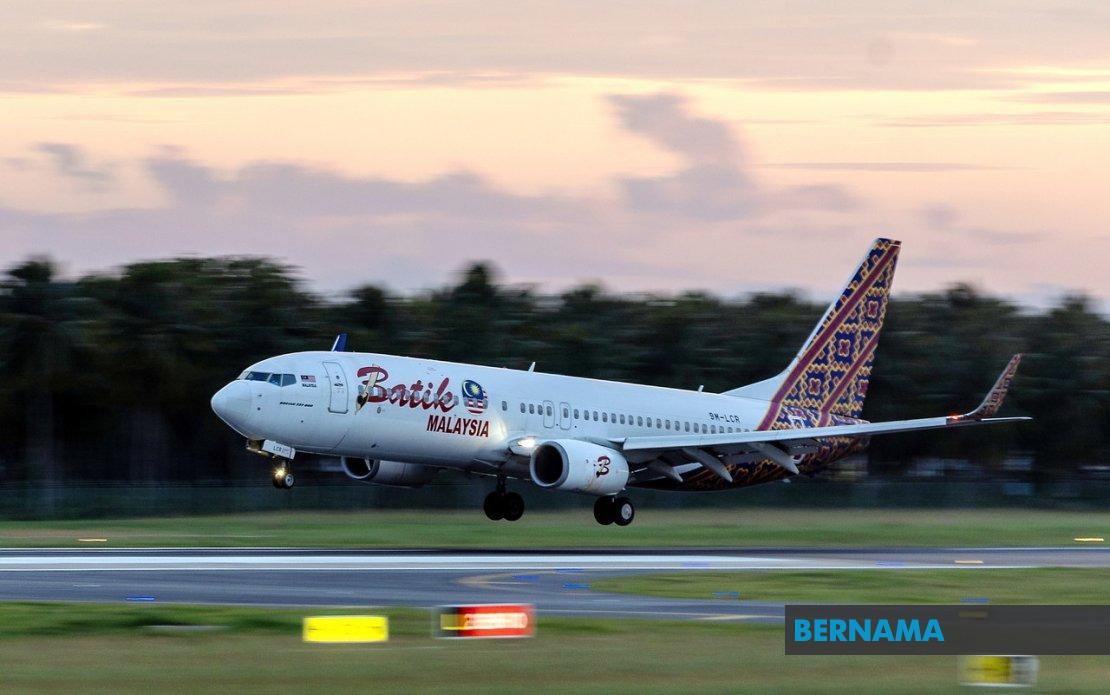
Batik Air will expand its Bintulu-Kuala Lumpur operations to two daily flights beginning July 20, according to Tourism, Arts and Culture Minister Datuk Seri Tiong King Sing. The decision comes after sustained dialogue between the government and the airline regarding passenger concerns about fare affordability and flight scarcity, issues that have increasingly dominated public discourse in Sarawak.
The frequency increase represents a partial victory for Tiong, who had initially pursued a three-times-daily service before the airline negotiated a more measured initial expansion. The new schedule positions departures from Kuala Lumpur at 10 am and 2.30 pm, while the return services from Bintulu operate at 1.10 pm and 5.40 pm. This structured timetable aims to accommodate diverse passenger needs across business, education, healthcare, and leisure segments.
Tiong's intervention reflects the mounting economic frustration in Bintulu, where residents have faced both reduced flight capacity and escalating ticket prices over recent months. The sudden withdrawal of services created bottlenecks for professionals commuting to peninsular Malaysia and disrupted connections for students and medical patients requiring access to specialists in larger urban centres. These operational challenges have accumulated into a genuine accessibility crisis that extends beyond mere inconvenience into economic hardship for households reliant on regular travel.
The minister's emphasis on maintaining competitive pricing reveals a critical tension within aviation policy. Airlines operate on tight margins, particularly on regional routes where load factors determine profitability. Yet the political imperative to ensure affordable air travel, especially for secondary cities, persists regardless of market conditions. Tiong acknowledged this friction by encouraging Batik Air to balance commercial sustainability against the public interest in accessible fares.
Bintulu's trajectory as an economic centre has accelerated in recent years, driven by petrochemical industries, light manufacturing, and emerging tourism. This growth trajectory demands proportionate transport infrastructure to unlock further development potential. Bottlenecks in air connectivity directly constrain business expansion, deter investment, and limit the city's ability to compete for skilled talent against larger Malaysian cities with superior flight networks. The frequency expansion thus carries strategic significance beyond immediate passenger convenience.
Tiong's dialogue approach highlights how Malaysian transport policy increasingly relies on ministerial negotiation rather than regulatory mandates. The airline retained discretion over capacity and scheduling within government-encouraged parameters, preserving operational autonomy while addressing political expectations. This collaborative model works when aligned interests exist but can prove fragile if commercial pressures resurface.
Future service expansion hinges on passenger growth, introducing an implicit incentive structure. Should ticket sales increase substantially, Tiong indicated the potential for a third daily flight. This conditionality reflects prudent business practice—airlines naturally resist capacity additions during declining demand—yet introduces uncertainty for constituencies requiring guaranteed connectivity improvements.
The stabilisation of fares depends partly on route maturity and load factors. If expanded capacity attracts sufficient traffic, unit costs decline and competitive pricing becomes sustainable. Conversely, if growth remains sluggish, fares may drift upward despite capacity additions, recreating the affordability crisis. Bintulu residents therefore have indirect stakes in promoting their own route's commercial viability through consistent travel patterns.
This announcement carries implications for Southeast Asian regional aviation patterns. Countries across the region face similar pressures: population dispersal demands connectivity to secondary cities, yet sparse route economics make such services commercially unviable without government incentives. Malaysia's approach of leveraging ministerial influence to negotiate frequency rather than direct subsidisation differs from regional peers but reflects particular political sensitivities around fare accessibility.
The timeline signals confidence that implementation can proceed without regulatory obstacles, suggesting Batik Air has secured necessary slot approvals at both terminals. Coordination with airport authorities demonstrates the systematic groundwork required beneath surface-level announcements.
Tiong's positioning emphasises mutual benefit outcomes where enhanced connectivity drives traffic growth and improved load factors, creating virtuous cycles rather than permanent subsidy dependence. Whether this optimistic framing reflects genuine market dynamics or represents aspiration remains to be determined by subsequent demand patterns.
For Malaysian business travellers, education seekers, and patients requiring Peninsular Malaysia access, the frequency increase removes a significant friction point in interregional mobility. The ramifications extend beyond immediate convenience into broader competitiveness for Bintulu's future development trajectory.

