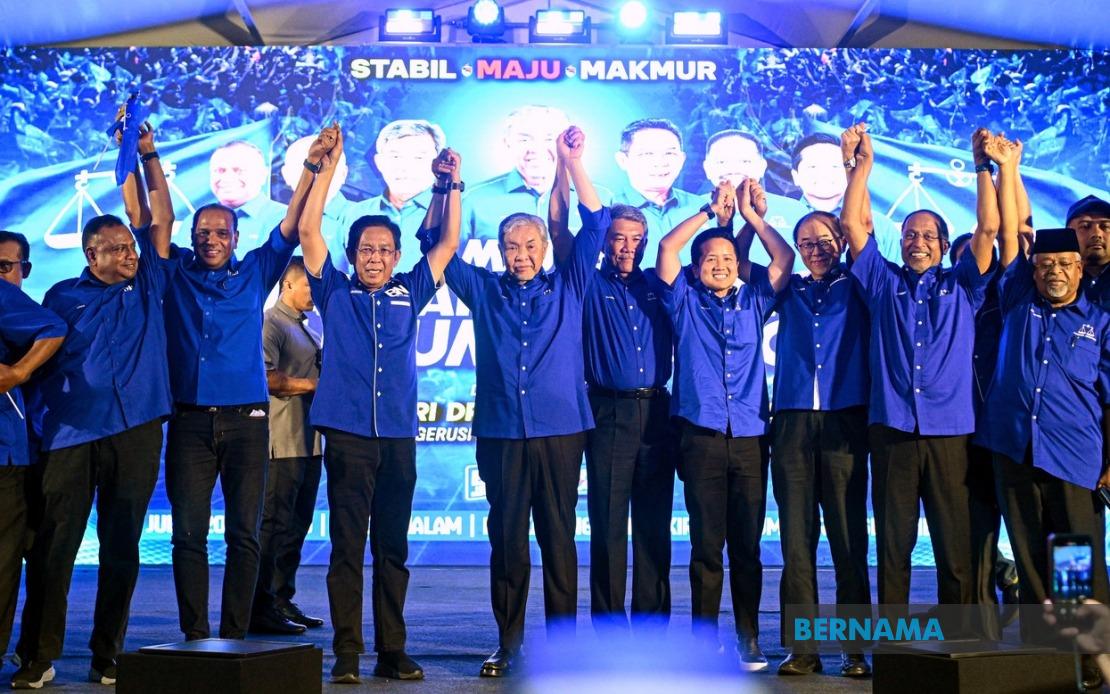
Barisan Nasional's Negeri Sembilan division has finalised its slate of 25 candidates for the 16th state election, striking a balance between established representatives and newcomers to the political arena. The coalition announced its selections at a campaign launch event held at Tuanku Abdul Rahman Stadium in Paroi on July 15, setting the stage for what promises to be a competitive electoral contest in the state.
The most significant confirmation came with Datuk Seri Mohamad Hasan's retention as BN's standard bearer for Rantau, a constituency he has represented continuously since 2004. Mohamad, who serves as both Negeri Sembilan BN chairman and deputy chairman of the broader Barisan Nasional coalition, publicly credited UMNO president Datuk Seri Dr Ahmad Zahid Hamidi for entrusting him with defending the seat once again. His two-decade tenure in Rantau underscores the coalition's preference for stability and continuity in its core constituencies, particularly those represented by senior leadership figures.
Another heavyweight retention was the selection of Datuk Seri Jalaluddin Alias to contest the Pertang state seat, a position he has held since the 2013 election. Jalaluddin, who currently chairs the Negeri Sembilan UMNO Liaison Committee while maintaining his role as Member of Parliament for Jelebu, brings considerable experience and cross-party standing to the coalition's efforts. His continued candidacy reflects BN's strategy of leveraging incumbency advantage in constituencies where representatives have established strong local networks and demonstrated electoral competitiveness.
Beyond these two headline selections, Barisan Nasional has retained several other sitting state assemblymen in their respective constituencies. Datuk Mohd Faizal Ramli will again contest Linggi, where he has built considerable local influence, while Datuk Mustapha Nagoor seeks another term in Palong. These decisions indicate the coalition's confidence in these representatives' ability to retain their seats despite broader political headwinds and shifting voter preferences that have affected BN's performance across Malaysia in recent electoral cycles.
The announcement represents a pragmatic approach to candidate selection, combining the electoral security that comes with incumbent advantage with the infusion of new talent into the coalition's candidate roster. By mixing established figures with fresh candidates, BN aims to project both stability and dynamism to voters weighing their electoral choices. This balancing act is particularly important in Negeri Sembilan, where the coalition's traditional dominance has faced increasing challenges from opposition parties gaining ground in both rural and urban constituencies.
However, the incomplete nature of BN's candidate list underscores ongoing negotiations and deliberations within the coalition structure. The coalition has yet to finalise selections for 11 state seats: Klawang, Serting, Lobak, Sikamat, Ampangan, Bukit Kepayang, Mambau, Paroi, Lukut, Bagan Pinang, and Gemas. These outstanding selections likely reflect the complex process of balancing demands from UMNO, MCA, and other BN component parties, each seeking to protect their interests and secure desirable nominations for their respective candidates and supporters.
The outstanding seat selections also present potential risks for the coalition's election campaign. Delayed finalisation of candidates can undermine momentum during the critical early phase of campaigning, when voters are first forming impressions of the parties' commitment and readiness. Furthermore, the continued uncertainty may provide openings for opposition parties to gain ground in these seats by fielding candidates earlier and establishing stronger campaign infrastructure and voter engagement before BN's own nominees are even confirmed.
For Malaysian observers tracking coalition politics, the Negeri Sembilan exercise illustrates the enduring structural complexities within Barisan Nasional. Despite nominal unity under the BN banner, the coalition remains fundamentally a federation of separate parties with distinct interests, membership bases, and electoral calculations. The need to balance representation across multiple component parties, manage intra-coalition tensions over seat allocation, and satisfy regional party leadership all complicate the simple logistics of announcing a unified candidate slate.
The broader context of this election also matters significantly for national politics. Negeri Sembilan's electoral fortunes carry symbolic weight, as a state where Barisan Nasional has traditionally exercised strong control. Any significant shift in the state's political complexion could signal broader trends affecting BN's competitiveness in other parts of the country, particularly as the coalition continues its efforts to rebuild credibility and electoral appeal following the 2018 general election defeat and subsequent internal reorganisation.
For voters in Negeri Sembilan, the announced candidates represent important choices about the state's future direction. Beyond individual candidate quality and local performance records, the election will largely reflect competing visions of governance offered by BN and opposition coalitions, with questions about economic management, service delivery, anti-corruption efforts, and constitutional governance all likely to feature prominently in campaigns across the 26 state seats contested. The ultimate electoral outcome will depend not only on the quality of announced candidates and their campaign effectiveness, but also on broader state and national sentiment about Malaysia's political direction.

