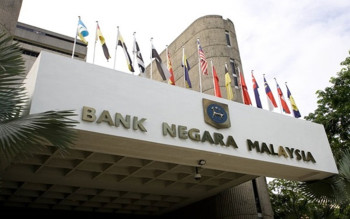
Bank Negara Malaysia has reasserted that its advisory role towards Tabung Haji represents a key component of its statutory financial stability mandate under the Central Bank of Malaysia Act 2009. The central bank's intervention, which has drawn scrutiny during an ongoing Royal Commission of Inquiry into the pilgrimage fund, reflects a broader supervisory framework designed to identify and mitigate risks that could threaten the integrity of Malaysia's financial ecosystem. This clarification comes as the RCI continues examining Tabung Haji's historical financial management and the central bank's response to emerging vulnerabilities within the institution.
The legal foundation for Bank Negara's involvement with Tabung Haji, despite the fund not falling under its direct regulatory purview, rests upon the central bank's mandate to monitor and identify systemic risks throughout the financial sector. This mandate extends beyond traditional banking institutions to encompass major non-bank financial entities that maintain meaningful interconnections with the broader financial system. Given Tabung Haji's substantial asset base and millions of account holders, Bank Negara reasonably classified it as an institution capable of generating systemic implications should its financial condition deteriorate significantly.
To operationalise this surveillance responsibility, Bank Negara established the Financial Stability Executive Committee under the 2009 Central Bank Act. This body functions as the institutional mechanism through which the central bank conducts ongoing surveillance of financial system vulnerabilities and coordinates responses to emerging threats. Through this framework, Bank Negara and the FSEC gain authority to provide advisory guidance to significant non-bank financial institutions, treating such recommendations as precautionary measures designed to preserve financial system resilience. The committee's work represents an evolution in central banking practice, recognising that systemic risk does not respect traditional institutional boundaries.
Bank Negara emphasised that despite Tabung Haji remaining outside its direct supervisory authority, the central bank retained legitimate grounds to offer counsel to both the fund's Board of Directors and the responsible government minister. This advisory approach, rather than direct regulatory enforcement, reflects the institutional constraints that govern Bank Negara's relationship with entities outside its formal mandate. Nevertheless, the central bank framed such advice as essential for maintaining Tabung Haji's financial soundness and preventing any potential spillover effects that could reverberate through the broader financial system. The distinction between advice and regulation proved significant, as it established Bank Negara's role as a concerned stakeholder rather than a binding authority.
The practical manifestations of this advisory mandate became evident through Bank Negara's escalating warnings to Tabung Haji's leadership. Over a sustained period, the central bank issued five separate cautionary letters directed at the fund's chairman and the Minister of Religious Affairs, each highlighting the widening gap between Tabung Haji's assets and accumulated liabilities. These communications represented increasingly urgent expressions of concern regarding the fund's financial trajectory, signalling that Bank Negara viewed the situation as requiring active intervention. The frequency and specificity of these warnings suggested that Bank Negara had identified genuine systemic vulnerabilities requiring immediate rectification.
These central bank warnings were subsequently validated when the Auditor-General issued its own reprimand in the 2017 Financial Statements Report. The convergence of concerns from multiple government institutions—Bank Negara, the audit office, and ultimately the RCI itself—underscores that Tabung Haji's financial difficulties were not matters of isolated institutional concern but reflected systemic governance and management failures. The timeline of these warnings and official responses demonstrates that Malaysian authorities possessed considerable visibility into Tabung Haji's problems well before the formal establishment of the RCI, even if public awareness of the severity remained limited.
The government's decision to establish the RCI in 2021 represented a more formal and comprehensive investigation into Tabung Haji's predicament following years of advisory warnings and audit findings. The commission's membership was appointed on January 20, 2022, initiating a detailed examination of how the fund had accumulated such substantial financial stress and identifying institutional failures and systemic vulnerabilities. When the RCI presented its findings to the Yang di-Pertuan Agong on August 30, 2022, it provided authoritative documentation of problems that Bank Negara had been attempting to address through advisory channels for an extended period.
For Malaysian readers and observers of financial governance, this clarification regarding Bank Negara's role carries important implications. It establishes that the central bank, despite lacking formal regulatory authority over Tabung Haji, exercised considerable influence through its financial stability mandate. This represents a pragmatic application of central banking doctrine that recognises systemic risk transcends traditional institutional categories. However, the sequence of events also raises questions about whether advisory mechanisms prove sufficiently robust when confronted with significant institutional deterioration. The gap between Bank Negara's warnings and the eventual government establishment of the RCI suggests that advisory approaches, however urgent, may lack the enforcement mechanisms necessary to compel rapid corrective action.
The experience with Tabung Haji may inform future considerations regarding Bank Negara's toolkit for addressing systemic risks in non-bank financial institutions. While the advisory mandate provides legitimate authority for intervention, the apparent delays in comprehensive remedial action highlight potential limitations of persuasive approaches when dealing with institutions managed by political appointees. This tension between central banking mandates and political governance structures represents a recurring challenge in emerging market economies, where financial stability objectives sometimes compete with other institutional considerations.
Looking forward, the clarification of Bank Negara's financial stability mandate as it applies to Tabung Haji provides valuable context for understanding the central bank's evolving role in Malaysian financial governance. Rather than representing overreach, the central bank's involvement reflected a reasonable interpretation of its statutory responsibilities to monitor and mitigate systemic risks. However, the ultimate resolution of Tabung Haji's crisis will likely prompt broader discussions about strengthening mechanisms through which central banks can translate their surveillance capabilities into timely, effective interventions when major non-bank institutions face significant financial distress.

