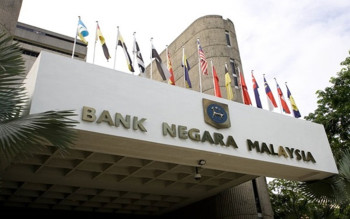
Malaysia's central bank escalated its concerns about Tabung Haji's financial deterioration through five separate warning letters directed at the pilgrimage fund's leadership and the Minister of Religious Affairs, according to disclosures made during a parliamentary sitting in Kuala Lumpur. The repeated cautions underscored growing alarm within Bank Negara Malaysia regarding the institution's precarious position and the potential consequences for the broader financial system.
Dr Zulkifli Hasan, the Minister in the Prime Minister's Department responsible for religious affairs, outlined the central bank's escalating intervention during a briefing to lawmakers on the Royal Commission of Inquiry findings into Tabung Haji's troubles. He characterised the situation as one demanding urgent corrective action, emphasising that Tabung Haji's management had been explicitly advised that failure to address the asset-liability discrepancy would constitute continued violation of financial regulations governing the institution.
The warnings proved ineffective, however. Dr Zulkifli conveyed a sobering assessment: Tabung Haji's financial condition at that juncture represented a potential systemic threat to Malaysia's financial stability, yet the institution's leadership disregarded Bank Negara's intervention. This dismissal of regulatory guidance from the nation's monetary authority highlighted governance failures that would later become central to the RCI investigation.
Regulatory scrutiny intensified beyond the central bank's alerts. The Auditor-General subsequently issued formal censure within the 2017 Financial Statements Report, identifying troubling accounting practices. Specifically, Tabung Haji had altered its impairment valuation methodology twice within a single year—an unusual frequency that appeared designed to present a more optimistic financial picture to stakeholders and the investing public.
The pattern of manipulation extended further when independent auditors arrived on the scene. In 2018, following mounting pressure from regulatory bodies, Tabung Haji's reconstituted board engaged PricewaterhouseCoopers, the multinational audit firm, to conduct a comprehensive reassessment of the institution's finances using rigorous international accounting standards. This external review delivered confirmation of what regulators suspected: significant portions of Tabung Haji's declared asset base lacked proper professional valuation.
PwC's investigation uncovered a stark reality that shattered the official narrative. Of the RM4.6 billion in assets Tabung Haji claimed on its books, merely RM556 million had been appropriately valued by qualified professional appraisers. The discrepancy meant roughly 88 percent of the reported asset base rested on questionable valuation methodologies, exposing the scale of the financial engineering that had masked Tabung Haji's deteriorating condition from depositors and policymakers alike.
The government's response took shape through the establishment of a Royal Commission of Inquiry into the institution's management failures. Announced in 2021, the RCI commenced formal operations following the appointment of its members in January 2022. The comprehensive investigation focused on the 2014 to 2020 period, a critical span during which the financial problems had accumulated and governance weaknesses had proliferated throughout the organisation.
On July 29, the RCI released its 211-page report to the public, laying bare systemic issues within Tabung Haji's operations and management architecture. The investigation identified 25 distinct recommendations aimed at overhauling the institution's practices and restoring public confidence. Notably, Tabung Haji demonstrated responsiveness to these findings, implementing 75 percent of the recommendations within a single month, suggesting a newfound willingness to embrace reform after years of institutional resistance.
The timing and presentation of the RCI findings represented a pivotal moment in Tabung Haji's history. Formal presentation to the Yang di-Pertuan Agong occurred on August 30, 2022, signalling the state's commitment to addressing the crisis systematically. For Malaysian Muslim depositors whose savings and pilgrimage funds had been jeopardised by mismanagement, the public acknowledgment of wrongdoing and the commitment to structural change offered some reassurance that accountability would finally prevail.
The unfolding scandal carries significant implications for Malaysia's broader governance and regulatory framework. The fact that Bank Negara's repeated warnings were ignored demonstrates potential vulnerabilities in regulatory enforcement mechanisms and questions about the independence and authority of financial supervisors. For Southeast Asian governments grappling with their own institutional integrity challenges, Tabung Haji's experience underscores the dangers of allowing financial institutions to operate without rigorous oversight and the necessity for independent audit mechanisms with genuine enforcement power.
The case also highlights the intersection of religious trust and financial stewardship. Tabung Haji serves millions of Malaysian Muslims seeking to fulfil the Hajj pillar of Islam, making it more than a commercial institution—it carries spiritual and communal significance. The breach of faith represented by systematic financial manipulation strikes at the heart of public trust in institutions designed to serve religious obligations, a concern that extends across the Muslim world where pilgrim savings have been mismanaged through similar schemes.
Looking forward, the implementation of the RCI's recommendations and sustained regulatory vigilance will determine whether Tabung Haji genuinely transforms or merely cosmetically adjusts. The lessons from this crisis—particularly the critical importance of heeding early warning signals from financial regulators and maintaining institutional independence from political pressure—should inform how Malaysia and its neighbours approach governance reform across the public financial sector.

