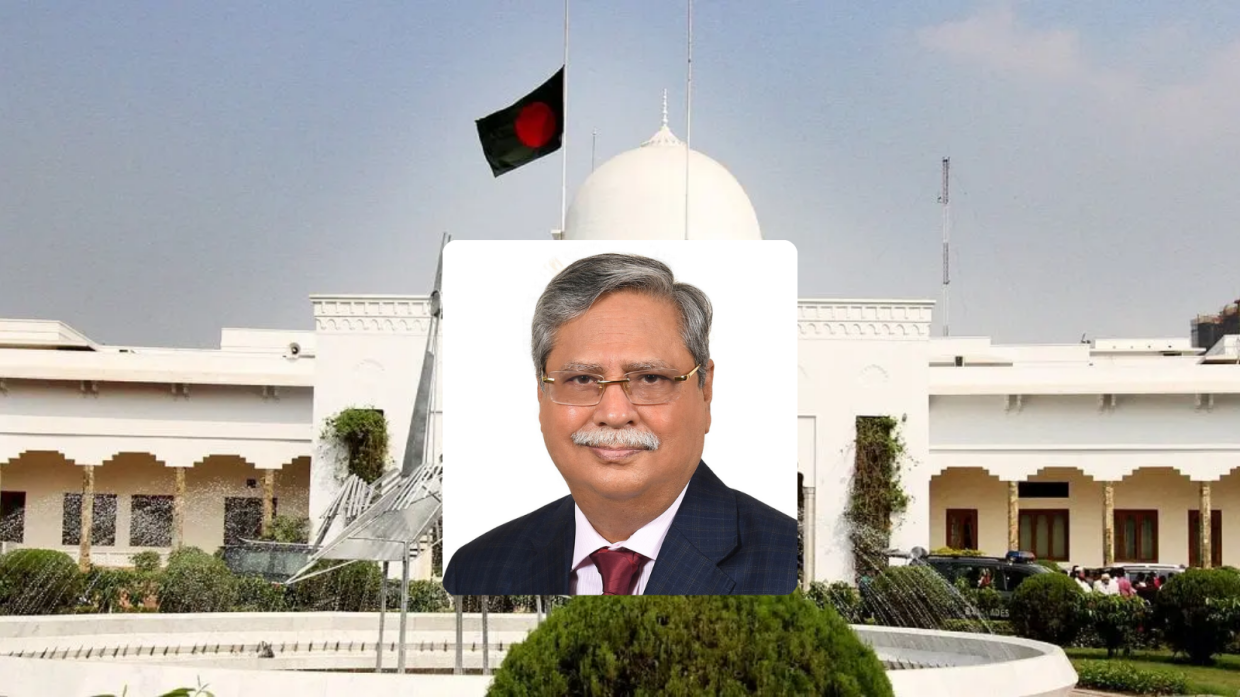
President Mohammed Shahabuddin appears poised to step down from his constitutional office in the coming days, according to multiple sources with knowledge of Bangladesh's internal political dynamics. The development represents a significant shift in the country's power structure as the government seeks to remove the last major institutional holdover from the period before July 2024's transformative mass uprising that fundamentally reshaped the nation's political landscape.
Shahabuddin, who assumed the presidency on April 24, 2023, now finds himself under mounting pressure to vacate a position that has become increasingly untenable within the current political environment. His status as the sole remaining high-level constitutional figure from the pre-uprising era has become a source of friction within governing circles. The timing of his expected departure comes after months of implicit and explicit pressure from the administration, reflecting deeper anxieties about loyalty and institutional alignment during a period of significant political realignment.
The catalyst for accelerated resignation discussions appears linked to a phone conversation Shahabuddin held with exiled former Prime Minister Sheikh Hasina during a medical visit to London in May. Intelligence agencies subsequently learned of the communication, which was perceived as problematic by the government. Rather than an isolated incident, however, government officials characterise the phone call as symptomatic of broader concerns about the president maintaining connections to figures operating from abroad. The very act of communicating with Hasina, regardless of content, apparently triggered official disapproval in an atmosphere of heightened political sensitivity.
Hashina's position has become increasingly precarious and controversial within Bangladesh's current political framework. Living in exile in India since fleeing during the July 2024 uprising, she faces a death sentence and operates under a regime that has banned her Awami League party from all activities. Yet she has publicly announced intentions to return to Bangladesh in December alongside senior party officials, creating significant apprehension within the interim government structure and the incoming BNP-led administration. This prospect of her return and potential formal surrender has elevated anxieties about maintaining institutional purity and preventing the resurgence of Awami League organisational networks.
Senior Bangladesh Nationalist Party officials have indicated that the resignation question involves considerably more complex considerations than a single controversial phone call. Government sources point to reports suggesting Shahabuddin has been attempting to reestablish historical political contacts, an activity viewed with suspicion by the current administration. The government's perspective holds that retaining a constitutional figurehead from the pre-uprising period contradicts the fundamental objectives of the political transition that occurred last year. Institutional continuity with the previous era, rather than representing stability, is now perceived as problematic and potentially destabilising to the revolutionary transformation that uprising supporters envisioned.
The emerging political consensus appears to centre on the principle that Bangladesh's highest constitutional office requires alignment with the current government's transformative agenda. Prime Minister Tarique Rahman underscored this commitment during a July Cabinet meeting by directing authorities to intensify operations against the Awami League and its affiliated youth and student organisations. This directive signals that the government intends to exercise comprehensive institutional control over potential sources of opposition mobilisation, viewing any residual links to previous power structures as unacceptable security vulnerabilities.
Authentic details regarding timing and succession remain unclear, though credible sources suggest the resignation decision could formalise within days. One source close to the president's official residence indicated that formal announcements might materialise imminently, with Shahabuddin maintaining a scheduled meeting with non-resident ambassadors from four countries on July 29. Bangladesh's constitutional framework stipulates that the Speaker of Parliament would assume acting presidential duties pending election of a successor, ensuring institutional continuity through the transition period.
Shahabuddin's own statements have inadvertently revealed his awareness of the precarious nature of his position. During his tenure under the interim government led by Muhammad Yunus in late 2025, he expressed intentions to resign following February parliamentary elections, citing feelings of humiliation at his treatment by that administration. More recently, in a February interview with newspaper outlets, he acknowledged willingness to depart if the new government preferred his resignation while simultaneously offering to remain if the administration desired his continued service. These conditional postures suggest he recognised the contingent nature of his position from the outset.
For Malaysia and the broader Southeast Asian region, Bangladesh's political evolution carries implications for regional stability and democratic development trajectories. The removal of institutional figures perceived as representing previous regimes reflects broader post-uprising commitments to comprehensive political transformation rather than incremental adjustment. The intensity with which Bangladesh's current government polices institutional alignment and monitors potential opposition reorganisation suggests anxieties about the durability of revolutionary change when confronted by exiled leaders maintaining international profiles and expressing intentions to return. These dynamics offer cautionary insights into the challenges of institutionalising political transitions while managing the persistent relevance of displaced elites.
The broader pattern evident in Shahabuddin's expected departure involves systematically consolidating institutional power within the current government's ideological framework. Removing constitutional figures associated with previous administrations represents a decisive assertion of the uprising's transformative objectives. For observers tracking Bangladesh's post-2024 political trajectory, the president's resignation symbolises the government's determination to eliminate institutional ambiguity and establish clear alignment between all constitutional offices and the revolutionary agenda that propelled the interim administration to power.

