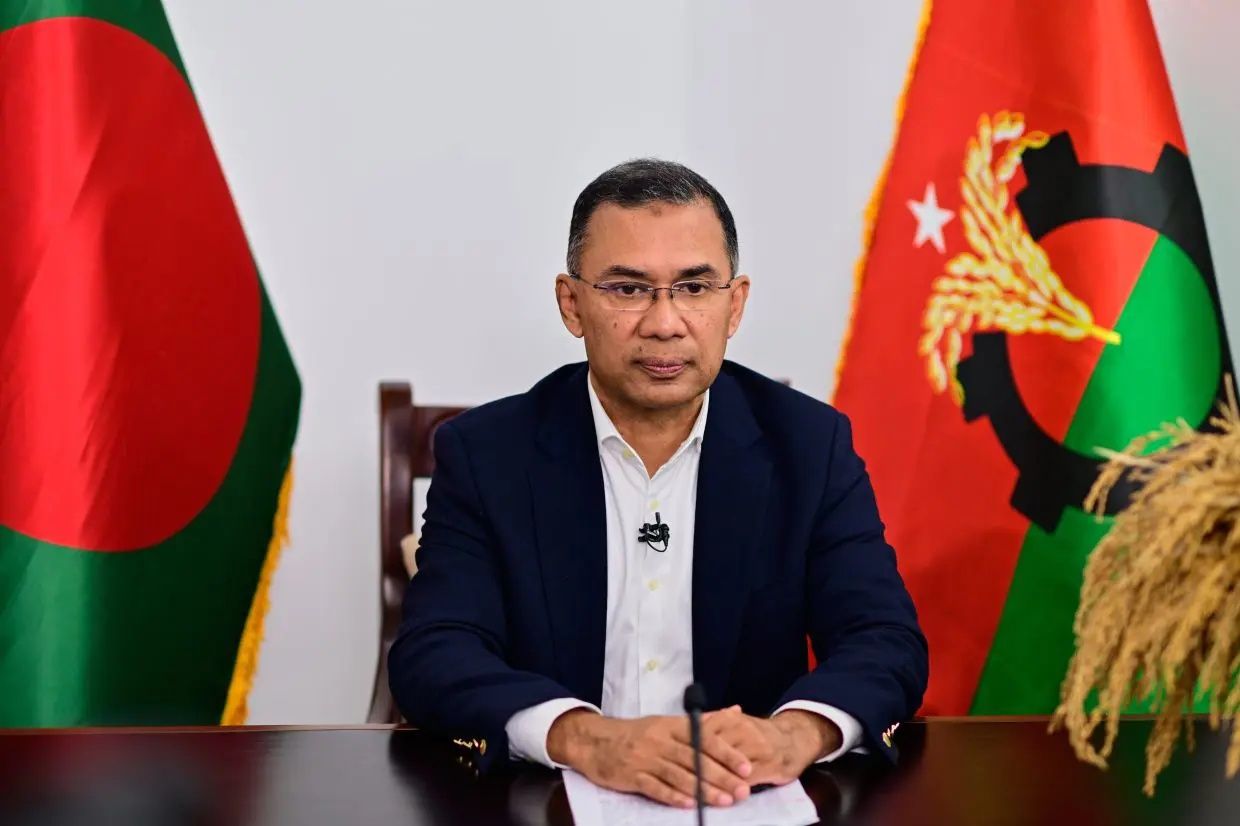
Bangladesh's newly installed Prime Minister Tarique Rahman is stepping onto the international stage with a calculated diplomatic move, choosing Malaysia and China as the destinations for his inaugural foreign visit rather than the traditionally closer neighbour India. The state-run BSS news agency confirmed on Saturday that Rahman will spend Sunday in Malaysia before proceeding to China the following day, marking a symbolic recalibration of Dhaka's diplomatic priorities just months after he assumed office following February's elections.
The timing and sequencing of this tour carry substantial geopolitical weight for the South Asian region. Rahman's decision to bypass India—a nation that shares a lengthy land border with Bangladesh and has historically wielded considerable influence over Dhaka's affairs—reflects the profound shifts that have occurred in Bangladesh's political landscape since last year's anti-government uprising. The new premier appears intent on signalling that his administration, though still establishing its footing, is not beholden to any single regional power and will pursue a balanced, independent foreign policy that considers multiple partnerships as essential to the nation's development.
Malaysia features prominently in this recalibration, and for compelling reasons tied to Bangladesh's massive diaspora community. Approximately 800,000 Bangladeshi nationals work in Malaysia, representing more than one-third of the country's entire foreign workforce. These workers remit substantial sums back to their families and constitute a crucial economic lifeline for millions of Bangladeshi households. The visit underscores Rahman's recognition that strengthening ties with major labour-destination countries is integral to his administration's economic agenda and social stability.
The Beijing leg of the journey carries even more strategic implications, particularly regarding infrastructure and development financing. Foreign ministry officials have indicated that trade expansion and infrastructure projects will dominate discussions with Chinese counterparts. Among the initiatives likely to feature prominently is the long-delayed Teesta River Project, a substantial undertaking designed to restore and manage one of Bangladesh's most vital waterways through comprehensive dredging, embankment reinforcement, and irrigation development. Chinese financial and technical support could prove decisive in advancing a project that has languished despite its importance to Bangladesh's agricultural and water-resource sectors.
This diplomatic overture to Beijing arrives at a moment when Bangladesh's relationship with India has deteriorated markedly. The 2024 uprising that toppled former Prime Minister Sheikh Hasina created a rupture in Indo-Bangladesh relations, as Hasina was widely perceived as aligned with New Delhi's strategic interests. Following her ouster and flight to India, where she remains in hiding, the relationship has been further strained by extradition demands and border management disputes. Bangladesh has repeatedly called for India to return Hasina to face justice, a demand that has gone unmet.
Border tensions have intensified these frictions. India has been systematically pushing back individuals it classifies as illegal migrants across the frontier into Bangladesh, a practice that Bangladeshi officials view as unilateral and destabilising. These episodes reflect the contentious nature of border management between two densely populated nations with a shared frontier of over 4,000 kilometres. The incoming flow of displaced persons has created administrative and social challenges for Bangladesh, straining local resources in border areas and complicating Dhaka's ability to manage its population effectively.
Rahman's pivot towards Malaysia and China should be understood partly as a response to these mounting pressures. By cultivating relationships with major Southeast Asian and Asian powers, the new government is attempting to reduce its dependence on India and create a more diversified diplomatic environment. This approach acknowledges that Bangladesh, as a nation of 170 million people with substantial economic potential, need not centre its foreign policy exclusively around any single neighbour.
The broader strategic context involves the India-China rivalry that has defined South Asian geopolitics for decades. India has long monitored China's expanding influence in the region with considerable wariness, viewing Chinese investment and engagement as a counterweight to Indian primacy. Bangladesh's outreach to Beijing, therefore, represents an opportunity for the newly elected Rahman administration to signal its independence while simultaneously securing economic partnerships that could accelerate development.
The foreign ministry's characterisation of these visits as a major diplomatic initiative aimed at strengthening economic partnerships reflects how the new government intends to frame its foreign relations. Rather than viewing foreign policy through a purely security or strategic lens, Rahman's team appears committed to emphasising economic cooperation and development as the foundation for regional relationships. This approach may prove more sustainable than engaging in the zero-sum competition that has sometimes characterised South Asian diplomacy.
For Malaysian policymakers and the broader Southeast Asian community, Rahman's arrival signals that Bangladesh intends to deepen its engagement with the region beyond traditional labour migration channels. Enhanced trade, investment, and infrastructure cooperation could emerge from these conversations, potentially positioning Malaysia as a facilitator of Bangladesh's development aspirations and strengthening ties between South and Southeast Asia.
The visit also provides Rahman's relatively new administration with an opportunity to demonstrate international engagement and competence on the global stage. Having inherited a government that emerged from crisis, establishing productive relationships with key regional and international partners helps solidify legitimacy both domestically and internationally. The success or failure of these inaugural diplomatic initiatives could shape the trajectory of Bangladesh's foreign relations for years to come.
As Bangladesh navigates the complex regional environment following its recent political upheaval, the Rahman government's willingness to pursue multiple partnerships rather than defaulting to established alignments suggests a pragmatic approach to national interest. This inaugural tour may well represent the beginning of a recalibration that extends well beyond these two nations, potentially reshaping how Bangladesh positions itself within Asian geopolitics.

