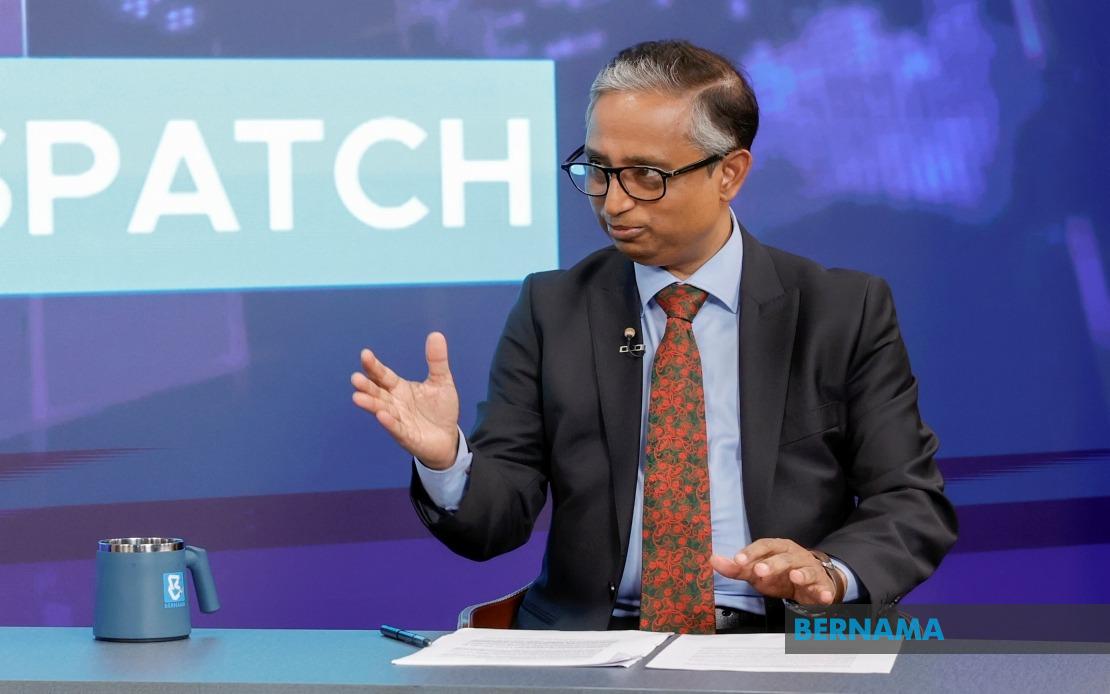
Bangladesh is positioning Malaysia as a cornerstone of its regional diplomacy, with the recent diplomatic visit by Prime Minister Tarique Rahman underscoring Dhaka's strategic priorities in Southeast Asia. The choice to make Malaysia his first destination for an official bilateral visit carries symbolic weight, reflecting how Bangladesh's new leadership views the relationship. Bangladesh High Commissioner to Malaysia Manjurul Karim Khan Chowdhury told Bernama TV that despite the visit's brevity—less than 24 hours—it achieved substantial results and demonstrated both governments' determination to transform bilateral engagement into a genuinely robust partnership across multiple sectors.
Chowdhury's remarks emphasise that Bangladesh perceives Malaysia through the lens of trusted partnership rather than transactional engagement. This framing is significant for a country emerging from significant political transitions and seeking to establish credibility within regional institutions. The High Commissioner articulated that Bangladesh views Malaysia not merely as a trading partner but as a dependable ally willing to support Dhaka's regional ambitions. The visit, conducted at the invitation of Prime Minister Datuk Seri Anwar Ibrahim, created momentum that both capitals intend to sustain through concrete institutional mechanisms and expanded cooperation frameworks.
At the heart of the bilateral agenda lies a free trade agreement that both nations have committed to fast-tracking, with negotiations targeted for completion by 2027. This timeline reflects pragmatic ambition—ambitious enough to signal serious intent but realistic given the complexities of trade negotiation in the ASEAN context. For Bangladesh, the potential benefits are substantial. Currently, Bangladeshi products face tariff rates approaching 32 per cent in the Malaysian market, a barrier that significantly constrains competitiveness. Reducing these tariffs through a bilateral FTA would dramatically improve market access and encourage Bangladeshi exporters to view Malaysia not as a difficult market but as a gateway to broader ASEAN commerce.
The trade relationship already demonstrates meaningful scale. Bangladesh ranked as Malaysia's 28th largest trading partner globally in 2025, though its position within South Asia is more prominent—second only to India. The bilateral trade volume reached RM12.18 billion (US$2.84 billion) in 2025, reflecting established commercial links. However, the composition of this trade tells an important story about comparative advantage. Malaysia's exports to Bangladesh, valued at RM10.08 billion, centre on petroleum products, reflecting Malaysia's energy resources and refining capabilities. Bangladeshi exports back to Malaysia, totalling RM2.10 billion, consist primarily of textiles, apparel and footwear—sectors where Bangladesh possesses substantial manufacturing capacity and labour cost advantages.
Chowdhury explicitly encouraged Malaysian investment in Bangladesh's infrastructure expansion, highlighting opportunities that extend beyond traditional sectors. Bangladesh is pursuing modernisation across telecommunications, road and bridge construction, advanced manufacturing facilities, and digital economy development. For Malaysian investors and companies, Bangladesh represents a substantial market of over 170 million people with rising consumer demand and an expanding middle class. The infrastructure development pathway offers entry points for Malaysian firms with expertise in these sectors, particularly those looking to establish regional manufacturing hubs or distribution networks.
The investment angle carries particular relevance for Malaysian firms contemplating ASEAN-wide expansion strategies. Bangladesh could serve as a manufacturing base for products ultimately destined for ASEAN markets, allowing companies to leverage Bangladesh's lower labour costs while maintaining proximity to ASEAN distribution networks. Chowdhury's comment that Malaysian companies should consider Bangladesh as a production platform for goods sold across ASEAN indicates how both capitals are conceptualising the relationship—not as bilateral exchange but as part of a regional value chain.
Beyond trade and investment, Bangladesh is pursuing deeper institutional integration with ASEAN itself. The country is actively seeking Malaysia's support for its aspiration to achieve sectoral dialogue partner status within ASEAN. This represents a significant diplomatic objective for Bangladesh, as such status would grant it formal mechanisms for engagement on specific issues while stopping short of full membership. Malaysia's backing would prove instrumental, given its standing within ASEAN and its capacity to build consensus among member states. Chowdhury indicated that Bangladesh views itself as capable of making meaningful contributions within such a framework, suggesting the country sees itself as offering value to ASEAN in areas like textile trade, labour markets, and development cooperation.
The timing of this diplomatic intensification reflects Bangladesh's broader regional recalibration following recent domestic political changes. By prioritising Malaysia for Tarique Rahman's first bilateral visit, Dhaka is signalling that it intends to anchor itself more firmly within Southeast Asian structures and partnerships. Malaysia, as ASEAN's current influential member with established diplomatic networks, represents an ideal entry point for this strategy. The relationship also benefits from historical and cultural ties, shared Islamic heritage, and complementary economic structures that reduce friction in bilateral dealings.
For Malaysia, deepening engagement with Bangladesh offers strategic advantages in its own regional positioning. A stronger Bangladesh partnership enhances Malaysia's influence within South Asia and supports ASEAN's broader engagement with the subcontinent. Bangladeshi textile and manufacturing sectors offer Malaysian firms opportunities to participate in global value chains while maintaining ethical and transparent operations. Additionally, stronger ties with Bangladesh reinforce Malaysia's role as a bridge between South Asia and Southeast Asia—a positioning that enhances Kuala Lumpur's diplomatic influence.
The trajectory outlined through these visits and agreements suggests that both nations recognise untapped potential in their relationship. The stated commitment to conclude FTA negotiations by 2027 provides a concrete benchmark against which progress can be measured. If successful, this agreement could serve as a template for deepening Malaysia's engagement with other South Asian countries while simultaneously helping Bangladesh diversify its export markets and reduce tariff barriers. The infrastructure investment opportunities complement the trade framework, creating multiple channels through which bilateral value can accumulate.
Looking forward, the success of this partnership intensification will depend on translating diplomatic momentum into institutional deliverables. The FTA negotiations will be critical; their timing and complexity will test both governments' capacity to balance domestic constituencies with regional ambitions. Malaysia's support for Bangladesh's ASEAN dialogue partner aspirations could prove equally consequential, potentially opening new avenues for Bangladesh's engagement with Southeast Asia. Ultimately, the relationship between Malaysia and Bangladesh exemplifies how established regional powers can foster partnerships with emerging players, creating structures that benefit both parties while strengthening the broader regional architecture.

