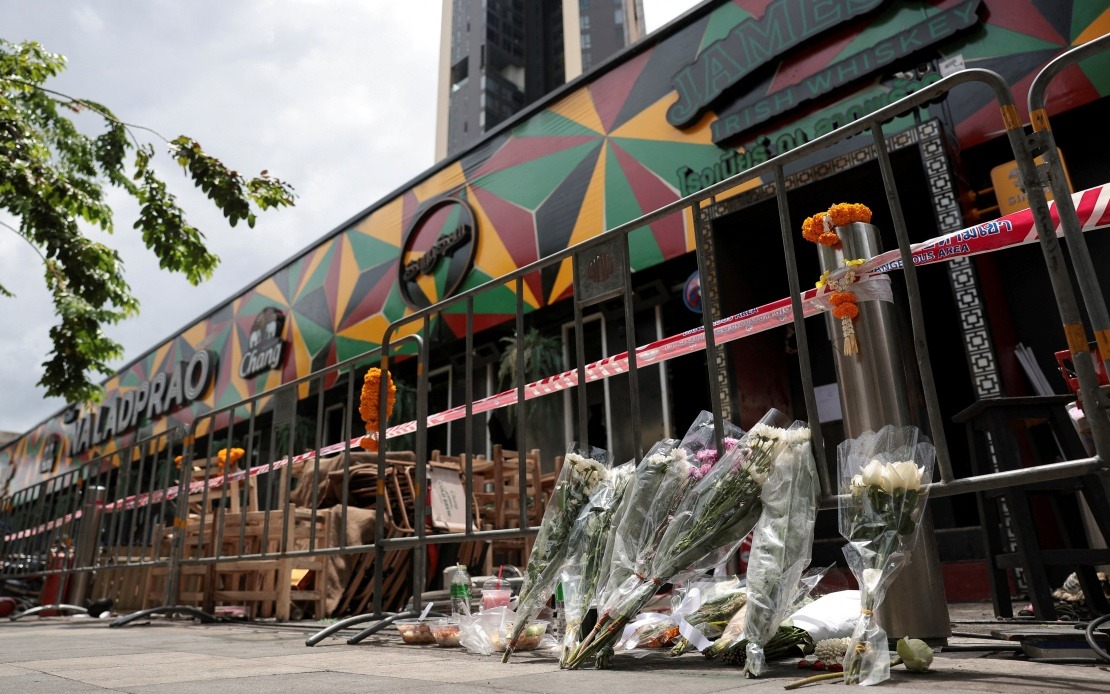
Thailand's deadliest nightlife disaster in recent years has claimed 32 lives after two critically injured survivors passed away in hospital, bringing the cumulative casualty count from Monday night's catastrophic blaze at Rong Beer Na Lat Phrao in Bangkok's Chatuchak district. The Bangkok Emergency Medical Centre confirmed on Wednesday that the latest fatalities occurred across Paolo Kaset Hospital and Nopparat Rajathanee Hospital, adding to the five deaths that had already been recorded among hospitalised patients since the fire erupted shortly before midnight.
The confirmed injury toll now stands at 79 individuals, with medical teams working across multiple facilities to treat the wounded. Among those still receiving care, 44 have been discharged as their conditions improved, while 30 remain hospitalised. The situation remains particularly grave in intensive care units, where 15 patients continue to receive critical treatment, whilst a further 15 occupy general ward beds. These figures underscore the scale of the emergency response required and the ongoing burden on Thailand's healthcare system.
The rapid escalation of the death toll within 48 hours reflects both the severity of the initial incident and the critical condition of many survivors admitted to hospital. Each subsequent fatality represents a person who survived the immediate fire but whose injuries—ranging from severe burns to smoke inhalation complications—ultimately proved fatal. The transition from emergency response to longer-term hospital care has thus become a continued tragedy for families awaiting news and for medical staff battling to save lives.
In response to the disaster, Thai Prime Minister Anutin Charnvirakul issued directives on Tuesday mandating the Ministry of Interior to execute a comprehensive nationwide inspection regime. This coordinated effort involves multiple government bodies including the Bangkok Metropolitan Administration, local administrative organisations, the Department of Public Works and Town & Country Planning, the Royal Thai Police, and additional relevant agencies. The scope of this directive signals that policymakers view the incident not as an isolated mishap but as a symptom of systemic safety deficiencies requiring urgent remediation across the country's built environment.
Investigators have identified several critical areas of concern that may have contributed to the catastrophic spread of the fire and the high casualty count. Blocked or inadequate emergency exits appear central to the tragedy, as patrons and staff found themselves unable to evacuate efficiently when the blaze took hold. The interior furnishings and construction materials throughout the venue have also drawn scrutiny, with evidence suggesting that flammable substances may have accelerated the fire's progression through the space. Additionally, electrical faults represent another avenue of inquiry, as faulty wiring or overloaded circuits could have initiated the blaze or contributed to its rapid development.
The specific location and operational characteristics of Rong Beer Na Lat Phrao place this incident within a broader context of safety concerns affecting Thailand's entertainment sector. Many such venues operate in older buildings or temporary structures with limited oversight, creating conditions where fire safety codes may be inadequately enforced or poorly designed. The late-night nature of the establishment meant that at the time of ignition, the venue likely operated at significant capacity with patrons unfamiliar with emergency procedures, amplifying the danger once evacuation became necessary.
For Malaysian readers and regional observers, this tragedy carries immediate relevance given the similar characteristics of many entertainment venues across Southeast Asia. Nightclubs, karaoke bars, and beer halls operating in shared commercial buildings face comparable structural and regulatory challenges. Thailand's swift response—mobilising a nationwide inspection regime—offers a template that neighbouring countries including Malaysia might consider adopting to assess their own venue safety standards and building code compliance.
The investigation into root causes remains ongoing, with authorities still gathering evidence from the site and interviewing survivors and witnesses. Determining whether the fire originated from electrical malfunction, negligent operation, or deliberately set circumstances will carry significant legal implications. Should negligence or violation of safety codes be established, venue operators, building management, and potentially government inspectors may face criminal accountability, setting precedents for similar cases across the region.
The broader implications extend to Thailand's tourism and hospitality sectors, which generate substantial economic returns but now face heightened scrutiny regarding safety standards. Venue closures, mandatory renovations, and stricter licensing requirements—likely consequences of comprehensive inspections—will create short-term economic disruption but may ultimately strengthen industry credibility and consumer confidence. For tourists and locals alike, increased oversight could translate to reduced risk when patronising entertainment venues.
This incident also highlights the ongoing tension between rapid commercial development and robust regulatory enforcement in Southeast Asia. Many entertainment venues expand or operate without contemporaneous safety upgrades, creating dangerous gaps between building capacity and adequate fire suppression systems, emergency lighting, and exit pathways. The lessons from this tragedy suggest that preventing similar disasters requires not only reactive investigations but proactive structural enforcement and regular safety audits across all entertainment premises.
The human cost remains the primary focus for Thai officials and the international community. Families of the deceased face immense grief, whilst survivors managing physical and psychological trauma require sustained medical and mental health support. Thailand's government will need to coordinate victim compensation, support services, and long-term care arrangements. The 32 deaths represent preventable losses that underscore the critical importance of rigorous, uncompromised safety standards in any environment where public gathering occurs.

