Bahrain has refrained from activating a $5.3 billion currency swap with the United Arab Emirates despite mounting economic strain from escalating tensions in the Middle East, according to the country's chief development official. The decision to preserve the financial lifeline underscores Bahrain's cautious approach to managing its crisis response while signalling confidence that immediate liquidity needs can be met through existing reserves and operational cash flows.
Noor bint Ali Alkhulaif, Minister of Sustainable Development and Chief Executive of the Bahrain Economic Development Board, confirmed this week that the swap agreement inked in April remains unused. She acknowledged the inherent disappointment of the trajectory that the kingdom's fiscal year has taken, particularly given that 2024 was envisioned as a period for consolidating economic reforms and expanding the foundation for long-term growth. The resurgence of regional hostilities has disrupted carefully laid planning frameworks across multiple sectors of the economy.
The geopolitical turbulence has extracted a measurable toll on Bahrain's macroeconomic outlook. Ratings firm S&P Global projects that the broader conflict in the region will trigger a contraction of approximately three percent in gross domestic product this year, whilst simultaneously widening the fiscal deficit to nearly 8.5 percent of GDP. These figures place Bahrain among the most economically vulnerable Gulf states, given its reliance on shipping corridors and tourism revenue that have both experienced disruption since tensions escalated.
Despite these headwinds, Alkhulaif maintained that recovery mechanisms are functioning more effectively than feared. Large-scale manufacturing and logistics operators have begun routing shipments around the Strait of Hormuz rather than through traditional pathways, preserving commercial connectivity across global supply chains. Regional tourism, which represented roughly 90 percent of the kingdom's 15 million annual visitor arrivals before the latest escalation, has substantially rebounded toward pre-conflict levels, suggesting that confidence among travellers from neighbouring states remains relatively intact.
The kingdom's foreign exchange position has nonetheless come under pressure, with reserves declining to approximately $3 billion—the lowest point since the depths of the COVID-19 pandemic. Yet the decision not to exercise the UAE swap facility demonstrates Alkhulaif's assessment that the current financial position, though constrained, remains defensible without triggering the formal activation of emergency liquidity arrangements. Such restraint carries psychological and market-signalling value, potentially reinforcing investor perceptions that Bahrain's situation, while serious, does not constitute an acute crisis requiring extraordinary measures.
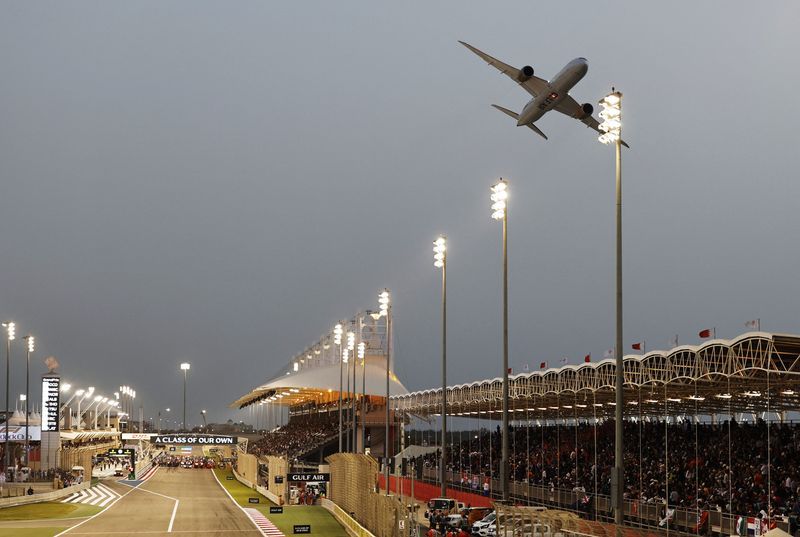
Beyond currency management, Bahrain is simultaneously pursuing restoration of its Formula One Grand Prix to the international racing calendar. The event was postponed in March alongside Saudi Arabia's maiden F1 race when regional hostilities erupted, leaving a gap in the sport's competitive schedule. Officials have identified the weekend of October 3-4 as the most plausible window for reinstatement, positioned strategically between the Azerbaijan Grand Prix in Baku and the Singapore Grand Prix scheduled for October 11. This timing would provide technical and logistical feasibility whilst allowing adequate preparation intervals for competing teams.
Alkhulaif confirmed that preliminary discussions have commenced regarding the reintegration of cancelled races into the season structure, though no formal confirmation has yet materialised. Formula One's governing bodies and team leadership require advance notice to arrange personnel deployments, equipment logistics, and broadcast arrangements, compelling a decision within the coming weeks. The uncertainty reflects ongoing sensitivity regarding regional security conditions, as any major international sporting event depends upon sustained stability and the confidence of travelling competitors, support staff, and spectators.
A successful restoration of the Bahrain Grand Prix would deliver substantial economic stimulus. The event typically draws approximately 105,000 spectators across its weekend duration, with ten to fifteen percent representing affluent international attendees whose spending multiplies economic impact beyond ticket revenues. Such visitors contribute to hotel occupancy, dining establishments, retail, and ancillary services throughout the kingdom, generating employment and supporting local businesses during a critical recovery phase.
Looking toward the medium term, Bahrain's Formula One prominence appears positioned for enhancement. Calendar adjustments currently under review suggest that Ramadan's earlier scheduling in the 2026-27 season creates opportunity for Bahrain to reclaim the prestigious opening race of that championship cycle. The kingdom would also host the mandatory pre-season testing programme, concentrating automotive industry attention and international media coverage on its facilities and infrastructure. Such elevation of Bahrain's role within global motorsport would amplify its positioning as a regional hub for premium sporting events and tourism experiences.
The convergence of these factors—prudent financial management, economic stabilisation indicators, and strategic engagement with international sporting bodies—reflects a calculated effort to navigate the turbulent present whilst securing competitive advantages for the medium term. Whether the combination ultimately succeeds depends substantially on whether regional tensions continue to moderate in the coming months, allowing confidence to spread across both investor communities and consumer segments throughout the Persian Gulf and beyond.

