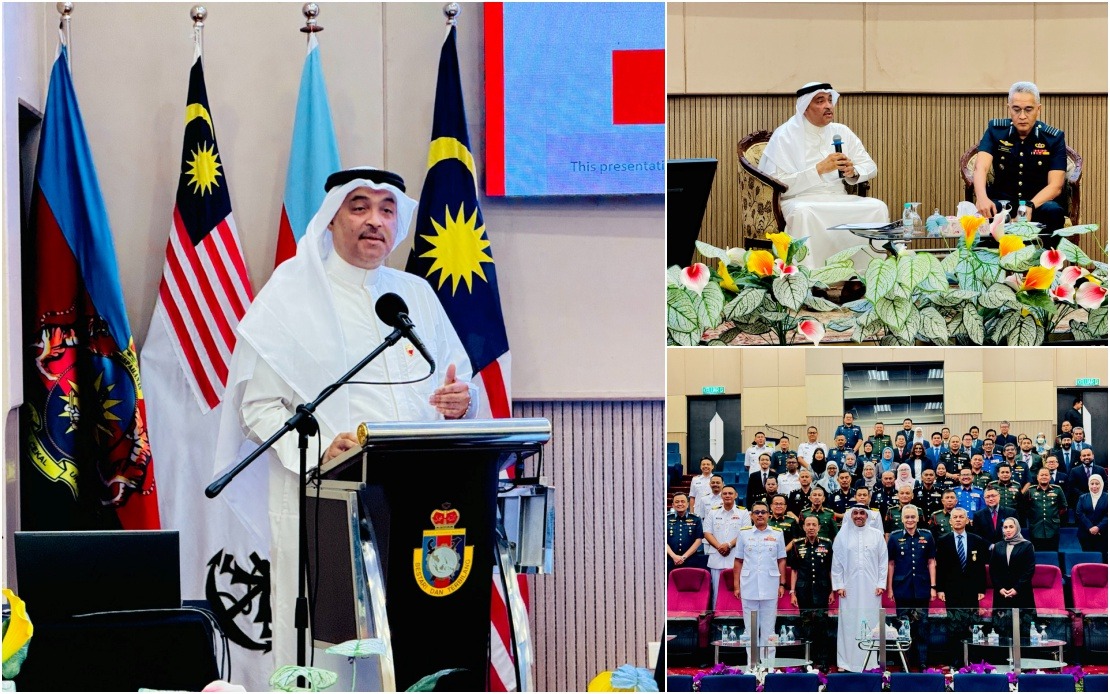
The relationship between Bahrain and Malaysia is entering a more substantive phase of cooperation, with both Gulf and Southeast Asian perspectives converging on matters of regional security and economic development. Bahrain's Ambassador to Malaysia Dr Waleed Khalifa Al Manea articulated this vision while addressing senior defence and security officials at Putrajaya's National Resilience College, signalling that partnership between the two nations extends well beyond ceremonial exchanges into practical collaboration on issues affecting their respective regions and global maritime commerce.
The foundation of this strengthening partnership rests on personal rapport and institutional commitment at the highest levels. His Majesty King Hamad bin Isa Al Khalifa of Bahrain and His Majesty Sultan Ibrahim of Malaysia have cultivated a relationship that creates space for deeper engagement between their respective administrations. Equally significant is the dynamic between Bahrain's Crown Prince and Prime Minister, His Royal Highness Prince Salman bin Hamad Al Khalifa, and Malaysia's Prime Minister Datuk Seri Anwar Ibrahim, whose sustained efforts have moved bilateral cooperation from symbolic gestures toward substantive initiatives affecting trade, security coordination, and diplomatic representation.
A particularly symbolic expression of this advancing partnership materialised with Malaysia's selection as host for the 2026 Formula 1 Gulf Air Bahrain Grand Prix. While motor racing may appear peripheral to state relations, such international sporting events function as platforms for showcasing bilateral confidence and attracting sustained media attention to cooperative frameworks. For Malaysia, hosting a prestigious Gulf-backed racing event signals integration into Middle Eastern networks and appeals to investors and tourists from that region. For Bahrain, the choice underscores recognition of Malaysia's significance as a Southeast Asian power and a Muslim-majority democracy with growing geopolitical influence.
The strategic dimensions of this partnership become clearer when examining the security landscape that prompted Ambassador Al Manea's visit to Malaysia's military establishment. The Middle East, particularly the Gulf region, faces mounting pressures from Iranian military adventurism and threats to critical infrastructure. Bahrain, positioned strategically along key shipping lanes and home to significant international naval installations, bears immediate consequences from regional instability. These challenges resonate with Malaysia's own maritime security concerns, particularly regarding freedom of navigation through vital chokepoints that sustain Southeast Asian trade and energy supplies.
During his presentation, Al Manea provided specifics on Iran's pattern of military provocations against Gulf Cooperation Council member states, emphasising not merely state-to-state confrontations but deliberate targeting of civilian populations and essential infrastructure. Such attacks extend beyond immediate geographical impact; they create ripple effects throughout global commerce and energy markets, directly affecting Malaysia's economic interests and ASEAN nations' prosperity. By articulating these vulnerabilities in a Malaysian security forum, Bahrain sought to broaden understanding among Southeast Asian defence communities regarding the interconnectedness of Gulf stability and regional prosperity.
Bahrain's approach to navigating these turbulent waters combines military preparedness with diplomatic initiative. The kingdom advocates for comprehensive strategies that simultaneously defend state sovereignty, protect civilian populations, document violations for international accountability, and advance collective diplomatic efforts. This multifaceted approach appeals to Malaysian sensibilities, given the country's own experience balancing security imperatives with commitment to multilateralism and rules-based international order. Both nations understand that raw military power alone cannot resolve the deeper sources of regional tension; diplomatic engagement and coordinated international responses remain essential.
Malaysia's co-sponsorship of UN Security Council Resolution 2817 demonstrates concrete alignment with Bahrain's security objectives. This resolution affirmed the sovereignty rights of states targeted by Iranian attacks, insisted on the protection of civilians from military strikes, and called for cessation of provocative actions. By supporting this initiative, Malaysia positioned itself as upholding international norms regarding maritime security and civilian protection while also implicitly signalling that Southeast Asian nations have stakes in Gulf stability. The resolution reflected emerging consensus that attacks on shipping and coastal infrastructure constitute threats to the international community beyond the immediate region.
Bahrain's presidency of the UN Security Council in April provided opportunity to advance international mechanisms for safeguarding maritime navigation and protecting critical infrastructure. These initiatives carry particular significance for Malaysia and ASEAN, whose economies depend heavily on uninterrupted passage through strategic waterways. When the Arabian Gulf faces instability, shipping costs rise, insurance premiums climb, and supply chain disruptions cascade through Southeast Asian economies. Malaysia's recognition of this reality motivated its active participation in UN deliberations on maritime security and freedom of navigation.
The formal venue for Al Manea's presentation—the National Resilience College, part of Malaysia's National Defence Studies Centre—underscores how seriously both nations view this strategic dialogue. Addressing senior military commanders, police leadership, maritime enforcement officials, government ministers and defence academics indicated that this partnership encompasses the full spectrum of security establishments. The breadth of Malaysian participants reflected official acknowledgment that Middle Eastern developments warrant close attention from diverse security agencies and policy communities.
For Malaysia, engagement with Bahrain serves several strategic interests beyond immediate bilateral relations. It demonstrates capability to operate effectively within Middle Eastern diplomatic and security frameworks while maintaining Southeast Asian identity and commitments. It signals to Gulf investors and trading partners that Malaysia offers sophisticated understanding of regional security challenges. Simultaneously, Malaysian involvement in discussions about maritime security and international maritime law reinforces the country's influence in shaping global governance of shared resources and shipping lanes. These intersecting interests make Bahrain partnership valuable not as isolated relationship but as component of Malaysia's broader positioning within evolving international system.
Looking forward, the deepening partnership appears positioned for expansion across multiple domains. Economic cooperation through trade and investment has potential for growth, particularly in sectors where Bahrain's financial expertise and Malaysian manufacturing capabilities could create complementary advantages. Educational and cultural exchanges can foster deeper mutual understanding among younger generations. Perhaps most significantly, continued security and defence cooperation promises to enhance both nations' capacity to address transnational challenges ranging from maritime piracy to terrorism and weapons trafficking. The strategic partnership between Bahrain and Malaysia reflects not nostalgia for past cooperation but recognition that contemporary regional challenges demand coordinated responses across geographically diverse nations sharing commitment to stability, prosperity and international law.

