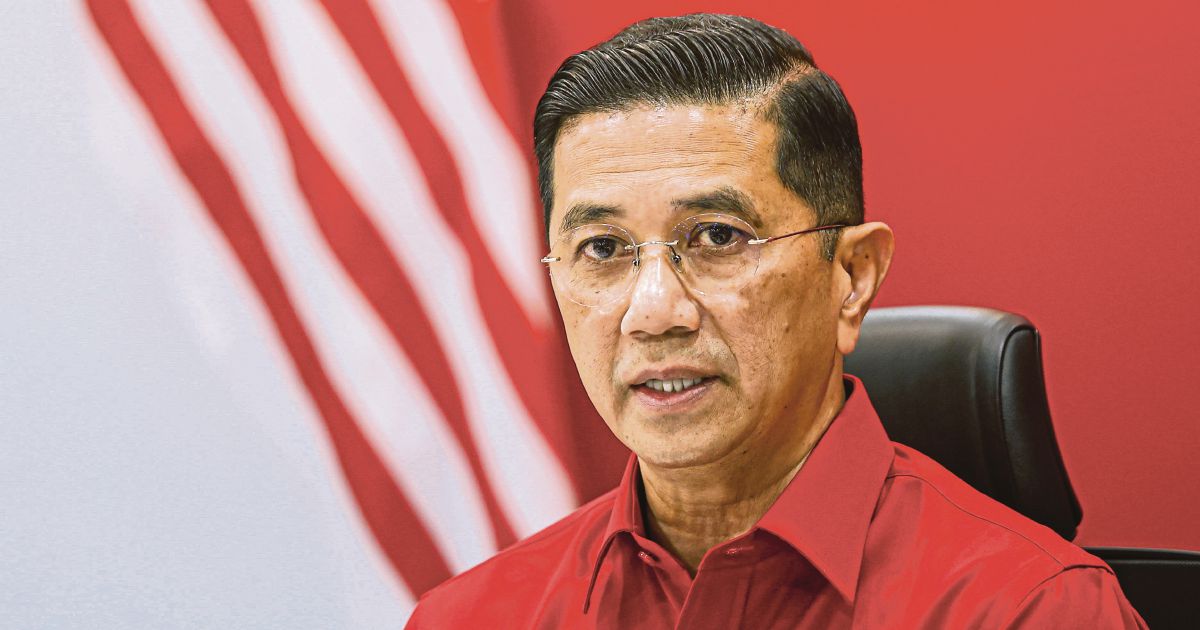
Tension within Malaysia's opposition coalition continues to escalate as Bersatu firmly disputes claims from PAS president Tan Sri Abdul Hadi Awang regarding its membership status in Perikatan Nasional (PN). The disagreement centres on whether Bersatu's membership in the coalition automatically lapsed following Tan Sri Muhyiddin Yassin's public announcement that the party intended to establish a new political alliance. This public rebuke from the coalition's second-largest party underscores deepening fractures within PN, a bloc that was once positioned as a significant counterweight to the governing Pakatan Harapan administration.
The dispute carries substantial weight in Malaysian political circles, where coalition membership determines parliamentary strength and negotiating leverage. Bersatu's response, articulated through party leadership, directly challenges the legitimacy of Hadi's unilateral declaration about PN membership status. The controversy illuminates a fundamental question about coalition governance: whether a member party can be deemed to have automatically severed ties without formal procedures or mutual agreement. This ambiguity has left observers uncertain about PN's actual composition and its viability as a cohesive political force heading toward the next general election.
Muhyiddin's initiative to form a new coalition represents a significant strategic shift that has evidently caught other PN partners off guard. The announcement suggests fundamental disagreements about the coalition's direction and leadership, with Bersatu apparently seeking a different political alignment than what PN currently offers. This recalibration could reshape the opposition landscape substantially, potentially creating new configurations that pit different ideological and strategic camps against each other. The timing of this manoeuvre, amid broader discussions about electoral cooperation and political realignment, suggests calculations about which partnerships might prove most advantageous in forthcoming political contests.
For PAS, Hadi's assertion that Bersatu's membership has automatically terminated likely stems from frustration over being sidelined in such consequential strategic decisions. As the coalition's largest component, particularly in terms of parliamentary representation and grassroots organisation, PAS may view Muhyiddin's unilateral move as an affront to collective decision-making processes. The party's attempt to declare membership lapsed could be interpreted as a defensive posture aimed at reasserting control over PN's narrative and preventing its dissolution through unilateral action by another member.
Bersatu's defiance of this claim underscores the complexity of Malaysia's coalition politics, where formal structures often remain unclear and procedures for addressing major disputes are inadequately defined. As the party that currently holds significant institutional positions, including representation in state governments and federal parliament, Bersatu's position carries material weight. The party's rejection of Hadi's assertion implies confidence that it can maintain its standing within PN's framework regardless of PAS objections, or that it is prepared to operate independently if necessary.
The Malaysian political context makes this dispute particularly consequential. With the government currently operating with a razor-thin parliamentary majority, any significant shift in opposition bloc composition carries implications for legislative stability and policy-making capacity. Should PN fracture or undergo substantial reconfiguration, the balance of power in parliament could shift unpredictably, potentially triggering cascading changes in government formation and coalition dynamics. The prospect of a weakened or divided opposition paradoxically strengthens the government's negotiating position, even as it raises questions about whether Malaysia's political institutions can withstand continued fragmentation.
Regionally, this Malaysian coalition dispute reflects broader patterns observable across Southeast Asian democracies, where coalition partners frequently struggle with internal cohesion and strategic alignment. The challenges facing PN mirror difficulties encountered by opposition coalitions in Thailand, Indonesia, and the Philippines, where partner parties often prioritise factional interests over collective objectives. Malaysia's experience suggests that stable multi-party coalitions require robust institutional mechanisms, clear dispute resolution procedures, and shared ideological commitments—elements that PN appears to lack.
For voters and observers monitoring Malaysian politics, these developments signal continued instability within opposition structures. The capacity of PN to present itself as a credible alternative government depends substantially on its ability to resolve internal disputes and project coherent policy platforms. The current public disagreement between Bersatu and PAS undermines that objective significantly, suggesting to electorate that the coalition lacks the unity and organisational discipline necessary to govern effectively. This perception could have lasting consequences for opposition electoral prospects, regardless of how the immediate membership dispute is ultimately resolved.
Moving forward, formal mechanisms for addressing coalition disagreements may become increasingly necessary. The current pattern of public disputes and unilateral declarations suggests that PN operates without adequate protocols for managing internal conflicts. Whether the coalition can establish such structures while maintaining operational unity remains uncertain. The outcome of this particular dispute between Bersatu and PAS could set precedents that either strengthen PN's institutional framework or accelerate its fragmentation, with significant implications for Malaysian electoral politics in the medium term.

