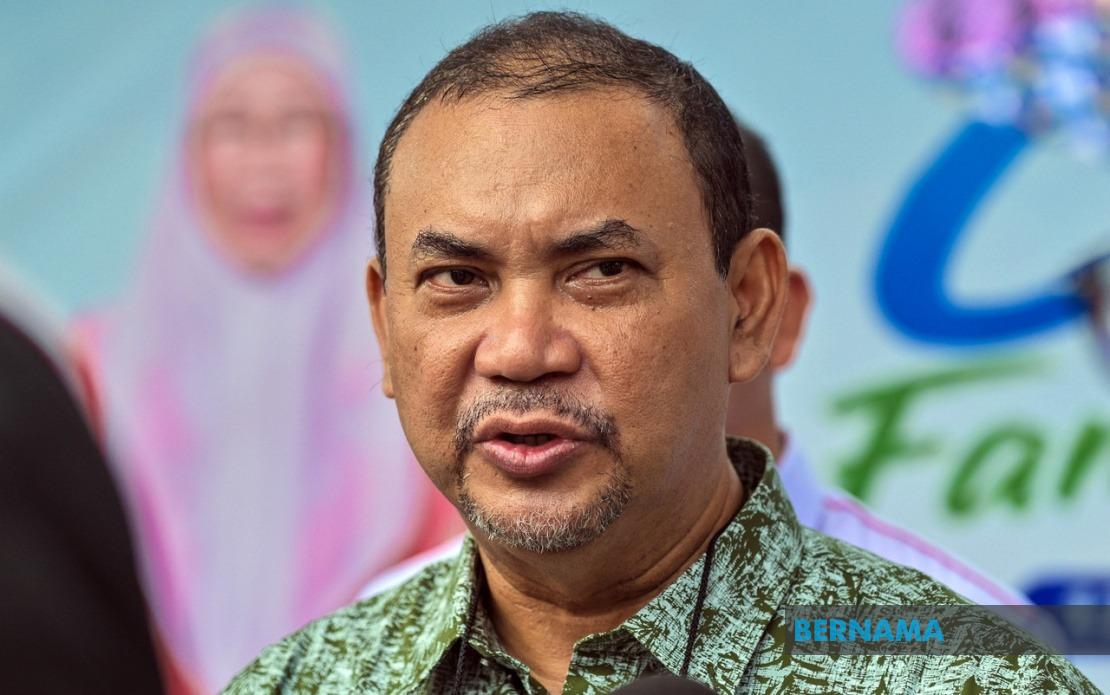
Datuk Azman Abidin, who recently assumed the role of Ampang Parliamentary Constituency Coordinator while serving as Prime Minister Datuk Seri Anwar Ibrahim's Political Secretary, has made a public commitment to overhaul the welfare assistance framework serving the constituency's residents. The appointment signals the government's focus on strengthening the grassroots delivery mechanism in one of the Klang Valley's prominent constituencies, which encompasses several urban and semi-urban areas with diverse socioeconomic needs.
In a statement released through social media, Azman outlined a comprehensive approach to ensuring that government welfare initiatives reach beneficiaries with minimal bureaucratic friction. His strategy centres on establishing clearer channels of communication and coordination, recognising that the proliferation of assistance schemes across different ministries and agencies has historically created confusion among potential applicants seeking support. By consolidating applications through his office, the coordinator hopes to eliminate redundancies and accelerate the processing timeline for residents in need of government aid.
The coordinating mechanism will leverage the Implementation Coordination Unit (ICU) under the Prime Minister's Department as the central hub for managing and tracking welfare applications originating from Ampang. This institutional framework represents a deliberate effort to formalise what has often been an ad-hoc process, introducing measurable accountability metrics and documented workflows. For Malaysian residents accustomed to navigating fragmented government service delivery, such a structured approach could potentially serve as a pilot model for other constituencies, particularly given the Prime Minister's emphasis on whole-of-government coordination during recent policy announcements.
Azman's commitment extends beyond top-down government structures to encompass collaborative engagement with local stakeholders who maintain direct community connections. The coordination framework specifically includes state assemblymen representing divisions within the Ampang constituency, community leaders, grassroots organisations, and religious leaders who often serve as informal welfare brokers within their respective constituencies. This multi-layered approach acknowledges that effective welfare delivery requires not merely administrative efficiency but genuine trust and legitimacy earned through longstanding relationships with constituents.
The emphasis on professionalism, integrity, and accountability in Azman's statement reflects broader governance themes that have gained prominence in Malaysian political discourse. By explicitly articulating these principles, the coordinator signals that the office will maintain records of all applications, provide regular updates to applicants, and establish clear criteria for assistance allocation. Such transparency measures are particularly important in the Malaysian context, where perceptions of nepotism or political bias in resource distribution have historically undermined public confidence in government programmes, especially during transition periods when new administrators assume control of local services.
For Ampang residents, the practical implication is the establishment of a dedicated focal point for welfare inquiries. Applications can now be submitted directly to the Office of the Prime Minister's Political Secretary, creating a single gateway rather than requiring constituents to navigate multiple government departments. This approach reduces information asymmetries that often disadvantage less-educated or elderly residents who may be unaware of available assistance schemes or unsure about proper application procedures. The centralised mechanism also allows for better data collection regarding the nature and frequency of assistance requests, enabling evidence-based refinement of welfare policies.
The appointment reflects Anwar Ibrahim's governance model, which emphasises the Prime Minister's office as a direct conduit between the federal administration and local constituencies. By assigning his Political Secretary to coordinate constituency-level welfare delivery, the Prime Minister signals that assistance to residents should not be viewed as a routine administrative function but as a strategic priority deserving ministerial-level oversight. This arrangement also creates potential synergies between parliamentary representation and executive capacity, as the coordinator can advocate for constituency-specific needs during high-level government planning sessions.
From a broader Malaysian political perspective, the Ampang appointment is particularly significant given the constituency's demographic composition and electoral competitiveness. The area encompasses several state legislative assemblies and has been a traditional battleground between competing coalitions, making resident satisfaction with government services a consequential factor in electoral calculations. By demonstrating visible commitment to welfare delivery improvement, Azman's role serves both humanitarian and political objectives, strengthening institutional capacity while simultaneously building political capital for the ruling coalition.
The coordination with state assemblymen is noteworthy in the context of Malaysia's federal-state governance structure, where welfare responsibilities are sometimes fragmented between national and state governments. By explicitly including assemblymen in the coordination framework, Azman's office acknowledges that effective delivery requires transcending these administrative boundaries and pooling resources across government levels. This approach could provide valuable lessons for other constituencies grappling with similar coordination challenges, particularly in states where ruling coalitions differ from federal government composition.
Implementation will ultimately determine the success of this initiative. The true test lies in whether applications are processed promptly, whether all eligible residents become aware of the new mechanism, and whether coordination across multiple government agencies translates into tangible improvement in beneficiary outcomes. The coordinator's team must establish clear internal standard operating procedures, allocate adequate staffing resources, and implement feedback mechanisms to identify bottlenecks and inefficiencies as they emerge. Given Malaysia's experience with various government modernisation initiatives that have produced mixed results, realistic scepticism about implementation challenges is warranted.
The broader implication of Azman's commitment is that Malaysian constituencies are increasingly viewing welfare delivery as a technical challenge requiring systematic solutions rather than a discretionary service dispensed through informal channels. This professionalisation of constituency service, while potentially reducing direct politician-constituent personalised interactions, offers the promise of more equitable and transparent assistance allocation. For the Ampang community, the next months will reveal whether this commitment translates into substantive improvements in accessing government support programmes.

