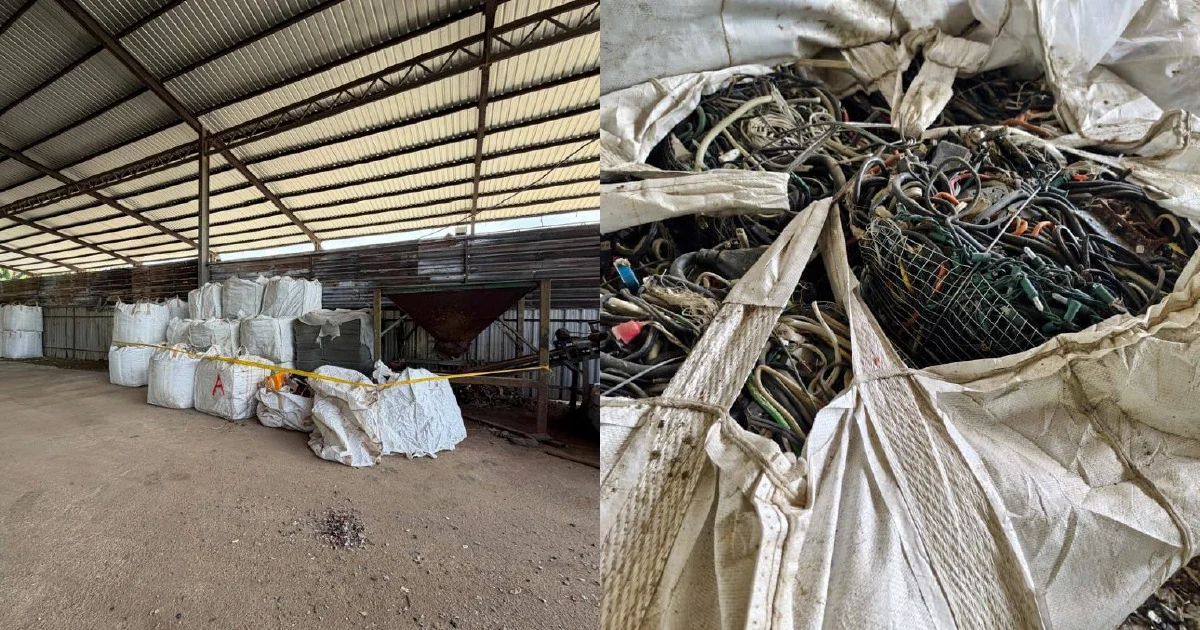
Regulatory enforcement officers have successfully shut down a substantial illegal e-waste processing and storage operation in Bukit Mertajam following a decisive raid yesterday, recovering confiscated materials valued at approximately RM3 million. The action represents a significant blow against the region's underground electronic waste recycling network and underscores the escalating problem of illicit e-waste handling across Peninsular Malaysia.
Five individuals were detained at the site following the operation, with authorities indicating that investigations into their roles in the venture are ongoing. The suspects are believed to have been operating the unregistered facility without proper licensing or environmental safeguards, a violation that carries serious regulatory and criminal penalties under Malaysian environmental protection frameworks.
Electronic waste processing represents one of the most hazardous informal industries in developing economies, given the toxic materials contained within discarded circuit boards, batteries, and display panels. Unregulated operations like the one discovered in Bukit Mertajam typically employ crude extraction methods to recover valuable metals such as copper, gold, and precious materials, processes that release lead, cadmium, and other carcinogens into surrounding soil and groundwater. The scale of the seizure—RM3 million in materials—suggests this facility may have been processing equipment from multiple sources across the state and possibly beyond.
The raid exemplifies ongoing attempts by Malaysian enforcement agencies to combat the proliferation of illegal recycling operations that have emerged as global electronics manufacturers and consumers from developed nations increasingly seek cheaper processing alternatives for their discarded products. Southeast Asia, with its combination of lower labour costs and historically laxer environmental regulations, has become a dumping ground for wealthy nations' e-waste. Peninsular Malaysia's proximity to major shipping routes and ports makes it particularly vulnerable to becoming a transit hub for internationally trafficked electronic refuse destined for informal processors.
The e-waste problem carries particular urgency for Malaysia given its role as a regional electronics manufacturing hub. The country produces substantial quantities of electronic waste domestically through both manufacturing processes and consumer disposal, yet infrastructure for responsible, licensed recycling remains inadequate relative to demand. This gap creates economic incentives for unregulated operators who undercut legitimate facilities by ignoring environmental compliance costs entirely.
Froman environmental health perspective, Bukit Mertajam residents and workers in the vicinity of the seized facility face potential contamination risks from the operation's history. Heavy metals and toxic substances may have leached into local water tables, and soil remediation may be necessary to prevent ongoing exposure. Authorities investigating the case should conduct comprehensive environmental assessments of the site and surrounding areas to quantify contamination and determine appropriate remediation strategies.
The regulatory framework governing Malaysia's e-waste sector has been tightened in recent years through amendments to environmental protection legislation, yet enforcement capacity remains inconsistent across state jurisdictions. The Solid Waste and Public Cleansing Management Corporation and various state environmental departments must collaborate to identify and prosecute similar operations, particularly in industrialised zones and areas with established informal recycling networks.
For Malaysian consumers and businesses, the broader implication is clear: disposing of electronic equipment responsibly requires engaging licensed, regulated recyclers rather than informal channels that may appear cheaper but perpetuate environmental degradation and public health hazards. Many manufacturers offer manufacturer-backed take-back schemes or partner with certified recyclers, options that increasingly offer competitive pricing compared to informal alternatives. Growing corporate sustainability commitments and international supply chain scrutiny are incentivising legitimate recycling pathways.
The successful Bukit Mertajam operation also highlights the importance of inter-agency intelligence sharing and coordination among enforcement bodies. Identifying and dismantling major illicit operations typically requires tip-offs from environmental inspectors, customs officers, community members, or businesses that have observed suspicious activity. Public awareness campaigns educating citizens about the harms of illegal e-waste processing could generate crucial intelligence that leads to future enforcement actions.
Regionally, Malaysia's experience mirrors challenges across Southeast Asia, where Thailand, Vietnam, and Indonesia have similarly grappled with proliferating illegal e-waste processing facilities. Transnational enforcement cooperation, particularly through mechanisms like the ASEAN Environmental Ministers Forum and customs partnerships, offers potential pathways for disrupting international e-waste trafficking networks that feed these operations. The seizure in Bukit Mertajam represents one enforcement success, yet substantially more comprehensive action is required to address the systemic economic and logistical factors driving the illicit e-waste trade.

%22%2F%3E%3C%2Fpattern%3E%3C%2Fdefs%3E%3Crect%20width%3D%22100%25%22%20height%3D%22100%25%22%20fill%3D%22url(%23ph1354vg)%22%2F%3E%3Crect%20width%3D%22100%25%22%20height%3D%22100%25%22%20fill%3D%22url(%23ph1354vp)%22%2F%3E%3Ctext%20x%3D%2250%25%22%20y%3D%2250%25%22%20text-anchor%3D%22middle%22%20dominant-baseline%3D%22central%22%20fill%3D%22rgba(255%2C255%2C255%2C0.95)%22%20font-family%3D%22Georgia%2C%20'Times%20New%20Roman'%2C%20serif%22%20font-weight%3D%22700%22%20font-size%3D%22320%22%20letter-spacing%3D%22-0.02em%22%3EGRS%3C%2Ftext%3E%3C%2Fsvg%3E)