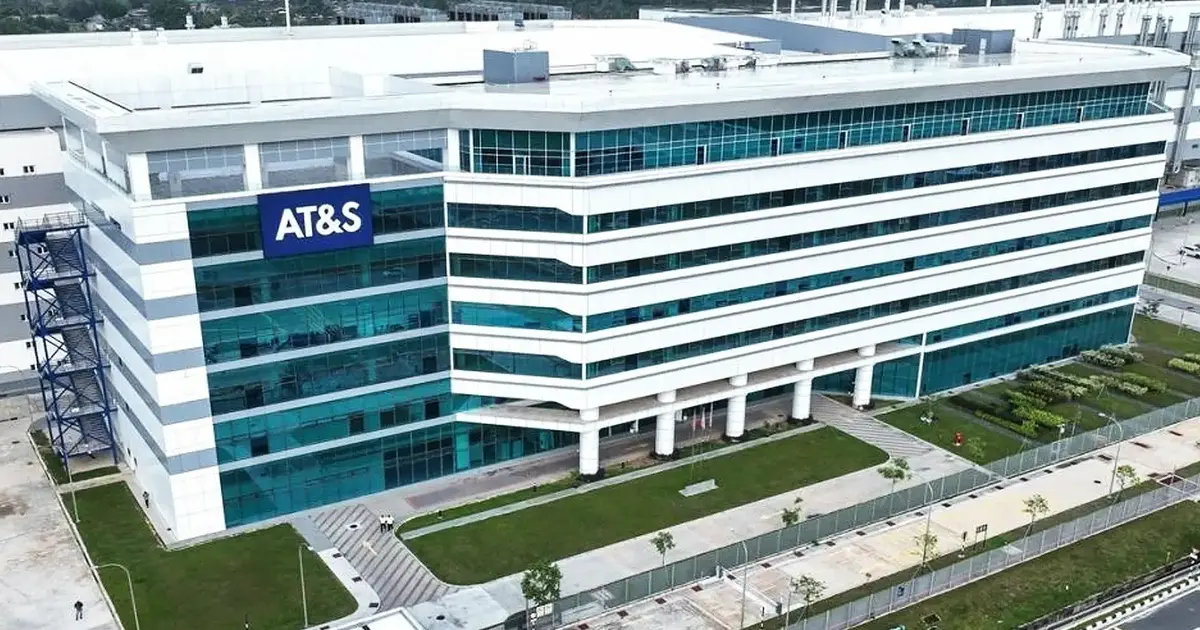
Austrian electronics manufacturer AT&S has announced plans to invest RM9.4 billion in a major expansion project at its facility in Kulim, Kedah, marking one of the most substantial foreign direct investments in Malaysia's semiconductor sector in recent years. Prime Minister Anwar Ibrahim has characterised the move as a powerful endorsement of Malaysia's business environment and institutional framework.
The Kulim investment represents a significant commitment by AT&S, a Vienna-headquartered specialist in circuit board manufacturing and advanced electronics assembly. The scale of the capital outlay underscores the company's confidence in the long-term viability of Malaysian operations and the region's position within global semiconductor supply chains. For Malaysia, the project carries substantial implications for job creation, technology transfer, and the nation's competitive standing within the crucial electronics manufacturing sector.
Anwar Ibrahim has publicly attributed the Austrian firm's decision to two interconnected factors: a demonstrable uptick in international investor confidence regarding Malaysia's trajectory, and a perception that the country maintains strengthened governance standards. These assessments reflect broader efforts by the current administration to rebuild investor sentiment following periods of economic and political uncertainty. The Prime Minister's remarks frame the AT&S commitment within a larger narrative of Malaysia reasserting itself as a reliable destination for high-value manufacturing operations.
The location of the expansion in Kulim is strategically significant. Kedah's Free Trade Zone has established itself as a crucial hub for electronics and semiconductor-related manufacturing within Malaysia, with existing clusters of supporting industries and skilled workforce availability. AT&S's decision to deepen its presence there suggests confidence in the sustainability and competitiveness of the regional ecosystem, particularly regarding logistics, infrastructure, and regulatory consistency.
Semiconductor and electronics manufacturing carry particular importance for Malaysia's economic diversification and value-added industrial growth. Unlike labour-intensive assembly operations that have migrated to lower-cost jurisdictions, advanced circuit board manufacturing and precision electronics assembly represent higher-margin, technology-intensive activities. These sectors generate better-paying employment opportunities and support ancillary industries spanning materials supply, testing services, and logistics.
The AT&S investment arrives within a broader context of competitive repositioning in global semiconductor manufacturing. Following supply chain disruptions during the pandemic and geopolitical tensions affecting chip sourcing, multinational manufacturers have pursued supply chain resilience through geographic diversification. Malaysia, as an established electronics manufacturing centre with established infrastructure and skilled technical workforces, has positioned itself to capture additional investment flows seeking alternatives to concentration in Taiwan, South Korea, or China.
From an employment perspective, major manufacturing projects of this magnitude typically generate thousands of direct jobs across engineering, production, quality assurance, and supervisory roles, alongside secondary employment through supplier relationships and service provision. The project may also accelerate skills development in advanced manufacturing disciplines, benefiting Malaysia's technical education landscape.
The investment narrative also carries implications for Malaysia's regional standing within Southeast Asia. As countries across the bloc compete for technology-intensive manufacturing capacity, successful attraction of major foreign investment signals competitive advantage in infrastructure quality, workforce capability, and institutional reliability. This positioning could generate positive spillover effects, encouraging additional companies to evaluate Malaysian operations as part of broader regional strategies.
Governance considerations featured prominently in Anwar Ibrahim's commentary on the AT&S decision. International investors, particularly large multinational corporations, conduct rigorous assessments of regulatory transparency, contractual reliability, and political stability before committing substantial capital. The perception that Malaysia has strengthened these dimensions reflects substantive efforts to address previous governance concerns and enhance institutional credibility. Such perceptions, once solidified, can catalyse additional investment flows.
The Kulim expansion also merits examination alongside broader efforts to develop Malaysia's semiconductor ecosystem beyond assembly and manufacturing into higher-value activities. Policymakers have articulated ambitions regarding design capabilities, materials innovation, and equipment manufacturing. While AT&S operates primarily as a manufacturer and assembler rather than a semiconductor design firm, the investment reinforces the infrastructure foundation upon which advanced capabilities can develop.
Looking forward, the success of the AT&S expansion will likely influence subsequent foreign investment decisions in similar sectors. Major multinational manufacturers frequently benchmark decisions against recent projects undertaken by comparable firms. A smooth implementation of the Kulim facility could therefore trigger additional investment announcements from electronics and semiconductor companies evaluating Malaysian expansion.
The RM9.4 billion commitment also carries macroeconomic significance for Malaysia's foreign direct investment figures and balance of payments. Capital inflows of this magnitude support currency stability and provide resources for wider economic activity. The project represents visible evidence of confidence in Malaysia's economic management and medium-term prospects, messaging that can prove valuable as policymakers navigate challenges in the broader economic environment.

