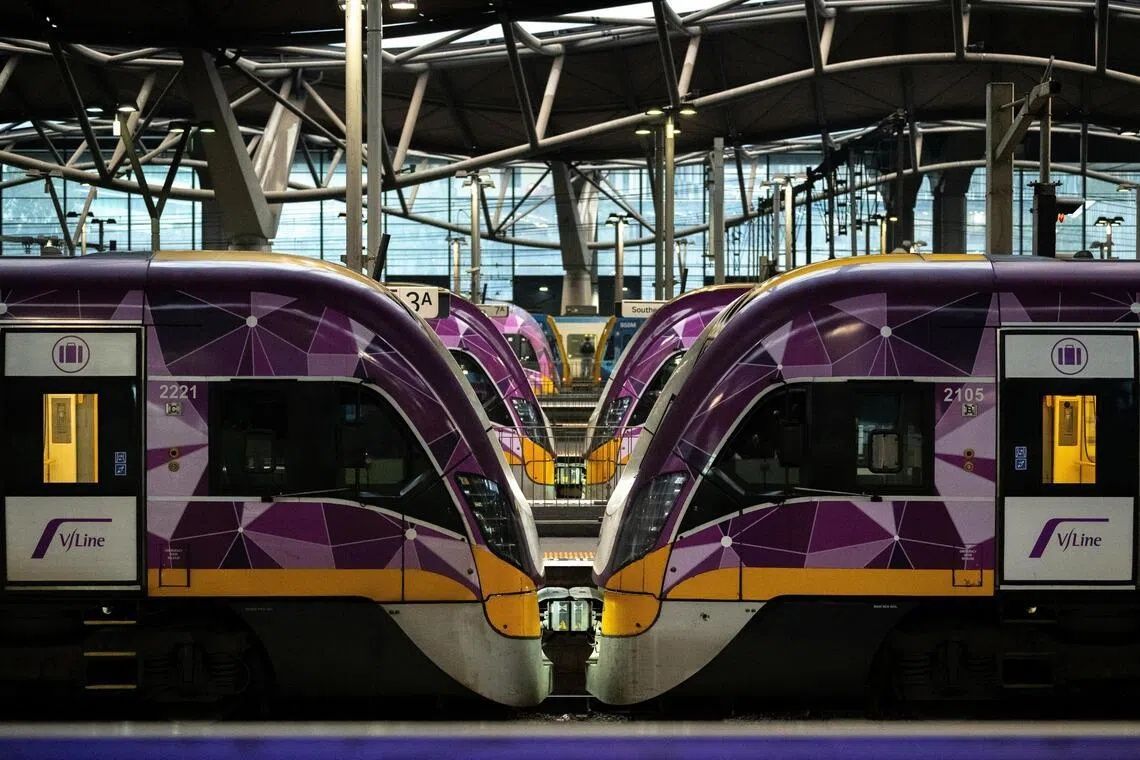
Australia's rail network began a cautious return to normal operations on Thursday following a severe outage at telecommunications giant Telstra that had crippled services across multiple states the previous day. The disruption highlighted a critical vulnerability in how the country's essential transport infrastructure depends on mobile connectivity, with trains grinding to a halt when Telstra's 4G network failed to maintain communication with drivers.
Australian Rail Track Corporation, which manages both freight and passenger rail across five states, gradually restarted services as confidence in network stability returned. The operator had suspended trains after the outage severed its ability to communicate with drivers operating on the network, an operational requirement that underscores how modern rail infrastructure has become almost entirely dependent on telecommunications. ARTC prioritised restoration of major commuter routes first, including metropolitan services in New South Wales, V/Line operations in Victoria, and interstate passenger connections, reflecting the relative importance of these corridors to the travelling public.
The Telstra failure occurred in stages, creating compounding problems that took hours to fully resolve. An initial software fault affecting the network's time-synchronisation nodes cascaded into secondary issues overnight, including calls being misdirected to voicemail and, most alarmingly, failures in the Triple Zero emergency calling system. Michael Ackland, Telstra's Chief Financial Officer, disclosed that emergency responders had conducted 639 welfare checks following missed emergency calls, a stark reminder of the life-safety implications when critical infrastructure fails. The company provides mobile services to approximately 25 million customers, making such an outage a national concern rather than merely a commercial inconvenience.
Federal Communications Minister Anika Wells acknowledged the secondary problems emerging overnight while the company worked to stabilise its systems. The layered nature of the outage—initial problem resolved, then new complications discovered—suggests that the underlying technical architecture had vulnerabilities that became apparent only under stress conditions. Telstra's management projected confidence by implementing what they described as a more robust solution, though Ackland carefully hedged by noting that further refinements would continue as engineers stress-tested the system against potential future scenarios.
The reputational damage prompted dramatic action at the highest corporate level. Chief Executive Vicki Brady curtailed a family holiday abroad to return to the office on Friday, signalling to both stakeholders and the public that Telstra was treating the incident with appropriate seriousness. Despite the operational crisis, Telstra shares edged upward by one per cent during Thursday's trading, recovering modestly from the three per cent decline recorded the day the outage occurred. The relatively muted market response may reflect investor confidence in the company's market position and brand resilience, or perhaps resignation to the reality that telecommunications oligopolies face limited competitive consequences for service failures.
The incident triggered broader questions about how telecommunications failures have become a recurring problem across Australia's carrier landscape. Cynthia Gebert, heading the Telecommunications Industry Ombudsman, framed the issue as a fundamental challenge to public confidence in essential services. She articulated the frustration of Australian consumers who expect their telecommunications network—now as basic as electricity or water—to function reliably without exception. The human cost extended beyond inconvenience; commuters experienced lost income from missed work, families faced travel disruptions, and vulnerable people worried about their ability to reach emergency services in genuine crises.
Telstra's outage represents the latest in a concerning sequence of telecommunications failures affecting Australians. Singapore Telecommunications-owned Optus, the country's second-largest carrier, experienced a devastating outage in September 2025 that directly prevented emergency callers from reaching Triple Zero services, with fatalities reported as a consequence. That incident followed another major Optus outage less than two years prior that had similarly disrupted emergency response capabilities and affected millions of customers. The pattern suggests systematic vulnerabilities across Australia's telecommunications infrastructure rather than isolated incidents, pointing toward architectural problems that might affect multiple carriers under stress conditions.
Vodafone Australia added to this troubling trend by acknowledging connectivity problems for some customers in recent weeks, further eroding public confidence in the sector's reliability. With three of Australia's four major carriers—Telstra, Optus, and Vodafone—experiencing significant outages within a short timeframe, questions intensify about whether the industry possesses adequate redundancy, whether network architecture is sufficiently resilient, and whether regulatory oversight has kept pace with the critical importance of telecommunications to modern society. The fact that emergency calling systems remain vulnerable to commercial network failures suggests that Australia's approach to separating essential emergency infrastructure from commercial telecommunications may require fundamental rethinking.
For regional economies and Southeast Asian observers, the Telstra incident offers cautionary lessons about infrastructure interdependencies. As rail networks, power systems, water utilities, and emergency services increasingly rely on telecommunications connectivity, single points of failure become increasingly dangerous. The incident also demonstrates how quickly cascading failures can occur when time-synchronisation systems fail, a technical detail with implications for any networked critical infrastructure. Malaysia and other regional nations developing smart city and digital infrastructure initiatives might examine how the Telstra failure emerged despite the telecommunications provider's size and sophistication, suggesting that technical complexity and scale offer no immunity from systemic failure.
The recovery process itself revealed institutional confidence challenges. ARTC needed assurance before resuming train operations, reflecting a reasonable but disruptive caution about whether telecommunications stability had genuinely been restored. Telstra's messages about the robustness of its solution carried an implicit acknowledgement that customers had witnessed the company's confidence prove unfounded. Rebuilding that confidence requires not just technical solutions but transparency about root causes and structural changes to prevent recurrence, a longer-term challenge than simply restoring service and resuming normal operations.

