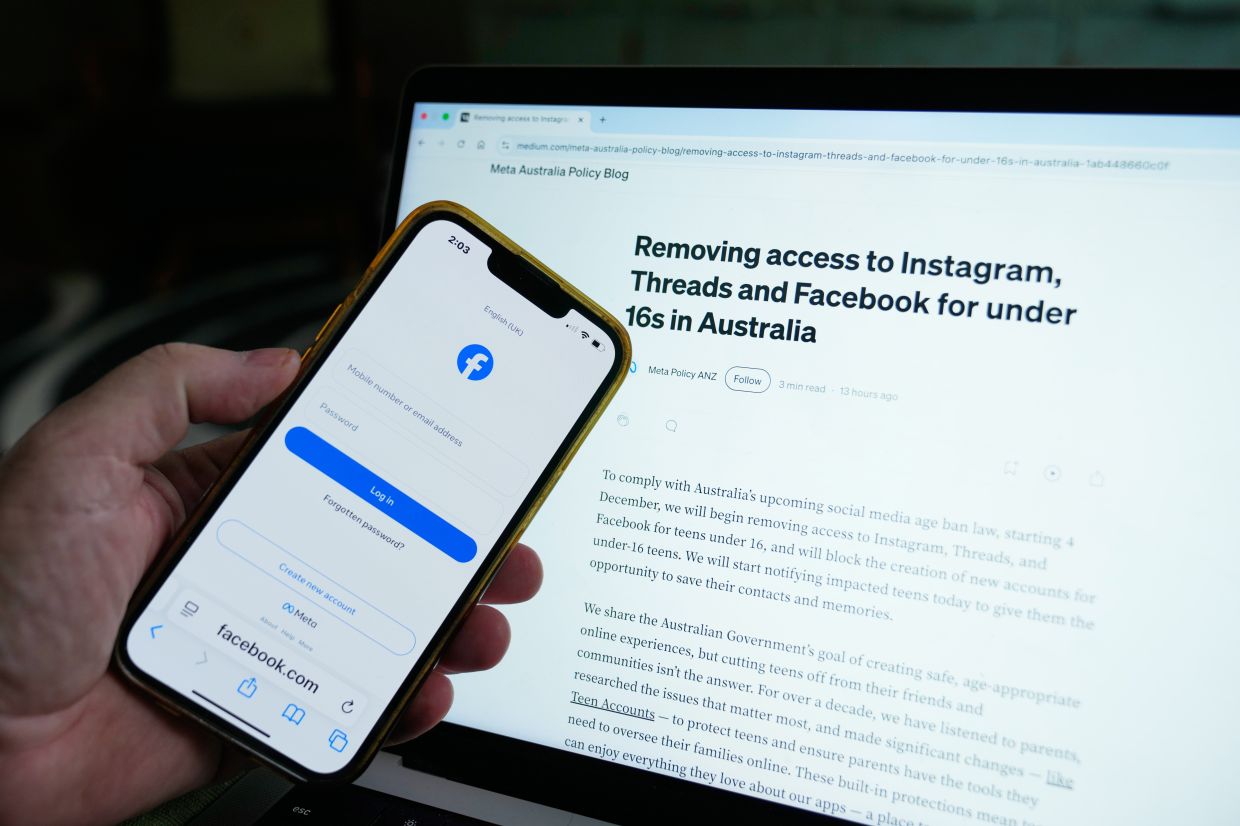
Australia's government is locked in a contentious battle over strengthening enforcement of the country's landmark child social media ban, with Prime Minister Anthony Albanese condemning delays that could undermine the regulator's capacity to hold platforms accountable. The dispute centres on proposed amendments to Parliament that would substantially expand the investigative and punitive powers of eSafety Commissioner Julie Inman Grant, the independent watchdog tasked with enforcing restrictions that prevent Australian children under 16 from accessing accounts on major platforms including Facebook, Instagram, and YouTube. These restrictions took effect in December and represent one of the world's strictest regulatory approaches to children's social media use.
The amendments before Parliament would grant Inman Grant the authority to demand documents and detailed information directly from platforms about their compliance efforts, significantly widening her current capacity to request information alone. This expanded power is intended to provide the commissioner with forensic investigative tools necessary to verify whether platforms are genuinely implementing age-restriction measures or merely performing performative compliance. Additionally, the amendments would enable the commissioner to compel third-party technology providers, including age verification companies, to provide evidence and testing data that could expose whether platforms' claims about children circumventing the ban are accurate or merely excuses for systemic non-compliance.
However, the conservative opposition Liberal Party and the left-leaning Australian Greens party jointly referred the draft legislation to an eight-week Senate inquiry on July 2, a procedural manoeuvre that has triggered fierce criticism from the labour government. This delay proves particularly consequential because the government lacks a Senate majority, meaning the opposition controls the legislative timetable. Prime Minister Albanese's frustration is rooted in a practical concern: every day the amendments remain unpasssed, platforms can delete documents, communications, and internal records related to their enforcement efforts, thereby destroying evidence that could prove invaluable to future investigations and enforcement action. In a forthright television interview with the Australian Broadcasting Corporation, Albanese articulated this concern directly, explaining that immediate passage would establish a clear legal date from which the commissioner's enhanced demand powers would become operative, enabling swift issuance of fines against non-compliant platforms.
The amendments would also double the maximum financial penalty platforms face for failing to take reasonable steps to exclude children, raising the ceiling from approximately A$49.5 million to A$99 million, equivalent to roughly US$68 million or RM276.56 million. This substantial increase is designed to create genuine financial disincentives for platform non-compliance, particularly affecting the technology giants whose annual revenues dwarf current penalty levels. Yet interestingly, no platform has faced a fine under the existing legislation, a fact that has prompted scepticism from critics about whether penalty escalation represents meaningful enforcement reform or merely symbolic posturing.
The Greens Senator David Shoebridge, who has consistently opposed the social media ban on principle, questioned the logic of doubling penalties that authorities have never deployed. Speaking to Sky News Australia, Shoebridge suggested that dramatically increasing unused maximum fines fails to address genuine child safety concerns and represents performative rather than substantive policy-making. His criticism reflects deeper ideological divisions within Parliament about whether age-based restrictions on social media represent appropriate regulatory intervention or problematic government overreach into personal digital liberty.
Meanwhile, the opposition Liberal Party has taken a different tack, arguing not that the amendments are unnecessary but rather that they remain insufficiently stringent. Opposition communications spokesperson Senator Sarah Henderson characterised the original legislation itself as fundamentally flawed, describing it as a poorly designed, hastily implemented law that is manifestly failing to achieve its stated objectives. Henderson demanded that the Senate inquiry process produce tougher amendments that impose more comprehensive obligations on platforms and result in genuinely enforceable compliance mechanisms, positioning her party as defending stronger child protection even as it delays government measures.
Parliament initially passed the foundational social media ban legislation in 2024 with overwhelming cross-party support, and the targeted platforms received more than twelve months to implement compliance infrastructure. This extended implementation timeline was ostensibly designed to allow technology companies adequate time to develop age assurance systems and modify algorithmic systems to prevent underage access. Significantly, the global technology sector has watched Australia's regulatory approach with intense scrutiny, as many countries are contemplating or actively developing similar age-based restrictions. Australia's experience therefore serves as a crucial proof-of-concept for whether legislative restrictions can effectively constrain platform behaviour or whether market forces and technical circumvention ultimately defeat regulatory intent.
Initially, authorities reported considerable apparent success, with more than five million accounts reportedly removed, deactivated, or restricted in the ban's opening weeks. However, this early optimism has given way to concerning evidence of continued widespread platform non-compliance. The eSafety Commissioner's March report revealed that approximately seven in ten children who maintained active accounts on restricted platforms—Facebook, Instagram, Snapchat and TikTok—on the December 10 implementation date remained actively using those services. This finding suggests either that age verification measures are ineffective, that determined young users easily circumvent restrictions, or that platforms are failing to apply their own compliance protocols with sufficient rigour.
Consequently, Inman Grant announced in April her intention to pursue court action against several major platforms, alleging they have manifestly failed to implement reasonable safeguards to exclude young users. The commissioner cited Facebook, Instagram, YouTube and TikTok as particular targets for litigation. Notably, she expressed satisfaction with compliance efforts by other restricted platforms including X, Kick, Reddit, Threads and Twitch, suggesting that regulatory outcomes vary significantly across the social media ecosystem and that some platforms have demonstrated genuine commitment to compliance.
Communications Minister Anika Wells has received regular monthly updates from the eSafety Commissioner since March, and these briefings have consistently indicated that compliance is deteriorating rather than improving. The absence of meaningful platform compliance progress, nearly eight months after the ban took effect, underscores the fundamental challenge: platform incentive structures remain fundamentally misaligned with regulatory objectives. Young users represent valuable engagement metrics and advertising demographics, creating powerful commercial pressure to maintain youth accessibility even in nominally restricted jurisdictions. Without substantially enhanced investigative and enforcement powers, regulators face an asymmetric contest against technology companies whose technical capabilities, financial resources, and global scale vastly exceed government capacity.
The Senate inquiry delay therefore represents more than procedural obstruction; it reflects divergent political philosophies about the appropriate balance between child protection and regulatory pragmatism. For the government, enhanced enforcement powers are essential to meaningful regulatory effectiveness. For opposition and minor parties, the inquiry period provides opportunity to scrutinise whether the underlying regulatory framework itself requires fundamental reconstruction. Meanwhile, millions of Australian children continue accessing platforms nominally prohibited to them, and platforms continue operating under legal uncertainty about enforcement intensity and timing. The outcome of this parliamentary struggle will reverberate far beyond Australia, signalling to global policymakers whether democratic governments possess sufficient regulatory capacity to meaningfully constrain platform behaviour or whether digital corporations effectively possess veto power over national social policy.

