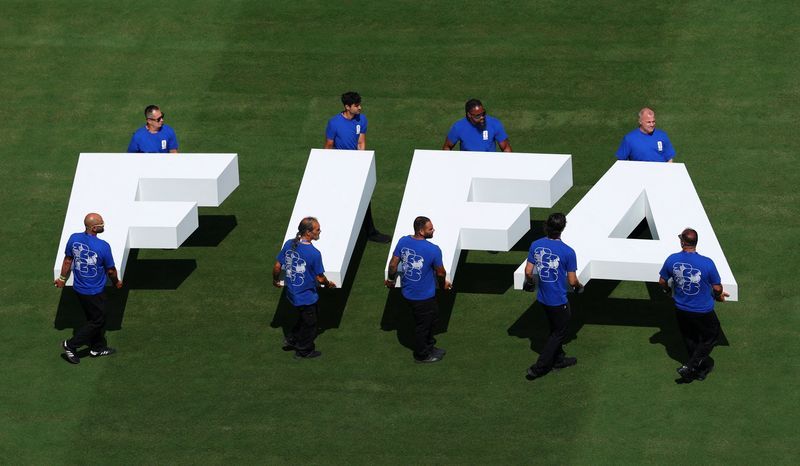
The Professional Footballers Australia (PFA) has added its voice to mounting international opposition against FIFA's controversial plan to establish a $20 billion subsidiary that would invite private capital into the governance and operation of the World Cup and other flagship tournaments. The union's forceful intervention reflects deepening anxieties among player representatives globally that the sport's most prestigious competitions risk being transformed from athlete-centred events into profit-maximising vehicles for shareholders divorced from football's traditions and values.
FIFA's initiative would create minority stakes available to private investors, with the governing body projecting it could raise up to $4.2 billion in fresh capital. The scheme dangled before member associations is significant: those accepting the proposal by September 19 would each receive $40 million from a $10 billion funding package commencing January 2027. The implicit threat is equally clear—reject the offer and the funding reverts to just $2.7 billion distributed among the 211 member associations, translating to approximately $10 million per federation. This carrot-and-stick approach has generated accusations that FIFA is employing financial coercion to steamroller approval through its constituent bodies.
The PFA's statement struck at the heart of governance concerns, highlighting what it characterised as FIFA's systematic exclusion of the people whose labour and talent actually generate commercial value for these tournaments. Players and supporters, the union argued, have been conspicuously absent from meaningful consultation processes despite their fundamental importance to the World Cup's global appeal and revenue-generating capacity. The union framed the situation as a battle for football's fundamental character—whether the sport remains governed primarily for the benefit of participants and communities, or whether it becomes subordinate to shareholder interests and quarterly earnings projections.
The transparency issue resonates particularly strongly in Southeast Asia, where questions about sporting governance have become increasingly fraught. Malaysian football administrators and supporters have watched with concern as international football bodies have grappled with accountability questions. The PFA's complaint that FIFA is advancing a proposal with "profound and irreversible consequences" for tournament ownership without adequate disclosure or deliberation speaks to broader anxieties about how major sporting institutions make consequential decisions affecting national competitions and player welfare across the region.
FIFA President Gianni Infantino attempted damage control through a video statement on Wednesday, characterising the proposal as merely consultative rather than mandatory. Yet this framing contradicts the financial pressure inherent in the September 19 deadline and the dramatically reduced funding available to members who decline participation. Infantino's approach mirrors corporate negotiation tactics where formally "voluntary" options carry such substantial financial consequences that declining them becomes practically impossible for resource-constrained national associations—precisely the concern animating the PFA's criticism of coercive pressure tactics.
The PFA's concerns align with warnings issued by FIFPRO, the global players' union representing footballers across confederations. FIFPRO cautioned that privatisation would fundamentally alter the incentive structures underpinning international competitions, potentially prioritising cost-cutting, scheduling convenience for investors, and commercial scheduling over player welfare, injury recovery, and the traditional rhythms of international football. For Malaysian and regional players, such concerns carry practical weight—competitive schedules already stretch resources for smaller associations, and privatisation could further marginalise less commercially attractive fixtures or nations from tournament planning.
Europe's governing body UEFA remains the only major confederation to explicitly reject the proposal, though even within UEFA's 55-member association network, consensus has fractured. The Czech Football Association president indicated receptiveness to FIFA's scheme, recognising potential "positive impact," suggesting that regional solidarity cannot be assumed despite ostensible shared governance structures. Meanwhile, African confederation leadership has scheduled meetings to evaluate implications, South America's CONMEBOL has maintained public silence, and Oceania has similarly withheld comment. This fragmentation provides FIFA negotiating room despite unified player opposition.
Australia's Football Association has notably avoided committing to any position, requesting additional detail from FIFA before assessing strategic, commercial, and governance dimensions. This cautious stance reflects the legitimate complexity facing national associations genuinely uncertain whether accepting privatisation offers genuine long-term benefits or represents accepting terms dictated under financial duress. The Australian federation's hesitation underscores how FIFA's compressed timeline prevents the thorough deliberation such structural changes warrant—a point the PFA emphasised in critiquing the procedural rush.
For Malaysian observers, the broader stakes extend beyond administrative processes or investor returns. World Cup tournaments generate enormous soft power benefits for participating nations, elevating international profiles and inspiring domestic sporting development. Privatisation risks subordinating tournament expansion, scheduling, and competitive structures to investor preferences rather than sporting merit, national development aspirations, or equitable geographic distribution. Southeast Asian nations, typically operating with constrained financial resources, could find themselves increasingly marginalised in governance conversations increasingly dominated by private shareholders concerned primarily with return-on-investment metrics rather than universal football development.
The PFA's assertion that "tournaments should not be for sale" ultimately contests a philosophical question about whether sports should be understood as primarily commercial enterprises optimised for shareholder value or as public institutions serving broader community and sporting development purposes. FIFA's proposal tilts decisively toward the former interpretation, reclassifying the World Cup from a competition the organisation facilitates into a financial asset it can monetise. The union's intervention suggests that players themselves—who bear the physical and professional consequences of governance decisions—increasingly demand voice in how football's institutional structures evolve, a principle with resonance far beyond Australia's borders.
FIFA's decision to proceed toward a vote despite unified player opposition and significant confederation hesitation suggests determination to advance privatisation regardless of institutional skepticism. The outcomes of upcoming African confederation meetings and final votes will clarify whether member associations ultimately prioritise immediate funding boosts or longer-term concerns about governance integrity and sporting autonomy. For Malaysian football and the broader Southeast Asian region, the precedent set—whether international sporting bodies can impose transformative institutional changes over constituent objections—carries implications extending well beyond FIFA's particular proposal.

