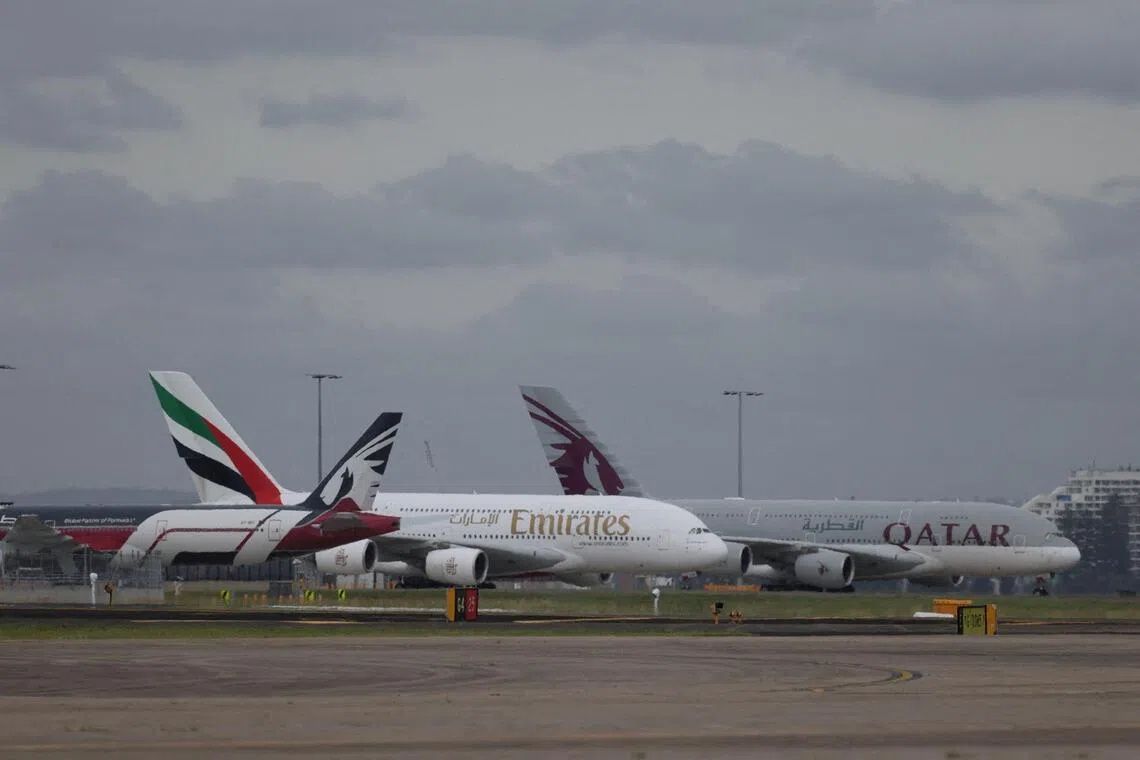
Australia's transport safety regulator announced a formal investigation into a series of alarming near-collision incidents at Sydney Airport, raising fresh questions about the nation's busiest aviation hub and the capacity of its air traffic control operations to manage current demand. The Australian Transport Safety Bureau confirmed on Friday that three separate incidents had occurred within a fortnight, with two happening on the same day, each posing serious risks to passenger safety and operational integrity.
The most recent incident occurred on the morning of August 9, when a Virgin Australia Boeing 737 crew spotted a Qantas aircraft unexpectedly crossing the runway directly ahead of them. Despite receiving clearance from air traffic control to take off, the Virgin Australia pilots immediately executed an emergency stop, bringing their aircraft to a halt approximately one kilometre away from the Qantas plane. In a troubling detail, the Qantas aircraft had also been separately cleared by the control tower to taxi across the runway—a fundamental breakdown in the system designed to prevent precisely this type of conflict.
The same morning saw a second dangerous incident when a Jetstar pilot was forced to brake suddenly to avoid a collision with a Qatar Airways aircraft. These two occurrences within hours of each other underscored potential systemic vulnerabilities in the airport's coordination procedures. An earlier incident on July 27 had already involved two Qantas planes that narrowly avoided a mid-air collision after both received simultaneous take-off clearance, suggesting a pattern rather than isolated human error.
Angus Mitchell, Chief Commissioner of the Transport Safety Bureau, attempted to reassure the travelling public by emphasising the thoroughness of the investigation ahead. Mitchell committed to examining any organisational or systemic factors that may have contributed to the incidents, signalling that the inquiry would extend beyond simply blaming individual controllers. He outlined that investigators would scrutinise operational conditions including airport congestion levels, staffing numbers in the control tower, and controller workload at the time of each incident—factors that are increasingly relevant as global aviation demand rebounds post-pandemic.
The regulator's focus on systemic issues reflects a growing challenge for Australian aviation. Mitchell acknowledged that Sydney Airport is experiencing what he described as a "significant ramping up period" for air services, with recruitment, training, and qualification of air traffic controllers occurring simultaneously across the network. This expansion, while necessary to meet passenger demand recovery and economic growth objectives, has created a temporary vulnerability where new and experienced controllers must work alongside each other under elevated pressure.
A particularly concerning aspect emerged when Mitchell revealed that a "supervisory or training situation" was taking place at the control tower during the August 9 incidents. This detail raised uncomfortable questions about whether an instructor monitoring a trainee controller may have been distracted or whether communication protocols broke down during this training phase. The revelation prompted scrutiny into whether training activities should occur during peak operational hours at a major metropolitan airport, or whether segregated training environments should be established.
The delayed reporting of these incidents also drew criticism and investigation. Standard aviation safety protocol requires prompt disclosure of such occurrences to enable rapid corrective action, yet questions emerged about why several days elapsed before authorities formally announced the incidents. This lag potentially hampered the ability of other airports or regulatory bodies to implement immediate safeguards if similar control tower configuration issues existed elsewhere in the Australian system.
Prime Minister Anthony Albanese weighed in on the matter, calling for a thorough investigation and signalling that the government takes these incidents with utmost seriousness. The political attention underscores public concern about aviation safety and confidence in the nation's critical infrastructure, particularly as international tourism and domestic travel continue rebounding toward pre-pandemic levels. Any extended closure or operational restrictions at Sydney Airport would have substantial economic ramifications for New South Wales and Australia broadly.
For Malaysian and regional Southeast Asian readers, these incidents carry particular relevance. Many major airlines operating across the Asia-Pacific, including carriers with strong Australian operations like Malaysia Airlines, Singapore Airlines, and Thai Airways, depend on Sydney Airport as a major hub for connecting traffic. Any prolonged safety issues or operational restrictions at Sydney would cascade throughout regional flight networks and capacity planning. Additionally, these incidents provide a cautionary case study for other major airport operators in the region, particularly as demand grows and staffing pressures mount following the post-Covid recovery surge.
The investigation's findings will likely shape air traffic control procedures and training protocols not merely in Australia but potentially influence safety standards across the International Civil Aviation Organization framework that governs regional operations. The tension between expanding airport capacity and maintaining safety margins remains unresolved in most major aviation hubs, making Sydney's formal examination of these failures particularly instructive for the broader region's long-term infrastructure planning and operational resilience.

