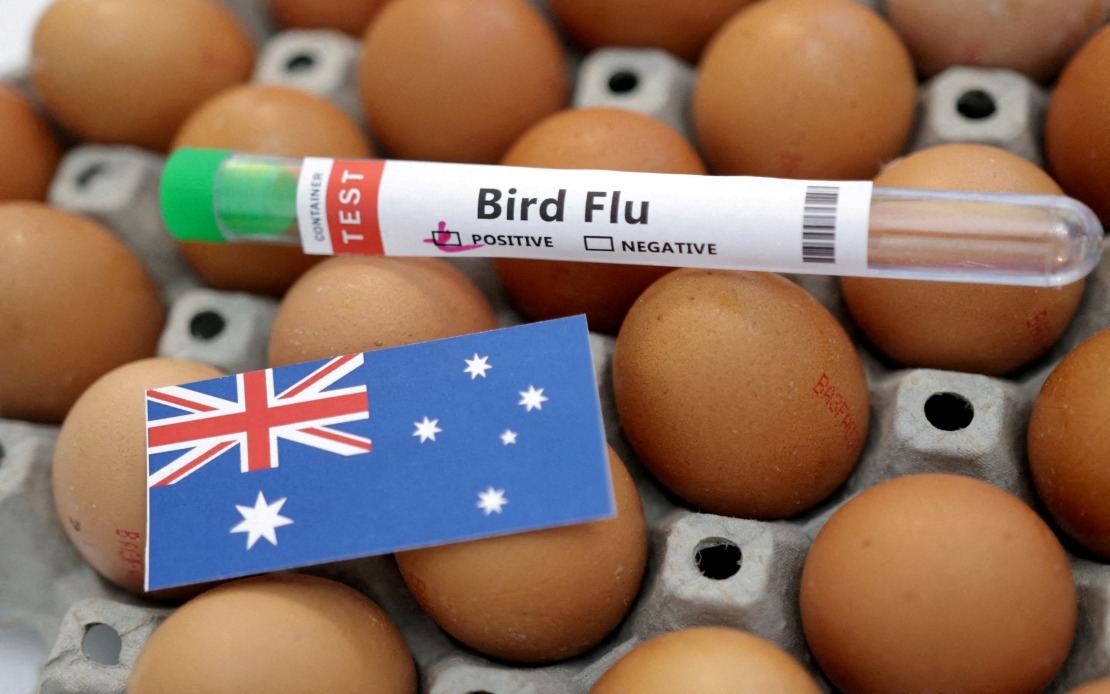
Australia's agricultural authorities have announced a significant development in the country's disease surveillance landscape, confirming that H5N1 avian influenza has established a foothold in the mainland wildlife population. Minister for Agriculture Julie Collins revealed on Friday that a greater crested tern discovered deceased near the South Australian coastal town of Robe tested positive for the highly pathogenic strain, representing a watershed moment in Australia's previously unblemished record against the deadly virus.
This discovery carries particular significance given Australia's geographical isolation and the historical pattern of the virus's spread globally. Until June of this year, Australia stood as the sole continent without a documented case of H5N1, a distinction that has now ended. The detection underscores how the rapidly evolving bird flu pandemic continues to breach previously secure regions, even on the isolated Australian continent where biosecurity measures are traditionally among the world's most stringent.
The greater crested tern that triggered the alert represents a departure from Australia's previous H5N1 encounters. All prior detections had involved migratory birds originating from the sub-Antarctic region—a pattern that suggested the virus arrived through seasonal migration corridors from areas where H5N1 had already become endemic. The identification of the strain in a non-migratory species native to Australian waters introduces a troubling new dimension, suggesting the virus may now be circulating within the local bird population rather than merely passing through during migration periods.
South Australian authorities have mobilised enhanced surveillance protocols in the region surrounding Robe, recognising that a single positive case in a resident bird species warrants intensified monitoring. Scientific teams are simultaneously investigating the transmission pathway that allowed the non-migratory tern to become infected. This investigative work carries immediate practical implications, as understanding whether the bird contracted the virus from migratory populations, environmental contamination, or other sources will inform the scope and intensity of the response effort.
The timing of this disclosure came as authorities confirmed three additional positive cases in South Australia and one further infection in Western Australia, bringing the total number of confirmed H5N1 detections on the Australian mainland to twelve since the initial detection in Western Australia in June. This cumulative figure indicates a pattern of increasing detections rather than isolated incidents, suggesting the virus has begun establishing itself across different regions of the country rather than remaining confined to a single location.
Minister Collins characterised the development as concerning yet unsurprising, framing it within the context of Australia's robust biosecurity framework. Her statement that "this is not unexpected" reflects scientific projections made by epidemiologists as H5N1 continued its relentless global spread, gradually reducing the number of virus-free regions worldwide. The acknowledgment that the discovery "is another sign that our strong biosecurity system is working" references Australia's detection capabilities rather than prevention measures—an important distinction that highlights how even well-resourced countries struggle to exclude pathogens once they reach sufficient geographic prevalence.
For Malaysian and regional observers, Australia's experience provides instructive lessons. Southeast Asia occupies a position of heightened vulnerability to H5N1 transmission, given the region's extensive poultry production, significant populations of migratory waterfowl, and the virus's confirmed presence in multiple regional countries. Australia's transition from H5N1-free status to multiple confirmed cases within weeks demonstrates how rapidly the epidemiological landscape can shift, even in countries with sophisticated surveillance infrastructure and geographic advantages of insularity.
The confirmation that local wildlife transmission has occurred carries implications for Australia's agricultural sector and wildlife management strategies. Unlike the scenario where migratory birds introduce the virus temporarily before departing, establishment within non-migratory populations suggests the virus may now persist in the Australian environment through regular transmission between local bird species. This scenario necessitates different management approaches, potentially including monitoring of commercial poultry operations with intensified biosecurity at farms in affected regions.
The investigation into transmission pathways will likely reveal whether infection chains extend through food sources, water systems, or direct contact between wild bird populations. Understanding these mechanisms becomes critical for predicting which regions may experience subsequent detections and which wildlife species face highest risk. The greater crested tern's marine habitat suggests potential transmission routes through shared water bodies or food sources among seabirds, a consideration relevant to understanding potential spread among Australia's diverse coastal bird populations.
Regional governments across Southeast Asia, where H5N1 has been endemic for years, will monitor Australia's response and scientific findings closely. The strategies deployed in Australian outbreak response—enhanced surveillance, investigation methodologies, and management protocols—may offer adaptable approaches for regional health and agricultural authorities. Conversely, Australia's late entry into the pandemic phase may provide valuable opportunity to document early-stage establishment patterns that could illuminate dynamics in regions where the virus has been present longer.
Looking forward, Collins' comments suggest authorities are preparing for the likelihood of additional detections across Australia. The framing of this first mainland case as inevitable rather than anomalous indicates recognition that exclusion efforts have failed and management strategies must now shift toward monitoring, containment, and mitigation of wildlife-level transmission. This philosophical shift, from prevention to management, will define Australia's approach during the coming months and potentially years as the country adapts to operating in an H5N1-endemic context.

