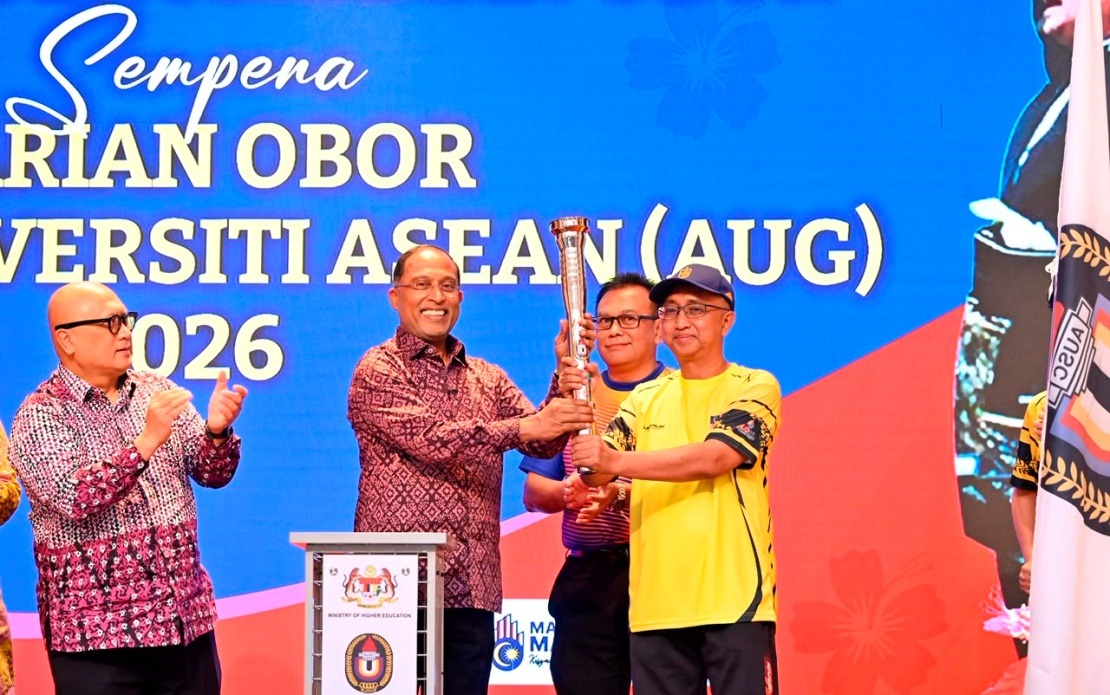
Malaysia has officially commenced the ceremonial torch run for the ASEAN University Games 2026, a symbolic gesture underscoring the nation's readiness to host one of Southeast Asia's most significant university sports competitions. The torch relay began at the Ministry of Higher Education headquarters in Putrajaya on August 20, with Higher Education Minister Datuk Seri Dr Zambry Abd Kadir formally handing the flame to Prof Dr Mohammad Ismail, the chief of the Malaysian contingent and deputy vice-chancellor of Universiti Malaysia Kelantan. The handover ceremony took place during MOHE's monthly assembly, blending administrative routine with the inspirational messaging required to energise both athletes and stakeholders ahead of December's showcase event.
Dr Zambry used the occasion to emphasise the broader significance of the upcoming competition, framing it not merely as a sporting spectacle but as an opportunity for Malaysian university athletes to demonstrate national pride and excellence on a regional platform. His remarks centered on the symbolic weight carried by those selected to represent the country, suggesting that participation transcends individual achievement and instead becomes an expression of collective national aspiration. The minister's language—invoking both victory and responsibility—reflected the Malaysian government's investment in positioning university sports as a soft power tool within ASEAN, where cultural and athletic exchanges reinforce diplomatic ties and regional cooperation.
The torch relay itself incorporated four elite student-athletes who embody Malaysia's competitive depth across diverse disciplines. Long jumper Andre Anura Anuar and shot putter Nani Sahirah Maryata, both representing Universiti Putra Malaysia, bring track and field credentials to the torch run. Karate competitor Thevendran Kaliana Sundram carries the colors of Universiti Pertahanan Nasional Malaysia, while taekwondo athlete Lee Hui Yee represents Sultan Salahuddin Abdul Aziz Shah Polytechnic. The deliberate inclusion of athletes from both research universities and polytechnic institutions signals Malaysia's commitment to inclusivity and to showcasing talent across the full spectrum of higher education institutions, a messaging strategy that broadens the narrative beyond elite university athletics.
The physical torch journey itself follows a carefully planned route designed to build momentum and awareness across the higher education ecosystem. Beginning at MOHE grounds in Putrajaya, the relay proceeded to the Ministry of Tourism, Arts and Culture before returning to MOHE, deliberately linking sporting and cultural portfolios within government. Subsequent relay stages will traverse Malaysia's major university campuses, including Universiti Kebangsaan Malaysia, Universiti Putra Malaysia, Universiti Pertahanan Nasional Malaysia, Universiti Malaya, and Universiti Teknologi MARA. This multi-institutional itinerary ensures that the symbolic flame reaches the heart of Malaysia's academic establishment, creating touchpoints for student engagement and institutional pride across the nation's leading tertiary institutions.
The scale of AUG 2026 underscores Malaysia's ambition and logistical capability. Scheduled for December 10 to 19, the event will draw approximately 4,669 participants spanning three categories: 2,849 athletes and officials representing 11 ASEAN nations, 700 referees and competition officials responsible for adjudication and organization, and 920 volunteers who will provide essential support services. This tri-partite structure reflects both the complexity of hosting a multinational sporting competition and the Malaysian government's emphasis on grassroots engagement through volunteer mobilization, a critical element in demonstrating broad-based national commitment to the games.
Competition will span 19 sports across multiple venues located in the Klang Valley and Selangor region, including Shah Alam, Kuala Lumpur, Serdang, and Bangi. This geographic dispersal necessitates sophisticated coordination of transportation, accommodation, and security infrastructure, placing significant demands on Malaysian hosting capabilities. The selection of multiple venues also ensures that the games' economic and promotional benefits distribute across the greater Kuala Lumpur area rather than concentrating in a single location, a strategic choice that amplifies the event's regional impact and justifies public investment across diverse municipalities.
The official theme, "HOLISTIC.EXCELLENCE," encapsulates the philosophical framework underlying AUG 2026 and reflects contemporary thinking within university sports governance. The emphasis on holistic development suggests an approach transcending pure athletic competition to encompass personal growth, intercultural understanding, and the fostering of well-rounded student-athletes. This thematic positioning aligns with international trends in university sports, where the International University Sports Federation and analogous regional bodies increasingly prioritize athlete welfare, educational integration, and social responsibility alongside competitive excellence. For Malaysia, adopting this language demonstrates alignment with global university sports standards while maintaining local relevance.
From a Southeast Asian perspective, AUG 2026 represents a significant soft power opportunity for Malaysia within the ASEAN framework. University sports competitions facilitate people-to-people connections that transcend formal diplomatic channels, fostering lasting relationships among future regional leaders, academics, and professionals. The participation of 11 ASEAN nations signifies the games' regional significance and Malaysia's capacity to organize events that command multinational participation. Such demonstrations of organizational competence enhance Malaysia's regional standing and create templates for future sporting and cultural collaborations, reinforcing Malaysia's position as a capable and willing steward of ASEAN interests.
The torch run also serves practical functions beyond symbolism. It generates media attention, educates the public about the forthcoming competition, and builds anticipation among both athletes and broader audiences. By routing the torch through government ministries and university campuses, organizers ensure visibility among key stakeholder populations while creating photo opportunities and narrative hooks for ongoing promotional campaigns. This multi-phase communication strategy maximizes awareness during the crucial final months before competition commencement, ensuring that athletes, universities, volunteers, and the general public maintain engagement with the event throughout the lead-up period.
For Malaysian university athletes specifically, the torch run represents an inflection point at which their individual training regimens become connected to a larger national narrative. The ceremonial aspects, ministerial involvement, and media attention signal that their performances will carry significance beyond personal records or institutional rankings. This psychological framing can enhance motivation and performance, as athletes internalize the message that their competition serves broader national and regional purposes. The inclusion of diverse athletic disciplines in the torch run similarly validates the breadth of Malaysian university sports excellence, ensuring that athletes across multiple sports receive recognition and encouragement.
Logistically, the months separating the August torch launch from the December competition provide Malaysian organizers with a critical window to address infrastructure, security, accommodation, and operational challenges. The torch run itself functions partly as a public stress test, exposing potential coordination difficulties within the relay route and prompting organizational refinements. Feedback from this ceremonial phase can inform adjustments to the full competition's infrastructure, volunteer training, and security protocols, making the torch run an integral component of overall event preparation rather than a purely ceremonial flourish.
Looking ahead, AUG 2026 positions Malaysia within a broader trajectory of Southeast Asian sporting development. As the region continues professionalizing its approach to university athletics and international competition, Malaysia's hosting role reinforces the nation's commitment to regional leadership in education and sport. The convergence of these two domains—tertiary education and competitive athletics—reflects Malaysia's recognition that university sports serve functions extending far beyond campus recreation, functioning instead as incubators of national talent, platforms for international engagement, and vehicles for youth development that align with both national and regional aspirations.

