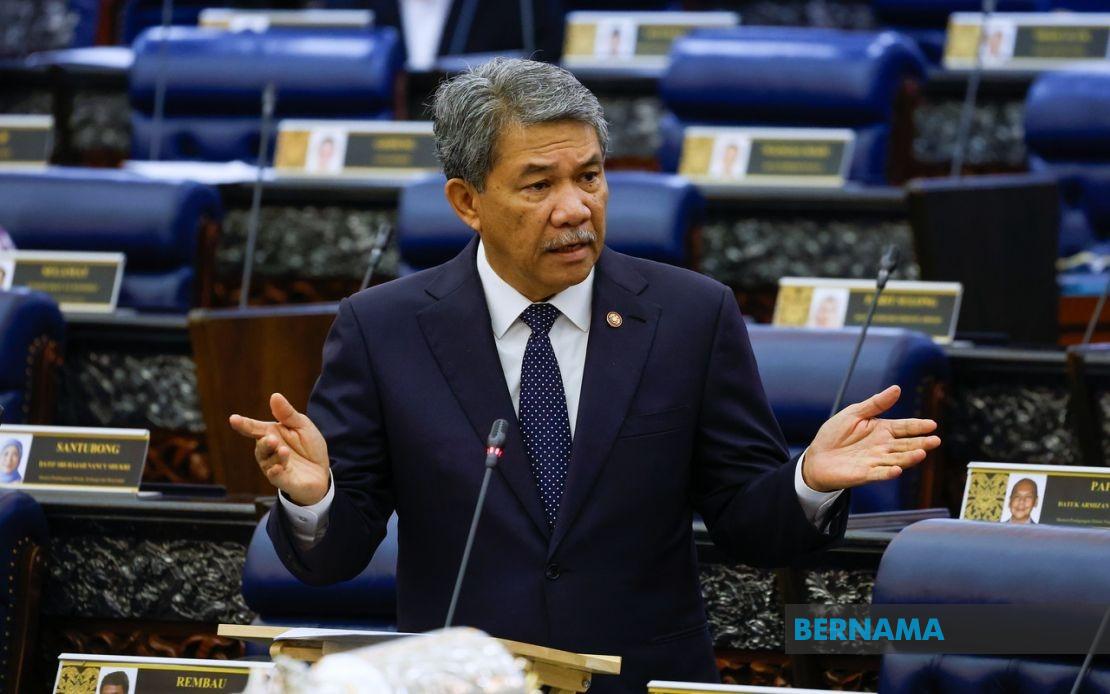
ASEAN is recalibrating its approach to the Myanmar crisis, with regional leaders acknowledging that the original peace framework requires fresh momentum to gain traction with the military junta. Speaking in parliament on June 25, Foreign Minister Datuk Seri Mohamad Hasan indicated that despite modest signs of progress on the ground, Myanmar has not delivered the substantive outcomes that ASEAN members collectively expected when they first endorsed the Five-Point Consensus (5PC) as the cornerstone of regional peace efforts.
The 5PC, agreed upon by ASEAN leaders as a roadmap for resolving Myanmar's internal conflict, has faced mounting criticism from observers who question whether the consensus-based diplomatic approach has sufficient teeth to influence the coup-installed military government's behaviour. Mohamad's acknowledgment that new approaches are being explored reflects growing frustration within the bloc that incremental engagement has yielded limited results in halting violence or advancing political dialogue within Myanmar.
At the 48th ASEAN Summit held in Cebu, Philippines, on May 8, regional leaders made a strategic decision to delegate greater responsibility to their foreign ministers. Rather than relying solely on the framework's original architecture, ASEAN heads of state tasked their diplomatic chiefs with conducting informal consultations directly with Myanmar authorities to assess the current situation and determine appropriate next steps. This shift represents a pivot from the ceremonial approach that had characterised earlier phases of ASEAN engagement, signalling that regional leaders are prepared to adopt more intensive bilateral and multilateral dialogues.
Crucially, Mohamad stressed that any modifications to the 5PC itself would require formal approval from ASEAN heads of state, meaning that while the foreign ministers have latitude to explore implementation tactics, fundamental changes to the consensus remain subject to the highest level of regional decision-making. This distinction is significant for understanding the constraints within which ASEAN operates—the bloc cannot unilaterally abandon or substantially rewrite its position without full consensus, a requirement that itself can slow strategic adaptation.
Malaysia has specifically championed the extension of Myanmar's current six-month ceasefire, which is scheduled to expire at the end of July. Mohamad indicated that Kuala Lumpur views this impending deadline as an opportunity to negotiate a second phase of confidence-building measures that would serve as a foundation for more comprehensive peace negotiations. By proposing an extended cessation of hostilities rather than an abrupt expiration of the current arrangement, Malaysia seeks to create diplomatic space for more ambitious peace architecture without appearing to capitulate to the junta's preferred pace of engagement.
Beyond ceasefire extension, Malaysia has pushed for the Myanmar military government to articulate a detailed roadmap outlining how the peace process will evolve and how various stakeholder groups will be incorporated into future dialogue. This demand for clarity reflects ASEAN's frustration with vague commitments and unmet timelines that have characterised the junta's engagement thus far. An explicit roadmap would theoretically constrain the military government's freedom of action and provide measurable benchmarks against which ASEAN can assess compliance or non-compliance.
Underlying ASEAN's recalibrated approach is a strategic anxiety about Myanmar's potential marginalisation within the region and the resulting vacuum that external powers might fill. Mohamad articulated this concern directly, emphasizing that ASEAN does not want Myanmar to become isolated in ways that invite third-party intervention by countries with competing geopolitical interests. This framing reflects the bloc's broader concern about maintaining its centrality in Southeast Asian affairs and preventing external actors from exploiting Myanmar's instability to advance their own strategic objectives.
The invocation of this vacuum concern carries particular resonance in the current geopolitical climate, where competition between the United States, China, and India for influence in Southeast Asia has intensified. Myanmar's geographic position, substantial natural resources, and strategic location along major trade and communication corridors make it a prize that external powers would gladly contest if ASEAN appears unable to manage the situation through its own mechanisms. ASEAN's desire to keep Myanmar engaged within regional frameworks, even as engagement remains frustratingly unproductive, reflects this calculation.
Malaysia's commitment to maintaining multilateral engagement with all relevant Myanmar actors—including the junta, the National Unity Government, the People's Defence Force, and the array of ethnic armed organisations—underscores the complexity of ASEAN's diplomatic task. Rather than taking a categorical position against any particular party, Malaysia positions itself as a facilitator capable of shuttling between competing factions while maintaining the fiction of ASEAN unity. This approach preserves Malaysia's role as a credible interlocutor but risks diffusing responsibility and accountability across too many parties.
The parliamentary exchange between Mohamad and opposition legislator William Leong Jee Keen (PH-Selayang) also illuminates the domestic political dimension of Malaysia's Myanmar policy. By being asked directly about whether a new approach should be considered given Myanmar's non-compliance with the 5PC, Mohamad had opportunity to demonstrate to parliament that Malaysia is actively reassessing regional strategy rather than rigidly adhering to a failed framework. This domestic accountability mechanism may itself constrain Malaysia's diplomatic flexibility on Myanmar policy.
Looking forward, the success or failure of ASEAN's revised approach will likely hinge on whether the foreign ministers can develop sufficient leverage over Myanmar's military leadership to secure meaningful commitments on ceasefire extension and dialogue roadmaps. Given Myanmar's traditional resistance to external pressure and the junta's confidence in its ability to manage internal security challenges, this remains an uncertain prospect. ASEAN's challenge is to find instruments of persuasion—whether through economic incentives, face-saving diplomatic formulations, or strategic engagement with regional powers—that move Myanmar toward greater compliance with regional consensus.
For Malaysia and other ASEAN members, the revised strategy represents both an admission that previous approaches required recalibration and an assertion that the bloc retains agency in shaping Myanmar's trajectory. Whether this recalibrated engagement produces substantive progress or merely delays inevitable further deterioration in Myanmar's political and security situation will become clearer as the current ceasefire expiration date approaches and foreign ministerial consultations unfold.

