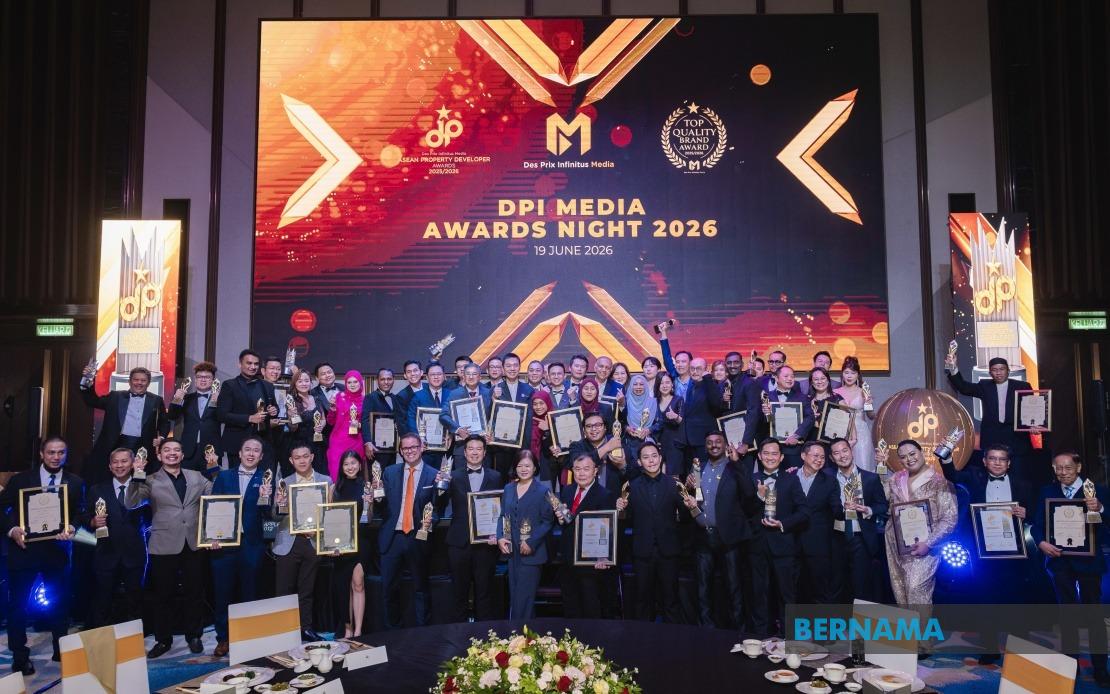
A prestigious awards ceremony in Kuala Lumpur has honoured more than 70 outstanding organisations from across Southeast Asia, recognising their contributions to property development excellence and brand quality leadership. The ASEAN Property Developers Awards 2025/2026 and Top Quality Brand Awards 2025/2026 were presented by Deputy Minister in the Prime Minister's Department (Federal Territories) Datuk Lo Su Fui and Des Prix Infinitus Media Managing Director Hagenz Choo, marking a significant occasion for industry recognition across the ASEAN region.
The magnitude of this recognition event underscores the growing maturity and competitiveness of the ASEAN property and business sectors. By bringing together developers, brand leaders, and corporate achievers from multiple countries, the awards serve as a platform for celebrating regional progress while setting benchmarks for excellence that ripple across national borders. This regional approach reflects how interconnected ASEAN's business ecosystems have become, with successful strategies and innovations increasingly flowing across market boundaries.
In addressing the assembled audience, Datuk Lo emphasised that the ASEAN Property Developers Award acknowledges those leaders whose projects are fundamentally reshaping urban landscapes throughout Southeast Asia. These organisations extend their influence beyond mere construction; they function as architects of community development, contributing substantively to the region's economic trajectory. The award category specifically highlights developers whose work aligns with creating inclusive, safe, resilient, and environmentally responsible urban environments—a framework that addresses the intertwined challenges of rapid urbanisation and climate imperatives that define Southeast Asia's development agenda.
The sustainability dimension has become integral to how industry excellence is measured and rewarded. Datuk Lo noted that these developments advance the broader ASEAN commitment to sustainable cities and communities, reflecting recognition that property development cannot be separated from environmental responsibility. For Malaysian readers particularly, this aligns with the nation's broader climate objectives and its pathway toward carbon neutrality, positioning local developers who embrace these principles as contributors to a nationally-significant transition.
The Top Quality Brand Award segment of the ceremony honours organisations that have cultivated enduring consumer trust through consistent delivery, inventive approaches, and unwavering customer focus. These awards increasingly recognise brands that embed Environmental, Social, and Governance principles into their foundational business strategies rather than treating sustainability as a peripheral concern. This evolution reflects shifting consumer expectations across ASEAN markets, where purchasing decisions increasingly factor in corporate responsibility and ethical practices alongside traditional quality metrics.
Datuk Lo drew particular attention to Kuala Lumpur's trajectory as a vibrant, progressive urban centre, attributing this success partly to deliberate urban planning that prioritises responsibility and sustainability. This framing positions property development not as a technical exercise but as a crucial lever for advancing national development objectives. The association between award-winning developers and Malaysia's carbon neutrality ambitions demonstrates how industry recognition now directly connects to policy goals, creating incentive structures that reward alignment with climate and social commitments.
Hagenz Choo articulated the broader mission of Des Prix Infinitus Media, positioning the organisation as more than a publishing entity but rather as a custodian of success narratives and credibility-building mechanism. This perspective reveals how awards ceremonies function within the broader ecosystem of business communication and reputation management. By curating stories of excellence and creating formal recognition structures, such platforms influence which companies are perceived as industry leaders and which business practices are validated as exemplary—a influence that extends far beyond the ceremony itself.
Choo's characterisation of property development emphasises that the sector's highest achievements transcend transactional real estate activity. Successful developers recognise that their projects must generate genuine value for residents and communities, a principle that elevates development from financial engineering to community building. This framing challenges a perception, sometimes prevalent in ASEAN markets, that property development exists primarily to generate investor returns, instead advancing a stakeholder-inclusive model where developer success is measured by community benefit alongside financial performance.
The diversity of sectors represented at the ceremony underscores ASEAN's emergence as a consequential business hub characterised by sophisticated competition and varied excellence pathways. Rather than concentrating awards within a narrow sector segment, the ceremony's breadth suggests recognition is distributed across multiple industries and business models, from traditional development to contemporary brand enterprises. This inclusive approach reflects the reality that regional growth depends not on single dominant industries but on ecosystem-wide elevation of standards and competitive intensity.
For Malaysian business observers, the prominence given to ASEAN-level awards carries particular significance. Malaysia's economy, while substantial regionally, represents one participant among ten ASEAN members, each with substantial market potential. Awards mechanisms that operate at the regional level create platforms for Malaysian companies to gain recognition beyond domestic markets and establish credibility across borders. Simultaneously, exposure to award-winning practices from other ASEAN members provides Malaysian entrepreneurs with competitive intelligence and innovation benchmarks.
The ceremony's timing and scale suggest growing recognition that business excellence merits formal celebration and public acknowledgment across the ASEAN region. As multinational corporate competition intensifies and consumer expectations for corporate responsibility rise, mechanisms that publicly distinguish leading performers become more consequential. These awards shape investment decisions, influence consumer choices, and signal to emerging businesses which practices and principles merit emulation.
Des Prix Infinitus Media's role as award organiser reflects the emerging specialisation within media and communications sectors focused on business-to-business credibility and reputation management. By maintaining rigorous evaluation standards and prestigious recognition frameworks, such organisations create valuable intellectual property in the form of validated excellence benchmarks. For businesses seeking competitive advantage, association with such award recognition provides tangible positioning benefits in crowded markets.
Looking forward, the prominence of sustainability and governance considerations within these awards suggests future business success in ASEAN will increasingly depend on alignment with environmental and social standards. Companies failing to embed these considerations into core operations may find themselves disconnected from recognised excellence benchmarks, creating competitive disadvantage. For Malaysian enterprises particularly, this trend validates investments in sustainable practices and governance improvements as competitive necessities rather than optional enhancements, directly affecting long-term market viability and stakeholder confidence.

