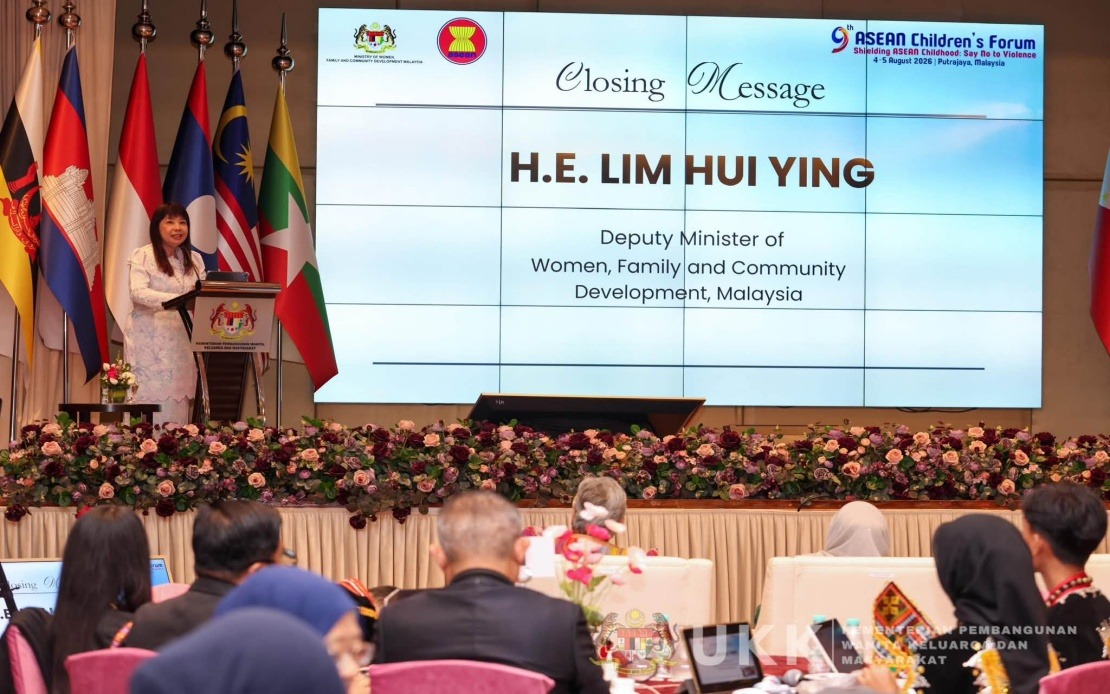
Child protection standards across Southeast Asia need significant strengthening, according to recommendations emerging from the 9th ASEAN Children's Forum held in Putrajaya. The hybrid gathering brought together young participants from across the ten-member bloc to articulate their concerns about violence in all its forms—physical, emotional, psychological and sexual—and to propose concrete solutions that policymakers should now consider at both national and regional levels.
Deputy Women, Family and Community Development Minister Lim Hui Ying emphasised that the voice of children themselves must inform policy development going forward. She noted that the recommendations presented by young participants represented authentic accounts of their daily realities, their hopes for the future, and their understanding of what protection truly means. This direct input from children, she argued, should carry significant weight when governments, ASEAN sectoral bodies and international partners evaluate whether existing frameworks adequately shield young people from harm.
The forum identified four critical environments where children face distinct vulnerabilities: the home, educational institutions, digital spaces, and broader community settings. For each domain, participants developed tailored recommendations reflecting context-specific threats. This segmented approach recognises that the nature of violence and the protective mechanisms required differ substantially depending on where children spend their time and how they interact with authority figures and peers.
Strengthening the legislative foundation emerged as a foundational priority. Current child protection laws across ASEAN vary considerably in their comprehensiveness and enforcement capacity. Many jurisdictions lack legislation specifically addressing emerging forms of harm, particularly online exploitation and cyberbullying. Participants called for governments to review existing statutes and introduce new provisions that reflect contemporary realities, ensuring that legal frameworks evolve alongside changing threats to child safety.
Equally important is the need to establish and promote child-friendly reporting mechanisms. Many abused children never come forward because existing channels for disclosure feel intimidating, inaccessible, or unlikely to result in meaningful intervention. The forum highlighted that reporting systems must be designed with children's needs and capacities in mind—accessible, confidential, responsive, and staffed by trained personnel who understand child development and trauma-informed practices. Without such infrastructure, protective legislation becomes hollow.
Anti-bullying policies require systematic implementation, the forum stressed. Bullying in schools and online communities causes documented psychological harm and can escalate into more serious violence. Participants emphasised that schools must adopt clear, enforceable anti-bullying codes with transparent consequences, coupled with restorative practices that address root causes rather than simply punishing perpetrators. Similarly, digital platforms must be held accountable for moderating harmful content and supporting victims.
Psychosocial support services demand expansion across the region. Children who experience violence often carry lasting emotional and psychological scars that impede development, education, and social functioning. The forum called for increased mental health resources, school-based counselling, trauma-informed care, and community support networks that help children process experiences of violence and build resilience. Many ASEAN nations currently lack adequate capacity in this area.
The recommendations also emphasised the necessity of inclusive services for marginalised children. Street children, children in migrant communities, those with disabilities, and other vulnerable groups often fall through protective gaps. Participants stressed that safeguarding frameworks must specifically address the needs of these populations, recognising that standard approaches may not reach or adequately protect those already on society's margins.
Beyond legislative and institutional measures, the forum recognised that child protection ultimately depends on cultural transformation across multiple sectors. Parents, teachers, private sector leaders, civil society organisations, media outlets, and peer groups all shape environments where children either thrive or suffer. Participants highlighted the crucial role these stakeholders play in normalising respect for children's rights, intervening when abuse occurs, and creating communities where safety is genuinely prioritised rather than merely proclaimed.
The forum concluded with participants themselves committing to peer-to-peer advocacy—pledging to support one another and foster cultures of care and mutual respect within their own circles. This grassroots commitment from young people themselves adds moral weight to the policy recommendations directed at adults and institutions. It suggests that generational change may already be underway among children who have been given space to voice concerns and envision alternatives.
For Malaysia and its ASEAN partners, these recommendations present both an opportunity and an obligation. The diverse experiences represented in the forum—spanning urban and rural contexts, conflict-affected and stable regions, wealthy and developing economies—provide a rich evidence base for policy refinement. Governments that respond seriously to these child-centred recommendations demonstrate commitment to their youngest citizens while contributing to a more cohesive and secure regional community.

