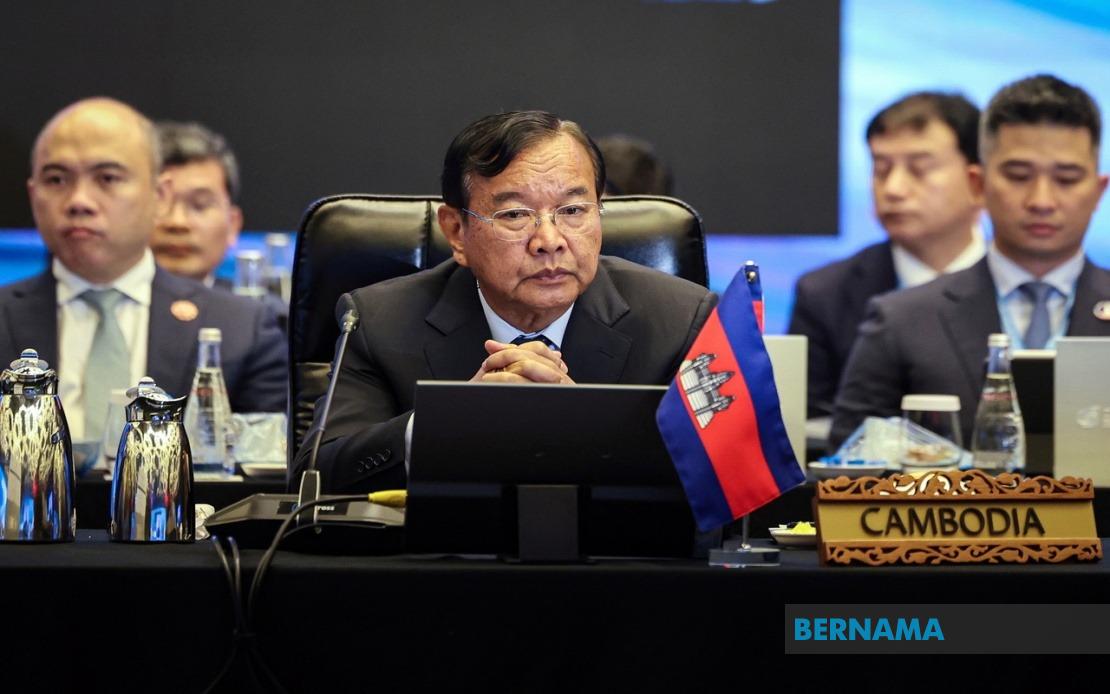
Cambodia's Deputy Prime Minister and Foreign Affairs Minister Prak Sokhonn has issued a forceful call for ASEAN to move beyond a reactive posture in addressing the mounting geopolitical turbulence confronting Southeast Asia, arguing instead that the bloc must seize the initiative in shaping outcomes that favour regional interests. Speaking in an official statement marking ASEAN's 59th anniversary, Sokhonn positioned the ten-member organisation as essential to maintaining peace and stability amid what he characterised as an increasingly unstable global environment defined by resurgent military conflicts, deepening great-power competition, and mounting threats to the international legal order.
The Cambodian minister's remarks reflect growing anxieties within ASEAN capitals about the bloc's capacity to maintain relevance and cohesion as external pressures intensify. Over the past six decades since its formal establishment on August 8, 1967, ASEAN has fundamentally transformed the trajectory of Southeast Asian affairs, according to Sokhonn's assessment. What was once a region fractured by ideological divides, territorial disputes, and Cold War tensions has evolved into a space characterised predominantly by dialogue, collaborative frameworks, and shared economic advancement. This transformation did not occur spontaneously but resulted from deliberate institutional choices, particularly the commitment to the ASEAN Charter and the Treaty of Amity and Cooperation, which establish binding principles of non-interference, non-aggression, and peaceful dispute resolution.
Yet Sokhonn's message carries an implicit warning that this hard-won stability cannot be taken as permanent. The contemporary global landscape presents multiple destabilising forces that demand ASEAN's active engagement rather than detached observation. Armed conflicts in neighbouring regions, intensifying strategic competition between major powers, and the erosion of multilateral mechanisms that underpinned the post-Cold War order all threaten the regional architecture that has enabled Southeast Asia's development. For Malaysian observers, this argument carries particular resonance given Malaysia's longstanding commitment to strengthened multilateralism and its own role as a bridge between different regional blocs.
The minister's call for ASEAN to shape rather than merely react to global developments suggests a recognition that the bloc's traditional posture of consensus-based neutrality, while valuable for maintaining unity, may prove insufficient in an era of sharper strategic competition. ASEAN members increasingly find themselves under pressure from major powers to align with competing visions for regional order. Sokhonn's framing appears designed to reorient debate toward ASEAN's collective agency and the protection of regional prerogatives against external determination of Southeast Asian affairs. This argument aligns with ongoing discussions within ASEAN about the bloc's role in proposed regional security frameworks and its position amid US-China strategic rivalry.
Cambodia's emphasis on ASEAN unity and centrality also reflects the country's own investment in the organisation since its accession in 1999. Sokhonn's affirmation of Cambodia's commitment to strengthening the bloc's unity and resilience signals that despite occasional tensions within ASEAN over various bilateral and multilateral issues, member states continue to regard the organisation as fundamentally valuable. Cambodia's membership represented a significant expansion of ASEAN's footprint and a commitment to integrating Southeast Asia's transitional democracies into a rules-based regional system.
The statement's repeated emphasis on strict adherence to the ASEAN Charter and Treaty of Amity and Cooperation appears designed to address persistent concerns about erosion of ASEAN's founding principles. These documents establish the legal and normative foundation for regional order, yet interpretations of their meaning sometimes diverge among member states, particularly regarding the extent to which individual members should prioritise bilateral relationships with major powers over collective ASEAN positions. By reiterating these commitments in principle and practice, Sokhonn signals that Cambodia, at least, believes ASEAN's foundational documents remain relevant and binding guides for member conduct.
The current membership composition of ASEAN includes Brunei, Cambodia, Indonesia, Laos, Malaysia, Myanmar, the Philippines, Singapore, Thailand, Vietnam, and Timor-Leste. This expanded membership, particularly the addition of Timor-Leste and the continued inclusion of Myanmar despite longstanding tensions over governance, reflects ASEAN's commitment to incorporating the broader Southeast Asian region. However, managing consensus among such a diverse group—spanning different development levels, political systems, and strategic orientations—remains a perpetual challenge that shapes the bloc's capacity for decisive action.
For Malaysia and other ASEAN members, the relevance of Sokhonn's message extends beyond ceremonial acknowledgment of ASEAN's anniversary. Southeast Asia faces genuine strategic pressures that could fragment the region if ASEAN fails to maintain institutional coherence. The ongoing Myanmar crisis, maritime disputes in the South China Sea, economic competition for regional influence from powers including the United States and China, and divergent responses to issues ranging from climate change to pandemic preparedness all test ASEAN's capacity to maintain consensus while advancing shared interests. Malaysia, as a significant regional power and traditional champion of ASEAN solidarity, has particular stakes in the bloc's continued effectiveness.
Sokhonn's call for proactive rather than reactive leadership implies that ASEAN should develop clearer positions on emerging regional challenges rather than allowing events to determine outcomes. This might involve strengthening institutional mechanisms for conflict prevention, developing more robust frameworks for addressing transnational challenges, and articulating more explicitly ASEAN's vision for its preferred regional order. Such measures would require members to balance their individual strategic interests against collective benefits, a perennial tension within ASEAN decision-making.
The minister's framing also suggests that ASEAN's traditional emphasis on non-interference in members' internal affairs, while essential for maintaining unity, requires calibration in contexts where internal instability threatens regional peace. The Myanmar situation illustrates this dilemma acutely, with some ASEAN members and civil society advocates arguing that stronger regional mechanisms for addressing governance failures would serve regional interests better than strict neutrality.
Ultimately, Sokhonn's message articulates a vision of ASEAN as an agent rather than merely an arena where regional and global powers compete for advantage. Whether ASEAN can realise this aspiration depends on whether member states, including Malaysia, prove willing to invest sufficient political capital in collective mechanisms and whether the bloc can maintain the flexibility necessary to address novel challenges while remaining faithful to founding principles.

