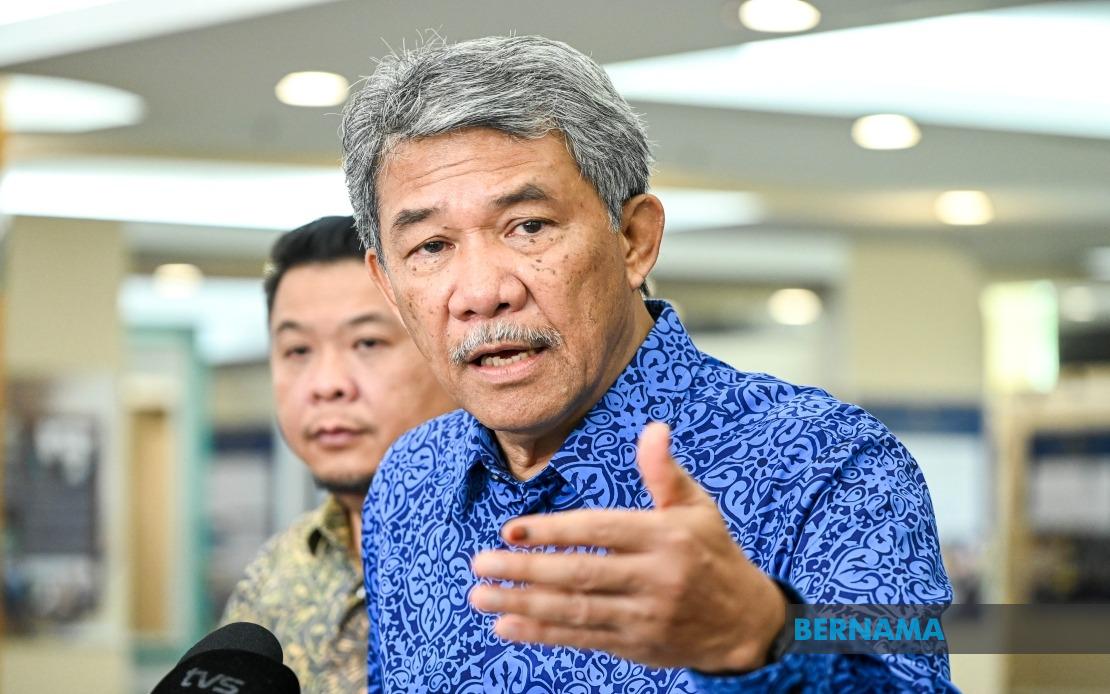
ASEAN faces a significant structural challenge in realising its ambition to become the world's fourth-largest economic bloc within the next six years: the ten-member organisation is conducting far too little trade with itself. Speaking at the 59th ASEAN Day celebration in Putrajaya on Monday, Foreign Minister Datuk Seri Mohamad Hasan underscored that intra-ASEAN trade currently represents less than 25 per cent of the region's total commercial activity, a figure that reveals substantial untapped potential for growth among neighbouring economies.
The shortfall is particularly notable given that ASEAN comprises some of Southeast Asia's most dynamic and complementary economies, ranging from manufacturing powerhouses to resource-rich nations and emerging services hubs. If the bloc is to achieve the economic standing comparable to major global powers, deepening the interdependency among members through increased bilateral and multilateral commerce has become essential. Mohamad's remarks suggest that ASEAN leadership recognises this structural weakness and is actively pivoting the organisation's strategic focus beyond its traditional emphasis on political stability and diplomatic coordination toward concrete economic integration.
The shift in priorities reflects a fundamental recalibration of ASEAN's raison d'être in an era of intense great power competition and economic pressures. Rather than functioning primarily as a geopolitical arbiter balancing major powers, ASEAN is increasingly positioning itself as a cohesive economic entity capable of leveraging its combined market of over 650 million people. This reorientation has profound implications for member states like Malaysia, which have historically benefited from ASEAN's diplomatic neutrality but now stand to gain substantially from tighter economic bonds with regional peers.
The Foreign Minister highlighted that ASEAN possesses several institutional mechanisms designed to facilitate increased intra-regional commerce. Chief among these is the established framework for the free movement of goods among member states, which theoretically eliminates tariff barriers and streamlines customs procedures. However, the persistence of intra-ASEAN trade below the 25 per cent threshold suggests that these frameworks, while important, have not yet achieved their full potential in driving integration. This gap points to lingering implementation challenges, regulatory inconsistencies across borders, and possibly the enduring pull of extra-regional trade relationships that remain more profitable or logistically efficient for many businesses.
Malaysia's role in catalysing this economic agenda cannot be overstated. During its ASEAN chairmanship in the previous year, the country spearheaded the development of multiple initiatives and resolutions designed to establish a robust foundation for sustained regional economic collaboration. These measures, formalised through the Kuala Lumpur Declaration and other official instruments, represent Malaysia's commitment to transforming ASEAN from a primarily political association into a genuine economic union capable of competing with established trading blocs and major economies.
The Philippines, assuming the ASEAN chair for the current year, has inherited and is actively advancing these proposals. This continuity across successive chairmanships is crucial, as regional economic integration typically requires sustained momentum and coordinated effort spanning several years. The transition from Malaysia's stewardship to the Philippines demonstrates that ASEAN's economic agenda transcends individual national priorities and reflects a genuine consensus among member governments about the strategic direction of the bloc.
Malaysia has been further designated as the Permanent Shepherd, or Permanent Auditor, of the ASEAN Community 2045 Vision, a long-term framework intended to guide the organisation's development through 2045. This appointment reflects confidence in Malaysia's institutional capacity and strategic thinking. In this elevated role, Malaysia is tasked with ensuring that foundational economic pillars—particularly the expansion of intra-regional trade—are systematically strengthened and advanced. The responsibility underscores Malaysia's stakes in whether ASEAN succeeds in its ambitions and signals that Kuala Lumpur will play an active custodian role in monitoring compliance and progress.
The trajectory toward a fourth-largest global economy status carries tangible benefits for Malaysian businesses and workers. Enhanced intra-ASEAN trade would create new export markets within the region for Malaysian goods and services, reduce dependence on extra-regional demand, and foster deeper supply chain integration that could enhance competitiveness. Manufacturing sectors spanning automotive components, electronics, pharmaceuticals, and agricultural products could all benefit from more seamless access to neighbouring markets. Similarly, Malaysian service providers in finance, tourism, education, and logistics stand to expand operations across ASEAN if trade and investment frameworks continue liberalising.
Yet achieving these gains requires addressing persistent obstacles that have constrained intra-ASEAN commerce to date. Non-tariff barriers including divergent standards, technical regulations, and customs practices continue to impede smooth trade flows despite formal agreements. Infrastructure bottlenecks, particularly in logistics and transportation connectivity, remain problematic in several corridors. Additionally, many ASEAN businesses remain oriented toward serving extra-regional markets or rely on imported inputs from outside the bloc, reducing incentives to source locally or establish regional production networks.
The timeframe for reaching the fourth-largest economy milestone—2030—is ambitious given these structural challenges. Achieving meaningful increases in the intra-ASEAN trade share will require coordinated policy reforms, substantial infrastructure investment, and active encouragement of private sector engagement across borders. The target implies that the bloc's internal trade share must rise from below 25 per cent to considerably higher levels, a transformation that cannot occur through institutional arrangements alone but demands deliberate business strategy and investment decisions by companies operating in the region.
For Malaysia specifically, the implications are dual-edged. Success would enhance the country's economic growth prospects and position it as a regional economic hub; failure would underscore ASEAN's structural limitations in competing economically and might necessitate a recalibration of strategic expectations. As the Permanent Auditor of ASEAN Community 2045, Malaysia bears responsibility not only for advocating stronger trade integration but for ensuring member states honour commitments and implement necessary reforms. The coming years will reveal whether ASEAN's latest economic ambitions represent achievable goals or aspirational rhetoric disconnected from political and business realities.

