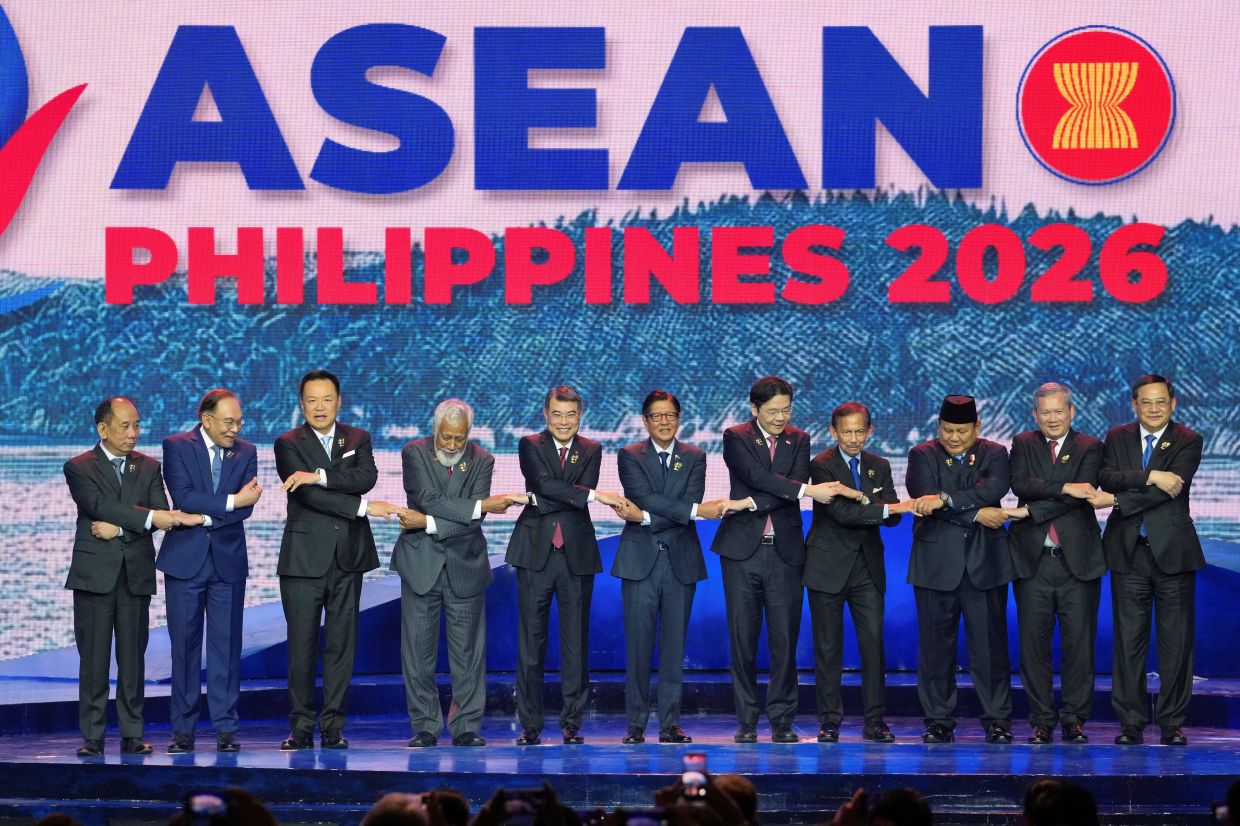
Southeast Asia's diplomatic establishment converges on Manila this week as the Association of Southeast Asian Nations hosts its annual ministerial forum, drawing senior envoys from across the globe to deliberate on some of the world's most pressing geopolitical challenges. The three-day gathering under the Philippines' ASEAN chairmanship will bring together the region's foreign ministers alongside top diplomats from the United States, China, Russia, and the European Union, creating a rare diplomatic platform where competing interests must navigate competing agendas. The convergence of these power brokers reflects the complex position Southeast Asia occupies—simultaneously seeking stability while managing pressure from rival global powers competing for influence across the Indo-Pacific.
The immediate trigger for heightened concern among ASEAN capitals centres on the escalating Middle East conflict. Foreign ministers are preparing a joint statement expressing alarm over renewed hostilities between the United States and Iran, particularly as fighting threatens to destabilize one of the world's most critical chokepoints for global commerce. The Strait of Hormuz, through which approximately one-fifth of the planet's oil supply passes, now faces potential disruption—a development with acute ramifications for Southeast Asia's energy security. The region's rapid economic growth depends heavily on steady flows of petroleum and natural gas from Middle Eastern producers, making any prolonged disruption to shipping lanes a direct threat to industrial output and consumer prices across the entire ten-nation bloc.
For Southeast Asian governments, the Middle East crisis carries immediate domestic consequences. The Philippines already felt compelled to declare a national energy emergency in March, with President Ferdinand Marcos Jr. implementing measures to secure fuel and food supplies while preventing hoarding and price manipulation. Similar pressures exist across the region, where inflation concerns and fuel availability shape public sentiment and government legitimacy. The prospect of sustained conflict in the Middle East threatens to resurrect the global supply shocks and commodity price spikes that battered Southeast Asian economies in previous crises, potentially undoing recent economic gains and complicating fiscal management for already-stretched government budgets.
Beyond energy concerns, U.S. State Secretary Marco Rubio's attendance carries symbolic weight regarding American commitment to the Indo-Pacific. Washington's military and diplomatic focus on the Middle East has triggered anxiety across Southeast Asia that the United States may be withdrawing strategic attention from regional security challenges—particularly China's increasingly assertive posture in the South China Sea and its military modernization aimed at Taiwan. The Trump administration has pledged to help deter Chinese aggression against the self-governing island, yet the diversion of American military resources and diplomatic bandwidth toward Iran raises questions about the credibility of those commitments. Rubio's participation is intended to reassure allies and partners that Washington remains invested in maintaining what officials describe as a "free and open Indo-Pacific."
Rubio's possible meeting with Chinese Foreign Minister Wang Yi underscores the diplomatic tightrope both powers must walk. Before departing Washington, the secretary of state indicated openness to engagement with his Chinese counterpart, recognizing that despite fundamental disagreements, sustained dialogue between major powers serves mutual interests and broader global stability. Such pragmatism reflects an understanding that complete disengagement between Washington and Beijing would destabilize the region far more than managed competition. Simultaneously, ongoing disputes over election interference allegations and trade friction complicate the diplomatic landscape, though both sides recognize that continued communication channels remain preferable to escalating confrontation.
On the ASEAN agenda sits Myanmar's deepening humanitarian catastrophe—a regional conflict where the bloc's own diplomacy has demonstrably failed. Since the military overthrew Aung San Suu Kyi's democratically elected government in 2021, more than eight thousand people have perished in fighting, with nearly twenty-three thousand languishing in detention according to human rights monitors. ASEAN's 2021 five-point peace plan has collapsed under the weight of the junta's intransigence, leading the bloc to exclude Myanmar's military-backed leadership from high-level meetings as a nominal sanction. Yet this approach has produced negligible results, leaving Southeast Asian ministers facing an uncomfortable reality: their preferred tools for managing regional crises—consensus-based diplomacy and quiet engagement—prove ineffective against actors unwilling to compromise.
Recently, Philippine Foreign Secretary Theresa Lazaro, acting as ASEAN's special envoy, broke ranks by meeting Myanmar's foreign minister Tin Maung Swe in Bangkok—the first encounter in five years between ASEAN and Myanmar's top diplomat. This maneuver prompted sharp criticism from human rights organizations, which contend that engaging junta representatives without extracting concrete concessions effectively abandons the enforcement mechanisms that give ASEAN's isolation policy meaning. Lazaro countered that dialogue with all conflict parties, including the military regime, remains essential to achieving peace, characterizing the encounter as renewed diplomatic effort rather than capitulation. This tension reflects a fundamental challenge confronting ASEAN throughout its history: balancing principled positions on human rights and democracy against pragmatic recognition that complete isolation produces paralysis rather than reform.
The South China Sea territorial disputes occupy equally urgent space on the ministerial agenda, particularly regarding negotiations over a proposed "code of conduct" between ASEAN and China. These contested waters involve overlapping claims by China, Taiwan, and ASEAN members Brunei, Malaysia, the Philippines, and Vietnam—disputes that have grown increasingly militarized in recent years. Philippine and Chinese coast guard vessels have experienced repeated confrontations, sometimes escalating to dangerous close encounters that risk miscalculation and unintended conflict. The code of conduct, long under negotiation, aims to establish rules of engagement preventing disputes from spiraling into armed conflict, yet achieving genuine agreement has proven elusive as Beijing seeks language protecting its assertive activities while other claimants demand meaningful restraint.
For Malaysia and other Southeast Asian nations, the South China Sea disputes represent an existential concern inextricably linked to sovereignty and economic viability. Fishing grounds and potential hydrocarbon reserves lie within contested zones, while freedom of navigation underpins regional trade. China's strategy of establishing facts on the ground through military installations and civilian presence creates a gradual, incremental approach to territorial consolidation that complicates international legal responses. ASEAN's challenge lies in maintaining united positions while accommodating different national interests—Vietnam and the Philippines require stronger language protecting their claims, while some members maintain closer ties with Beijing that constrain their negotiating posture. This internal division weakens ASEAN's collective bargaining power and allows China to engage individual members bilaterally, fragmenting the bloc's strategic coherence.
The convergence of these multiple crises—Middle Eastern instability, Myanmar's unresolved civil war, and South China Sea tensions—illustrates the interconnected nature of modern regional security. Southeast Asia occupies a precarious position, simultaneously dependent on supply routes traversing the Middle East, threatened by unresolved internal conflicts, and confronted by great power competition for regional influence. ASEAN's founding principle of non-interference and consensus decision-making, designed for a different era, struggles to accommodate contemporary challenges requiring decisive action and clear positions. The week's ministerial discussions will likely generate diplomatic statements and commitments to ongoing dialogue, yet the fundamental challenge remains unchanged: Southeast Asian nations must navigate between multiple powerful actors—each pursuing its own strategic interests—while defending regional autonomy and seeking prosperity amid persistent instability.

