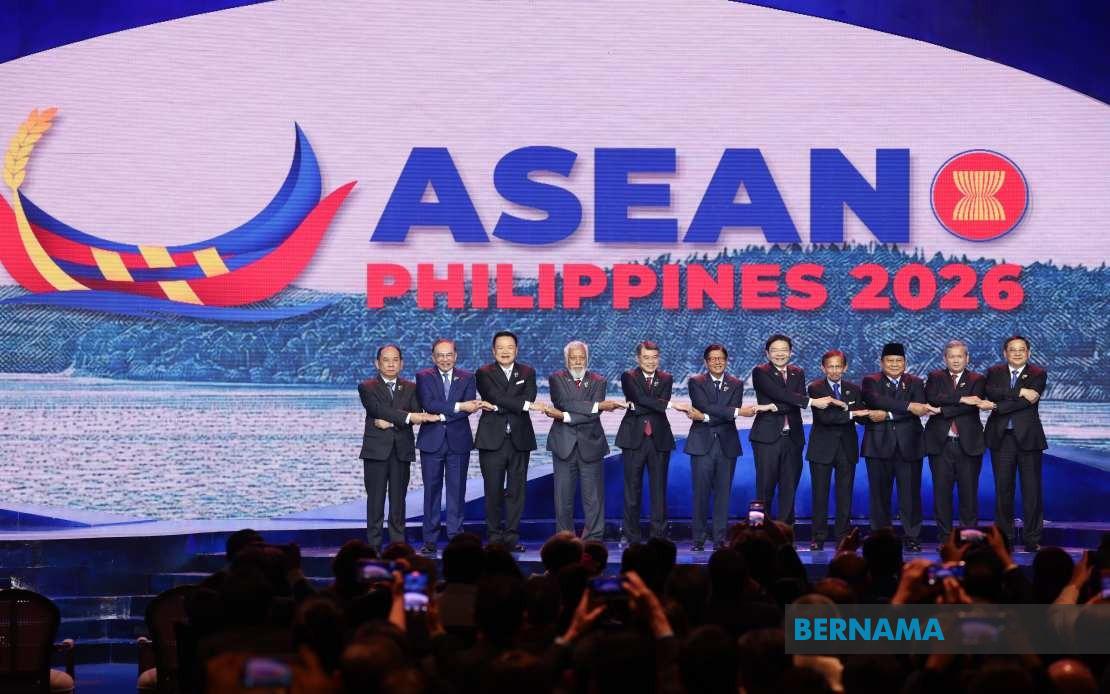
The Association of Southeast Asia Nations marked its 59th anniversary this week at a defining moment in the region's history, as the bloc grapples with a fundamentally altered geopolitical landscape that demands fresh strategic thinking. Founded on August 8, 1967, by Indonesia, Malaysia, the Philippines, Singapore, and Thailand, ASEAN has evolved into an eleven-member organization following the sequential admission of Brunei, Vietnam, Laos, Myanmar, Cambodia, and most recently Timor-Leste in October last year. Yet having established itself over nearly six decades as a consequential voice in regional affairs, the organization now faces a challenge far different from merely establishing its credentials on the world stage.
The immediate environment confronting Southeast Asian policymakers has grown markedly more complex. The escalating tensions between the United States and Iran, combined with wider instability across West Asia, have reverberated through the region with tangible economic consequences. Energy security has emerged as a pressing concern for ASEAN members, while disruptions to global trade corridors and supply chain vulnerabilities threaten prosperity across the bloc. These external pressures have coincided with intensifying strategic competition between Washington and Beijing, a rivalry that shows no signs of abating. Against this backdrop, ASEAN's role as a stabilizing force and honest broker takes on heightened significance, yet paradoxically becomes harder to maintain.
According to analysts observing the organization's trajectory, the organization's survival and relevance no longer hinge primarily on external validation of its importance. Rather, the critical question centers on whether ASEAN can consolidate its own internal architecture while simultaneously demonstrating to the world that it remains a coherent, purposeful actor capable of delivering concrete outcomes. Prof Dr Phar Kim Beng, Director of the Institute of International and ASEAN Studies at the International Islamic University Malaysia and a former ASEAN Secretariat official, frames the challenge in straightforward terms: member states themselves must reinforce ASEAN's centrality through consistent commitment and action, while the organization must work deliberately to transform aspirational goals into operational reality.
The vision guiding this effort is ASEAN Community Vision 2045, an ambitious framework intended to benefit the bloc's 700 million inhabitants through deepened economic integration, enhanced human mobility, and strengthened institutional cooperation. However, translating such vision into tangible improvements in people's lives requires sustained effort across multiple fronts. Phar identifies labor mobility, digital connectivity, and government-to-government coordination as priority areas demanding immediate attention. Without progress in these functional domains, ASEAN risks becoming a forum for dialogue without corresponding improvements in the quality of life for its citizens or in the organization's capacity to act decisively when required.
Dr Rahul Mishra, Associate Professor at the Centre for Indo-Pacific Studies at Jawaharlal Nehru University, emphasizes that ASEAN's considerable normative appeal—its capacity to convene dialogue and build consensus—must be matched by operational effectiveness and practical outcomes. The organization has demonstrated notable skill in navigating internal disagreements and maintaining unity despite profound differences among members. Yet the rising intensity of competition between great powers, coupled with the accelerating dispute over territorial claims in the South China Sea, presents challenges that dialogue alone cannot resolve. The bloc must demonstrate that it can translate its growing diplomatic capital into substantive achievements that advance regional stability and prosperity.
One indication of ASEAN's expanding international engagement came through the elevation of Türkiye to full dialogue partner status, expanding the circle of formal partnerships to twelve nations. Simultaneously, the Treaty of Amity and Cooperation in Southeast Asia—which celebrates its 50th anniversary this year—has attracted new adherents, including Sweden, Poland, Romania, and Lithuania. The number of High Contracting Parties has consequently risen to 62 from 58, suggesting continued international endorsement of ASEAN's principles and frameworks. Yet numbers alone provide insufficient reassurance; what matters is whether these expanding relationships yield concrete cooperation on issues of mutual concern.
Mishra argues that the organization must move decisively beyond the comfort of dialogue toward action-oriented partnerships that deliver results. Intra-regional and regional security cooperation must be strengthened through mechanisms that move faster and operate with greater precision than ASEAN's traditionally consensus-driven approach allows. Physical and digital infrastructure connectivity requires coordinated investment and political commitment from member governments to overcome bureaucratic obstacles. Economic integration, long a stated goal, demands removal of non-tariff barriers and harmonization of standards across the bloc. Dispute resolution mechanisms must function reliably and fairly, offering members confidence that grievances can be addressed without recourse to external arbitration or coercion. Managing relations with major powers requires ASEAN to articulate clear interests and boundaries while maintaining constructive engagement with all parties.
Two particular challenges loom with particular urgency. The Myanmar crisis, now extending into its fourth year, continues to destabilize the region and strain ASEAN solidarity. The ongoing political and humanitarian catastrophe threatens to pull the bloc into internal recriminations and divisions, undermining its ability to act as a unified voice on other matters. Simultaneously, the emergence of organized cyber fraud operations allegedly based in Southeast Asian territory has emerged as a growing scourge affecting neighboring countries and damaging the region's reputation. These issues demand ASEAN to move beyond measured rhetoric toward coordinated, time-bound action backed by genuine political will and resources.
The implications for countries like Malaysia are substantial. As a founding member and perennial voice for regionalism within ASEAN, Malaysia has considerable stake in the organization's ability to maintain relevance and effectiveness. The success or failure of the ASEAN Community Vision 2045 will directly shape Malaysia's economic prospects, security environment, and diplomatic standing in the region. Similarly, the organization's capacity to manage great power competition will influence Malaysia's room for maneuver in navigating relationships with both the United States and China. Strengthening ASEAN's internal cohesion thus represents not an abstract institutional exercise but a practical necessity for advancing Malaysian interests.
The theme selected for this year's ASEAN Day celebration—"Navigating Our Future Together"—carries both aspirational and cautionary weight. The Philippines will chair ASEAN in 2026, when this theme will guide the organization's work program. Yet the choice of words reflects awareness that ASEAN's pathway forward cannot be charted by any single member or external actor. The future depends on sustained commitment from all eleven members to prioritize regional interests above narrow bilateral concerns, to invest in the institutions and mechanisms that bind them together, and to demonstrate through concrete actions that ASEAN remains the central organizing principle of regional order. Without such commitment, the organization risks becoming increasingly marginalized even as its members face challenges that could only be addressed effectively through genuine collective action. The 59th anniversary thus marks not a celebration of accomplishment alone, but a call to recommitment and renewal.

