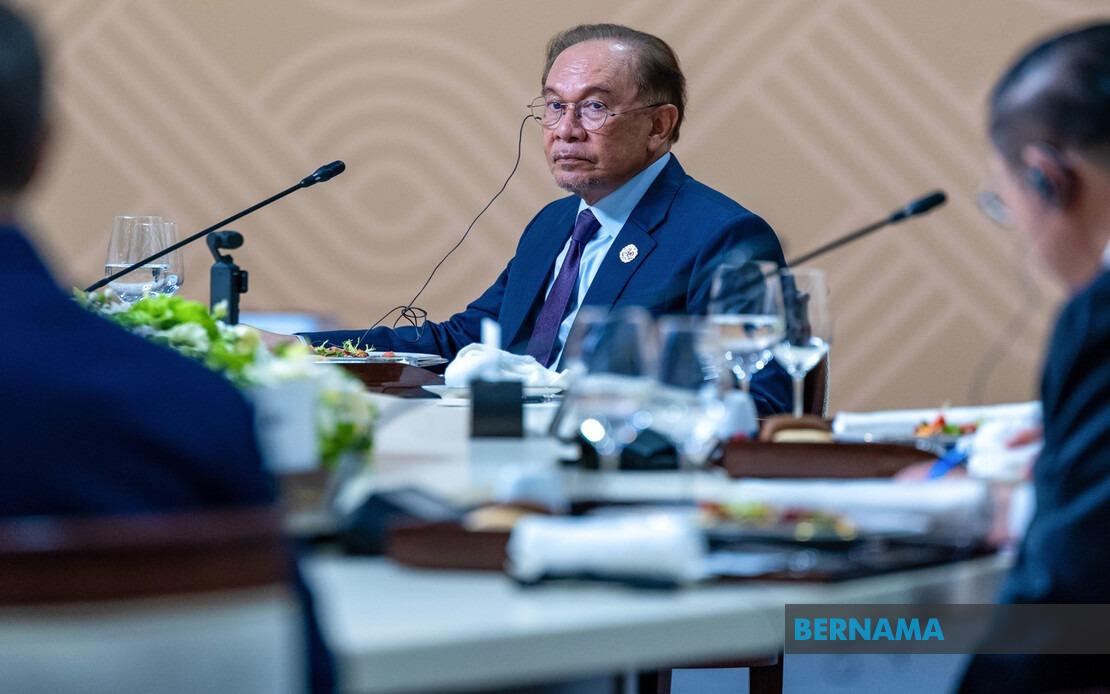
Prime Minister Datuk Seri Anwar Ibrahim has called for ASEAN and the Shanghai Cooperation Organisation to marshal their combined strength in tackling transnational crime and fortifying energy cooperation during multilateral engagements in Kazan. Speaking at the ASEAN-Russia Commemorative Summit, Anwar stressed that both organisations possess the institutional architecture necessary to launch coordinated action on issues that transcend national borders, yet lack the pooled resources and unified approach to realise their full potential. The appeal underscores Malaysia's broader strategic positioning as it navigates deepening ties with both regional partners in Southeast Asia and the wider Eurasian sphere.
The foundation for such collaboration already exists through a 2005 memorandum of understanding between ASEAN's eleven member states and the SCO, which encompasses cooperation frameworks spanning counter-terrorism initiatives, drug control, money laundering prevention, economic partnerships, and energy ventures. However, Anwar indicated that this written accord has not translated into sufficiently ambitious or results-oriented engagement. He proposed that both blocs concentrate their combined diplomatic and technical resources on carefully selected domains where measurable progress could be demonstrated within realistic timeframes, thereby building political momentum for deeper integration.
Criminal enterprises exploiting digital technologies present perhaps the most compelling case for urgent cooperation. Online scams, illicit financial transfers, and human trafficking networks now operate across jurisdictions with velocity that overwhelms individual national law enforcement agencies. Anwar highlighted how these criminal flows move faster than governmental responses can be mounted, creating security vacuums that threaten citizens across multiple nations. The remedy he proposed involves systematic intelligence sharing and capacity-building initiatives that would allow partner nations to strengthen their investigative techniques, forensic capabilities, and inter-agency coordination mechanisms. Such arrangements would prove particularly valuable for smaller nations within ASEAN that may lack the technological infrastructure or specialised expertise to combat sophisticated cybercriminal operations independently.
Energy cooperation represents the second pillar of Anwar's advocacy, reflecting Malaysia's pragmatic assessment of regional development imperatives. The SCO encompasses major energy-producing states and possesses substantial technological knowledge in hydroelectric generation, fossil fuel extraction, and renewable energy systems. Anwar positioned energy security not as a zero-sum competition but as a shared challenge demanding collaborative solutions. By bringing together producers and consumers within a structured dialogue, ASEAN and the SCO could negotiate more stable supply arrangements, accelerate technology transfer, and coordinate investments in infrastructure projects that benefit multiple stakeholders.
The specific energy domains Anwar identified reflect contemporary global energy transition debates. Liquefied natural gas and conventional gas cooperation offers immediate commercial opportunity, particularly for ASEAN economies seeking to diversify fuel sources. Renewable energy integration, grid reliability improvements, and energy efficiency measures represent the longer-term strategic pivot toward decarbonised economies. Knowledge-sharing on safety protocols and system resilience would protect infrastructure investments and minimise operational risks. For Malaysia specifically, such frameworks could facilitate technology acquisition and create export opportunities for energy-related services and expertise.
Beyond security and energy, Anwar advocated expanding cooperation with the Eurasian Economic Union, a bloc encompassing Russia and several post-Soviet states. He contended that existing ASEAN-EAEU frameworks remained dormant, lacking the business engagement and commercial dynamism necessary to generate meaningful economic integration. Private sector interaction constitutes the first strategic imperative. Trade associations, chambers of commerce, and business councils should organise regular forums and encourage participation in major regional economic events such as the Eastern Economic Forum and St Petersburg International Economic Forum. These venues would facilitate networking, supplier identification, and partnership exploration that government-to-government engagement alone cannot achieve.
Small and medium-sized enterprises from both ASEAN and EAEU regions face particular disadvantages in accessing distant markets, competing against established incumbents, and acquiring specialised technologies. Targeted assistance programmes should provide trade intelligence, facilitate technology licensing arrangements, and deliver skills training for workers entering cross-border supply chains. Such support mechanisms would democratise access to larger regional markets, particularly benefiting firms from smaller ASEAN nations that lack the resources to establish independent overseas operations. Malaysia, as a middle-income economy with developed financial and professional services sectors, could position itself as a gateway and facilitation hub for such enterprises.
Emerging technologies and knowledge domains increasingly supersede traditional commercial categories as drivers of economic competition and prosperity. Anwar identified the digital economy, artificial intelligence applications, cybersecurity, and food security as overlapping interest areas where ASEAN and EAEU collaboration would prove mutually advantageous. Digital economy cooperation could address common regulatory challenges, establish interoperable payment systems, and create standards for digital trade. Artificial intelligence development and deployment raise governance questions applicable across diverse political systems. Cybersecurity cooperation directly connects to the transnational crime challenges discussed earlier. Food security becomes increasingly pressing as climate change pressures agricultural productivity and global supply chains remain vulnerable to disruption.
Anwar's articulation of these cooperative opportunities reflects Malaysia's broader foreign policy positioning under his administration. Rather than choosing between competing spheres of influence, Malaysia advocates constructive engagement across multiple regional organisations and partnerships. This approach requires demonstrating concrete benefits from multilateral participation, which in turn demands moving beyond ceremonial summitry toward pragmatic, results-oriented cooperation. The ASEAN-Russia Commemorative Summit provided an appropriate venue for advancing such arguments, given Russia's own economic reorientation toward Asia following Western sanctions and its expansion of SCO activities.
The timing of these appeals carries significance within evolving regional geopolitical contexts. ASEAN faces pressure to articulate a cohesive response to great power competition in Southeast Asia. Simultaneously, energy transition imperatives demand international cooperation on scale and speed unprecedented in recent history. Transnational crime continues expanding in sophistication and reach, challenging national security establishments. By framing these challenges as shared rather than competitive, and proposing solutions rooted in existing institutional frameworks rather than new organisational structures, Anwar presented a vision of regional cooperation that sidesteps confrontational positioning while advancing tangible mutual interests.
Implementing these proposals requires sustained political will, adequate resource allocation, and genuine commitment from member governments to empower specialised working groups with decision-making authority. The history of multilateral cooperation contains numerous examples of ambitious declarations followed by minimal implementation. Success would require establishing specific targets, timelines, performance metrics, and accountability mechanisms. Malaysia, as chair or co-chair of relevant ASEAN working groups, possesses opportunity to translate rhetorical commitment into operational reality, thereby demonstrating the dividend of regional multilateralism to increasingly sceptical domestic audiences across member states.

