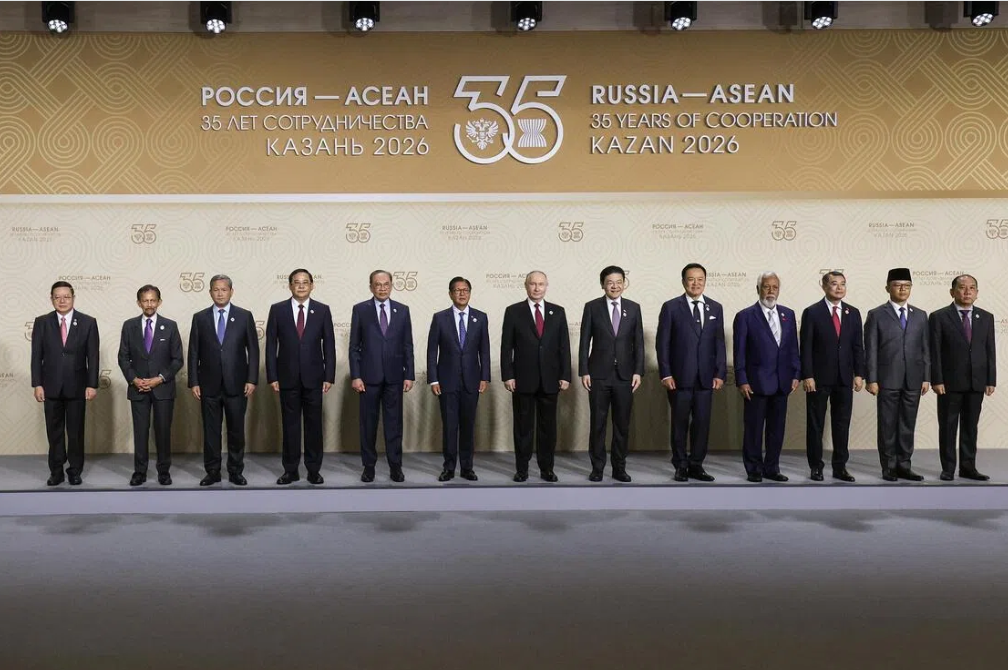
Asean and Russia have reinforced their diplomatic partnership at a two-day summit in Kazan, a major city in southwestern Russia, adopting a comprehensive roadmap for cooperation extending through 2030. The Asean-Russia Commemorative Summit, held in mid-June, served as a significant milestone marking three and a half decades of formal relations between the regional bloc and Moscow, alongside three decades of their structured dialogue mechanism. The gathering underscored both sides' determination to deepen engagement across multiple sectors despite the complex geopolitical environment that has characterised recent international relations.
Three substantive documents emerged from the summit, each designed to guide future collaboration. The Kazan Declaration provides a strategic overview of the relationship's evolution over the past 35 years and sets out priorities for the coming period. Alongside this, a Joint Statement on Cultural Cooperation emphasises the importance of people-to-people connections and expanded cultural exchange programmes. Most significantly, the Asean-Russia Comprehensive Plan of Action for 2026-2030 establishes a five-year framework to operationalise cooperation across specific sectors and initiatives, transforming broad diplomatic commitments into concrete programmes and deliverables.
The areas identified for enhanced collaboration span a diverse range of strategic and developmental concerns. Maritime cooperation represents a particularly salient focus, reflecting the importance of sea lanes and maritime security to both the Asean region and Russian interests. Trade and investment frameworks merit deeper attention, offering opportunities for economic engagement that could benefit enterprises and workers across Southeast Asia. Energy cooperation holds particular resonance given regional demand for diversified energy sources and Russia's position as a major energy supplier. Connectivity initiatives aim to improve physical and digital linkages across Asean and Russia, while traditional security cooperation addresses shared threats. Education and cultural exchanges form another pillar, building mutual understanding among citizens and fostering long-term relationship stability.
Singapore's Prime Minister Lawrence Wong, attending on behalf of the regional bloc, articulated an approach emphasising pragmatic cooperation where interests align while maintaining principled positions on international norms. His remarks reflected Asean's broader diplomatic philosophy of engaging with diverse partners while prioritising dialogue and confidence-building measures that contribute to regional stability. Wong specifically highlighted the potential for joint initiatives in disaster management and counter-narcotics operations, domains where collaborative frameworks can yield tangible benefits for multiple countries simultaneously. He stressed that Russia's consistent engagement with Asean-led mechanisms, including its participation in the ASEAN Regional Forum and the East Asia Summit, remains valuable for regional security architectures.
Wong's comments regarding international law and the rules-based global order carried particular weight in the summit context. He emphasised that Asean's commitment to peaceful dispute resolution and respect for sovereign territorial integrity reflects principled positions rather than alignment with any particular power. Singapore's approach to Ukraine, which has involved maintaining official condemnation of Russian military action while supporting diplomatic pathways toward resolution, exemplifies this balancing act. The city-state imposed sanctions on Russia in 2022 following the invasion, measures that remain in effect, yet simultaneously seeks constructive engagement with Moscow on matters of mutual interest. This posture reflects Southeast Asian nations' broader challenge of maintaining principled stances on international law whilst avoiding excessive polarisation in a multipolar world.
The prime minister's specific focus on maritime freedom of navigation rights demonstrates Asean's vital concern with maintaining unimpeded passage through critical waterways in accordance with the United Nations Convention on the Law of the Sea. This principle underpins regional prosperity and stability, making it a non-negotiable element of Asean's foreign policy framework. Wong's remarks on the Strait of Hormuz and the importance of reopening this critical chokepoint following international agreements reflect the economic ramifications of Middle Eastern tensions for Southeast Asian trade and energy supplies. By welcoming developments that reduce regional tensions, Asean signals its interest in a stable international environment conducive to commerce and development.
Looking ahead to Singapore's assumption of the Asean rotational chair in 2027, Wong indicated that Russia's participation in Asean-led forums would be actively cultivated. This forward-looking stance suggests Singapore intends to use its chair to strengthen Asean's engagement with Moscow across multiple dimensions. The emphasis on dialogue and confidence-building measures gains particular importance as geopolitical tensions persist in various regions. Singapore's demonstrated willingness to engage Russia despite fundamental disagreements on certain issues sends a signal to other Asean members about the value of maintaining communication channels with major powers, even amid tensions.
The bilateral meeting between Wong and Russian President Vladimir Putin, held at Putin's request, served to reinforce personal-level diplomatic connections between key regional and great power leaders. Such interactions, even amid strategic differences, underscore the continued importance of face-to-face engagement in international relations. Wong's social media commentary afterward, emphasising that dialogue and engagement matter precisely when countries do not fully align, captured an important diplomatic principle guiding Asean's approach to major power relations. This philosophy of maintaining engagement while preserving principled positions on key issues defines the bloc's diplomatic maturity and relevance in an increasingly complex international system.
Wong's separate meeting with Tatarstan's leader Rustam Minnikhanov highlights the multilayered nature of Asean-Russia relations, extending beyond federal-level engagement to include significant regional actors within the Russian Federation. The discussion of cooperation across cultural, educational and people-to-people dimensions reflects a recognition that sustainable bilateral relations depend on broad-based connections rather than elite-level interactions alone. Tatarstan's significance to Russia's strategy in Asia, combined with Singapore's experience in regional engagement, creates a natural foundation for expanded cooperation. Historical ties, including then-Minister Mentor Lee Kuan Yew's 2007 visit to the region, provide established precedent for deepening these connections.
For Malaysia and other Asean members, the Kazan summit outcomes carry several implications. The comprehensive cooperation plan provides a framework within which individual member states can develop bilateral relationships with Russia aligned with broader regional objectives. The emphasis on maritime security, energy cooperation and connectivity initiatives addresses priorities germane to the region's development agenda. The reaffirmation of Asean centrality and Russia's support for regional mechanisms strengthens the bloc's role as a forum for addressing regional and international issues. Meanwhile, Asean's demonstrated ability to engage major powers whilst maintaining principled positions offers a model for navigating complex geopolitical circumstances.
The summit ultimately reflects a maturation of the Asean-Russia relationship beyond Cold War-era patterns, establishing a foundation for pragmatic, multifaceted cooperation grounded in identified mutual interests. As geopolitical competition intensifies globally, Asean's role as a bridge between competing powers and a voice for stability gains increasing importance. Russia's recommitment to engagement with the regional grouping, through both the summit and the comprehensive action plan, signals Moscow's recognition that Southeast Asia remains strategically significant. For Asean members including Malaysia, this expanded framework offers opportunities to deepen practical cooperation with Russia across numerous sectors whilst maintaining the principled stances on international law and regional stability that define the bloc's diplomatic identity.

