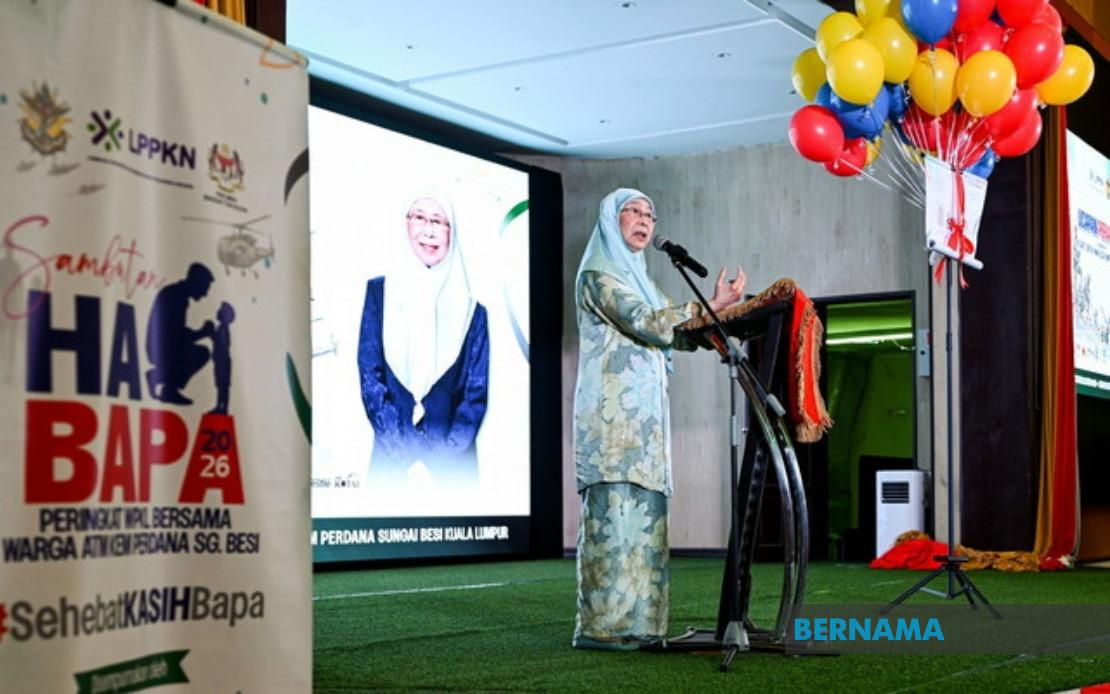
Dr Wan Azizah Wan Ismail, wife of the Prime Minister and Member of Parliament for Bandar Tun Razak, has stressed the importance of ongoing support systems for fathers within the Malaysian Armed Forces as they navigate the unique challenges of military service while maintaining family bonds. Speaking at the 2026 Federal Territory of Kuala Lumpur Father's Day Celebration, she underscored that military personnel who serve the nation in defending its sovereignty deserve institutional backing that acknowledges both their professional commitments and their roles as family leaders.
The celebration, which brought together approximately 500 participants including MAF personnel, their spouses, and children, reflected a broader national conversation about recognizing the sacrifices made by service members who are frequently separated from their families due to operational demands. The event highlighted how military fathers often carry dual burdens—the weight of national responsibility and the emotional strain of prolonged separation from loved ones. Dr Wan Azizah emphasized that acknowledging these challenges is not merely symbolic but essential for maintaining the morale and wellbeing of the armed forces workforce.
Central to her remarks was advocacy for the National Family Compassion Policy (DKKN), which represents a targeted approach to supporting military families through institutional mechanisms rather than relying solely on personal resilience. This policy framework recognizes that effective family support translates into more stable, focused military personnel capable of executing their duties with greater confidence. The DKKN provides practical assistance that enables fathers to maintain meaningful connections with their children despite geographical and operational barriers, thereby reducing the psychological toll of separation on both service members and their families.
Dr Wan Azizah articulated that strengthening support for fathers contributes directly to fortifying family institutions more broadly across Malaysian society. When fathers feel empowered and supported by their employers and government institutions, they are better positioned to exercise leadership within their households and serve as anchors for family stability. This perspective shifts the discussion beyond individual grievance to frame paternal support as a social good with implications for community cohesion and national stability. Military families, in particular, require tailored interventions that address the specific stressors they encounter.
The National Population and Family Development Board (LPPKN) has developed targeted initiatives aimed at equipping fathers with practical tools and knowledge. The Fatherhood Module, for instance, concentrates on imparting parenting competencies that enable fathers to nurture healthy relationships with their children regardless of deployment schedules or geographic separation. Such training recognizes that modern fatherhood requires deliberate skill-building rather than assuming innate capability, particularly when fathers must compress parental engagement into limited time windows between operational commitments.
Complementing these educational initiatives is the Men Empowerment Network (MEN), which functions as a support ecosystem connecting fathers facing similar challenges. Peer support networks prove invaluable for military personnel who may hesitate to seek formal counseling or struggle to articulate their experiences within traditional support frameworks. The MEN provides spaces where service members can exchange experiences, strategies, and encouragement with others navigating comparable circumstances, thereby reducing isolation and building collective resilience.
For Malaysia's defense community, this institutional emphasis on paternal support signals an evolved understanding of military readiness. Historical approaches often compartmentalized military service and family life as separate domains; contemporary thinking recognizes their interconnection. Personnel who feel abandoned by their institutions regarding family matters may experience diminished commitment and focus. Conversely, those who perceive genuine institutional support for their roles as fathers often demonstrate heightened loyalty and engagement with their professional responsibilities.
The timing of this advocacy is significant given regional tensions and Malaysia's ongoing efforts to maintain robust defense capabilities. A well-supported military force encompasses not just operational preparedness but also personnel wellness and family stability. Dr Wan Azizah's emphasis on strengthening the family institution through paternal support reflects recognition that national security ultimately rests on the wellbeing of those who shoulder the burden of defense and their supporting families.
Moreover, the DKKN and related initiatives position Malaysia within a broader international trend of military organizations acknowledging family support as integral to personnel retention and performance. Countries with robust family support frameworks for military personnel consistently report better morale indicators and lower attrition rates. By investing in programs that empower military fathers, Malaysia demonstrates commitment to its personnel beyond the terms of their service contracts, potentially enhancing recruitment and retention prospects in an increasingly competitive environment where young Malaysians evaluate career opportunities across multiple sectors.
The celebration itself, organized jointly by LPPKN and the MAF, represented practical implementation of these principles through public recognition and community engagement. Bringing families together to celebrate military fathers sends powerful symbolic messages about institutional valuing while creating spaces where fathers can connect with peers and access information about available support resources. Such events demystify support programs and encourage uptake among those who might otherwise remain unaware of available assistance.
Looking forward, Dr Wan Azizah's advocacy suggests government commitment to expanding and deepening these support mechanisms. As the armed forces evolve to address contemporary security challenges, maintaining personnel wellbeing through family-centered policies will remain essential. The recognition that military fathers juggle profound responsibilities—protecting national sovereignty while nurturing the next generation—deserves sustained institutional attention and resource allocation.

