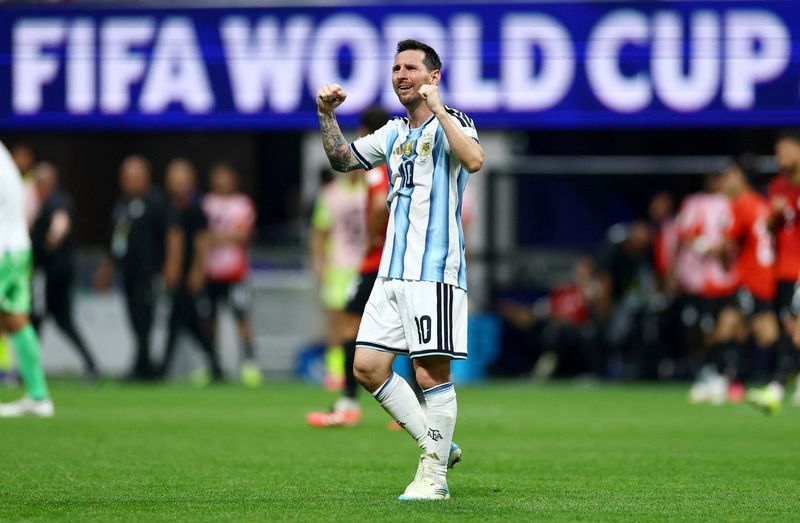
The defending World Cup champions have found themselves in unfamiliar territory during the knockout rounds, facing far sterner tests than their commanding group stage performances suggested they might encounter. Argentina's journey through the tournament has taken a sharp turn toward the dramatic after they breezed past Algeria, Austria and Jordan with authoritative displays in the earlier rounds. Yet it is these recent struggles—requiring extra time against Cape Verde and engineering an astonishing comeback from two goals down to defeat Egypt 3-2—that may ultimately define their campaign if they manage to retain their trophy.
The Atlanta victory on Tuesday represented more than merely another advancing ticket in Argentina's tournament schedule. With 11 minutes remaining and Egypt leading 2-0, the match appeared destined for heartbreak. Instead, Lionel Messi orchestrated a comeback that exemplified the resilience Lionel Scaloni's squad has been forced to demonstrate. The psychological fortitude displayed in those final moments, combined with the technical quality required to overturn such a deficit, provided a template for how this Argentine side responds when genuine adversity strikes. Should the team progress further and ultimately lift the trophy, analysts will likely point to this specific moment as the turning point in their mental approach to the tournament.
Former striker Carlos Tevex, speaking on ESPN Argentina immediately after the match, articulated what distinguished Argentina's performance from mere luck or tactical ingenuity. Beyond the goals and possession statistics, Tevex emphasised that the true measure of the team lay in the willpower they displayed on the pitch—the unwillingness to surrender even when circumstance appeared to have decided matters. This perspective shifts focus away from individual moments of brilliance toward the collective mentality that allowed Argentina to maintain their competitive intensity despite overwhelming setbacks.
The contrast between Argentina's group stage dominance and their knockout round vulnerability has been stark. During the initial phase of the tournament, the defending champions conceded just a single goal across three matches, and that came during a rotated lineup when Scaloni afforded rest to key personnel. However, the subsequent two knockout encounters have yielded four goals conceded—a significant deterioration in defensive solidity that cannot be dismissed as merely bad fortune. This defensive vulnerability represents the most tangible weakness exposed during Argentina's push toward the latter stages of the competition.
Messi himself underscored the philosophical approach that has sustained the team through these trials. His assessment acknowledged the immense difficulty in evaluating a side that performs so unevenly, yet emphasised the group's collective mentality. The captain noted that the team never abandoned their tried-and-tested approach, regardless of the scoreline, and that this consistency of purpose represented a defining feature of the squad's character. For a player of Messi's experience, having reached and failed to win previous World Cup finals, such resilience represents the antidote to championship-threatening moments of despair.
Midfielder Leandro Paredes reinforced this narrative of never-say-die determination, articulating that the team maintained psychological engagement throughout the Egypt encounter. Paredes' observation that the squad never felt genuinely defeated, despite facing a two-goal margin, speaks to the mental conditioning that separates champion teams from those that merely perform well during comfortable phases. This belief system becomes especially crucial in tournament football, where momentum shifts can prove decisive and where confidence rapidly evaporates if players permit negative emotions to take hold.
Scaloni's analysis of the Egypt match suggested that Argentina's performance contained more positive elements than their earlier contest against Cape Verde had demonstrated. The Argentine coach highlighted the creation of scoring opportunities, including a penalty miss by Messi, as evidence that his team's tactical approach remained sound despite the challenging result for much of the match. This granular examination indicates that Scaloni perceives the underlying issues as more correctable than a comprehensive team breakdown might suggest, offering optimism that Argentina can refocus before their next challenge.
The coaching staff's emphasis on maintaining their established playing style—continuing to press forward and create chances until the final whistle—reveals a philosophy that prioritises consistency and identity over reactive adjustments to match circumstances. Such steadfastness, while occasionally leaving Argentina exposed defensively, has also generated the conditions for dramatic reversals like the one witnessed against Egypt. The challenge moving forward lies in achieving greater balance between this attacking philosophy and the defensive solidity that proved so effective during the group stage.
Argentina's path now leads to Kansas City, where Switzerland awaits in Saturday's quarter-final. Scaloni has acknowledged that his team faces another formidable examination against opponents whose World Cup credentials and experience are beyond question. The Swiss represent the type of well-organised, tactically disciplined opponent that could exploit the defensive vulnerabilities Argentina has displayed. Whereas Cape Verde and Egypt were opponents Argentina could reasonably expect to overwhelm, Switzerland presents a qualitatively different challenge that will test whether the defending champions have genuinely learned from their recent defensive lapses or whether those weaknesses remain exploitable.
The recovery period afforded by resuming training Wednesday evening provides limited opportunity for tactical overhaul, suggesting that Argentina's path forward will depend more on psychological adjustment and restored defensive discipline than wholesale changes to their approach. For a squad containing players of Argentina's calibre, particularly a figure like Messi nearing the twilight of his international career, the ability to synthesise attacking ambition with defensive responsibility represents the essential requirement for tournament success. Whether they achieve this balance against Switzerland will substantially determine whether their recent dramatic escape becomes a foundation for glory or merely a temporary reprieve.

