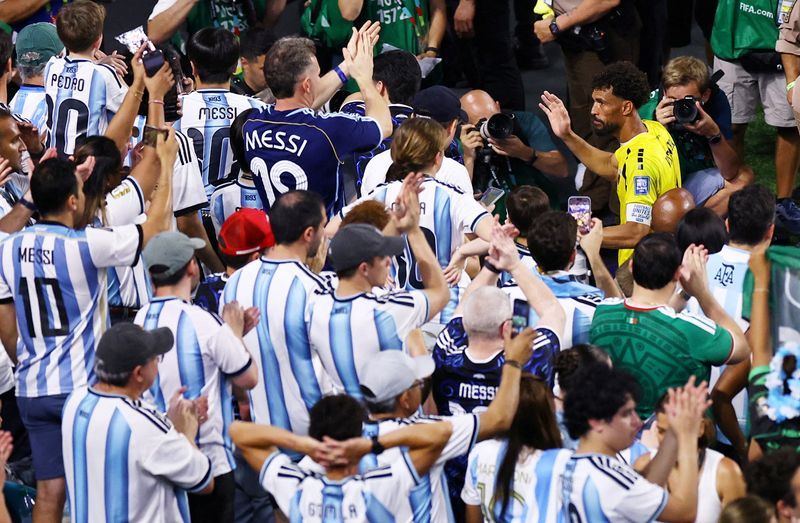
Argentina secured progression to the World Cup knockout stage with a hard-earned 3-2 extra-time victory over Cape Verde in Kansas City, Missouri on July 4, yet the manner of their escape has cast a shadow over their tournament prospects. The South American giants, widely regarded as favourites for the competition, found themselves repeatedly pushed back by their opponents, who claimed their debut World Cup appearance with a fearless display that exposed previously concealed vulnerabilities in the defending champions' back line. With their round-of-16 fixture against Egypt looming in Atlanta on Tuesday, Argentine officials and analysts are grappling with uncomfortable questions about whether their earlier dominant performances masked deeper defensive problems.
The match unfolded as a curious study in resilience and redemption, with Cape Verde twice retrieving themselves from behind before defender Cristian Romero's header—inadvertently deflected into the net by Cape Verde's Diney Borges in the dying moments—finally provided the breakthrough that had seemed inevitable only minutes earlier. For much of the encounter, Cape Verde's collective discipline and tactical discipline prevented Argentina from establishing the sort of controlling presence that characterised their earlier group-stage performances. The island nation's surprise pool-stage draws with Spain and Uruguay had already signalled their competitive credentials, yet few observers had anticipated they would push the tournament favourites into extra time.
Argentina's path through the initial rounds had appeared remarkably smooth by World Cup standards. Consecutive victories over Algeria, Austria and Jordan produced a goal tally of eight across three matches without conceding, suggesting a well-oiled machine functioning at peak efficiency. Yet sceptical observers had noted that the quality of opposition hardly represented a barometer for judging their true championship readiness. The defensive line had navigated the group stage without encountering the type of sustained, coordinated attacking pressure that elite World Cup contestants would inevitably apply. Compounding these concerns were pre-tournament observations that Iceland had been their first competitive European opposition since the 2022 World Cup, indicating a scheduling pattern that had inadvertently sheltered them from testing encounters.
Lionel Messi, extending his World Cup goalscoring record to twenty, nevertheless emerged from the encounter visibly depleted, candidly acknowledging the physical demands imposed by a team that refused to yield. The 39-year-old captain's assessment of Argentina's performance proved notably self-critical. He identified fundamental issues in their pressing structure and spatial organisation, lamenting his side's inability to regain possession higher up the pitch and attributing their difficulties to disjointed defensive lines that granted Cape Verde excessive territory. The veteran forward's candid post-match remarks suggested frustration with a performance that deviated sharply from the commanding football Argentina had previously demonstrated.
Marcelo Gallardo, a former River Plate manager with personal World Cup experience from 1998 and 2002, offered perspective that transcended mere disappointment. Speaking on ESPN Argentina, he reframed the narrow victory as potentially beneficial, arguing that the scare would catalyse necessary improvements. His assessment reflected a view increasingly evident among tactical observers: that being tested at this juncture, before facing stronger opponents, might ultimately strengthen Argentina's tournament trajectory through forced adaptation. This interpretation positioned the Cape Verde match less as a disaster than as an uncomfortable education—painful but ultimately instructive.
The psychological resilience that ultimately secured Argentina's passage derived significantly from two defenders whose personal circumstances lent their contributions symbolic weight. Lisandro Martinez, who had endured the devastating anterior cruciate ligament injury during early 2025, materialised as Argentina's second goal scorer, while Romero similarly emerged from recent knee complications to play a decisive role. Both men had navigated lengthy rehabilitation processes, their return to competitive international football preceded by considerable uncertainty about their fitness and match sharpness. Martinez's emotional post-match reflections conveyed genuine gratitude toward the medical and coaching apparatus that had facilitated his recovery, expressing relief that his arduous rehabilitation had culminated in meaningful contribution at international level.
Manager Lionel Scaloni declined to engage in the sort of self-flagellation some observers might have anticipated, instead emphasising the team's capacity to respond effectively during adversity. His perspective acknowledged legitimate debate about the quality of Argentina's performance whilst simultaneously celebrating their unwillingness to surrender even when tactics appeared fractured. This framing suggested philosophical confidence in the team's foundational qualities, if not their immediate execution. Scaloni's pre-match prediction that no World Cup encounter could be considered routine had proved prescient, validating his warnings about underestimating tournament participants regardless of apparent hierarchy.
As Argentina regroups in Miami on Saturday before confronting Egypt, the wider implications for Southeast Asian followers merit consideration. The region's football development increasingly encompasses World Cup participation and international exposure, making Argentina's experience instructive. The match demonstrated that tactical discipline, collective organisation and psychological resilience can partially compensate for technical limitations—lessons relevant to emerging football nations. Cape Verde's performance, despite ultimate defeat, established that smaller footballing nations can compete effectively against established powers through structured defensive commitment and tactical clarity.
The Egypt encounter will provide more immediate evidence regarding whether Argentina's struggles against Cape Verde represented aberration or symptom of more persistent defensive instability. The Egyptians, boasting their own competitive tradition and tournament experience, will approach the knockout stage with confidence bolstered by Argentina's recent difficulties. Should the South American champions maintain their position as tournament contenders, they will require marked improvement in their defensive organisation and pressing structure from the manner displayed in Kansas City.

