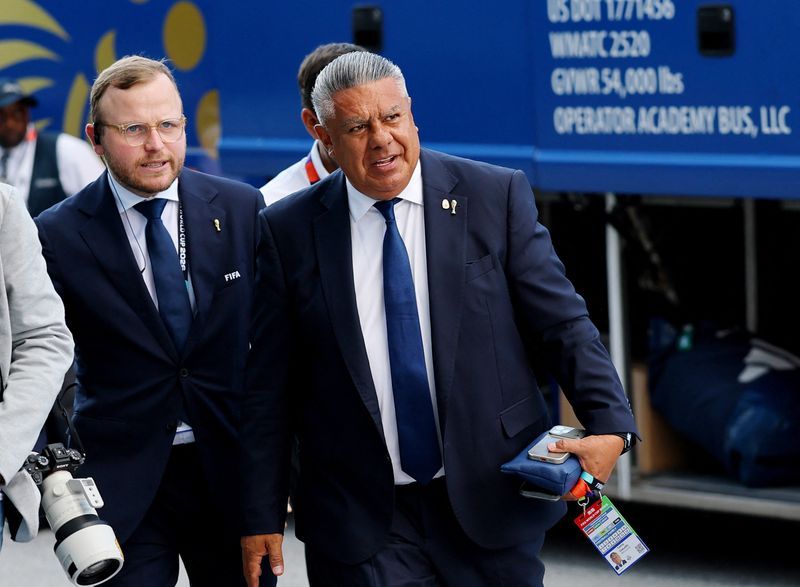
Argentina's football association moved swiftly to distance its leadership from mounting scrutiny by United States authorities, issuing a categorical denial on Wednesday that either president Claudio Tapia or treasurer Pablo Toviggino had been formally compelled to provide testimony in any American legal proceeding. The statement marked an aggressive pushback against local media reports that had alleged both officials faced detention and questioning at John F. Kennedy Airport in New York, casting a shadow over the national squad following its World Cup triumph in December.
Yet the AFA's carefully worded response contained a significant concession: the organisation acknowledged that an unidentified third party had indeed received a subpoena to appear before a United States grand jury, where that individual might be required to furnish evidence concerning multiple people with connections to the football body. This distinction—between the organisation's chief executives and some unnamed external party—formed the crux of the association's defence, suggesting that while investigations were proceeding, they were not directly targeting the top echelons of Argentine football's governing structure.
According to eyewitness accounts from those present at the airport, federal agents had questioned both Tapia and Toviggino for approximately half an hour aboard a bus positioned on the tarmac as the Argentina national team prepared for departure. The encounter itself underscored the escalating international dimension of financial investigations into Argentine football, though officials insisted such questioning fell short of the formal legal measures that would constitute a summons or the confiscation of personal property. The timing of the incident—occurring immediately after Argentina's pinnacle sporting moment—injected an awkward note into national celebrations.
The broader context for this controversy involves a sweeping United States federal inquiry into commercial transactions linked to the AFA. According to reporting by Infobae, investigators are examining more than $300 million in contracts associated with the football association, seeking to understand potential irregularities in how these agreements were structured and executed. This particular investigation represents part of a larger crackdown on financial misconduct in Argentine sport following December raids initiated as part of a distinct money-laundering probe that has cast prolonged shadows over the nation's football infrastructure.
The AFA's formal statement dismissed as entirely false the assertions that devices belonging to either Tapia or Toviggino had been seized or confiscated by authorities. The association further contended that the relevant legal documents contained no personal directives against its president or treasurer, imposed no procedural obligations on them, and recorded no property seizures. Such language suggested the AFA was constructing a technical defence, arguing that even if agents had conducted interviews, these did not constitute the formal legal measures that would constitute binding court orders or investigations specifically targeting the two officials.
This episode illuminates the intricate relationship between international sporting governance and complex financial investigations that increasingly characterise modern football administration. The United States' willingness to examine Argentine football contracts reflects broader efforts by American authorities to combat corruption and money laundering in international commerce, regardless of sector. For Southeast Asian stakeholders watching developments in global football finances, the scrutiny of AFA contracts serves as a reminder that no football association—regardless of stature or World Cup pedigree—operates beyond the reach of foreign regulatory frameworks.
The distinction between questioning and formal legal compulsion matters significantly in legal terms, yet carries reputational implications regardless. When federal agents detain officials at an international airport, the optics surrounding such encounters inevitably shape public and investor perceptions of institutional integrity, even when subsequent legal analysis demonstrates that formal charges or summonses did not materialise. The AFA's emphatic denials, therefore, represent not merely legal positioning but also reputation management in the face of international scrutiny that could influence sponsorships, broadcasting deals, and future commercial arrangements.
The anonymity surrounding the third party summoned to testify raises intriguing questions about the scope and nature of the American investigation. Whether this individual represents a current or former AFA administrator, a commercial contractor, a financial intermediary, or an international partner remains unclear from available disclosures. The identity and position of this person could substantially illuminate the investigation's trajectory and the specific commercial arrangements that have attracted federal attention. The AFA's silence on this matter suggests either that naming the individual might compromise ongoing legal proceedings or that doing so could expose sensitive commercial relationships or personnel matters.
For Argentina's football establishment, these developments arrive at a delicate moment. The nation basks in the glory of its World Cup victory, a triumph that enhanced national pride and consolidated the legacy of manager Lionel Scaloni's tenure. Yet concurrent international investigations into financial practices threaten to complicate the post-victory narrative, potentially affecting sponsorship negotiations, television rights discussions, and the association's global standing. The timing of the airport incident, occurring just after the team's return from Qatar, suggests that American authorities were pursuing their investigation agenda regardless of sporting calendars or national celebrations.
Regional implications for Southeast Asian football warrant consideration as well. If investigations reveal systematic financial irregularities within the AFA, they may prompt other football associations across Asia and beyond to conduct internal audits and strengthen governance frameworks. The increasing internationalisation of football finances means that Asian football bodies increasingly enter into cross-border commercial arrangements with American entities, sponsors, and broadcasting partners. Scrutiny of how leading South American organisations manage such relationships could establish precedents affecting administrative practices throughout the region.
Looking ahead, the trajectory of the American investigation will likely continue unfolding beyond public view for extended periods. Grand jury proceedings typically remain confidential, meaning that substantive details about the investigation's scope, findings, and any potential prosecutions may not emerge for months or years. Meanwhile, the AFA must navigate the delicate balance between defending its reputation, cooperating with legitimate legal inquiries, and maintaining the confidence of stakeholders who depend on the organisation's institutional stability. The statement issued on Wednesday represents the association's opening move in what could prove a prolonged engagement with international law enforcement.

