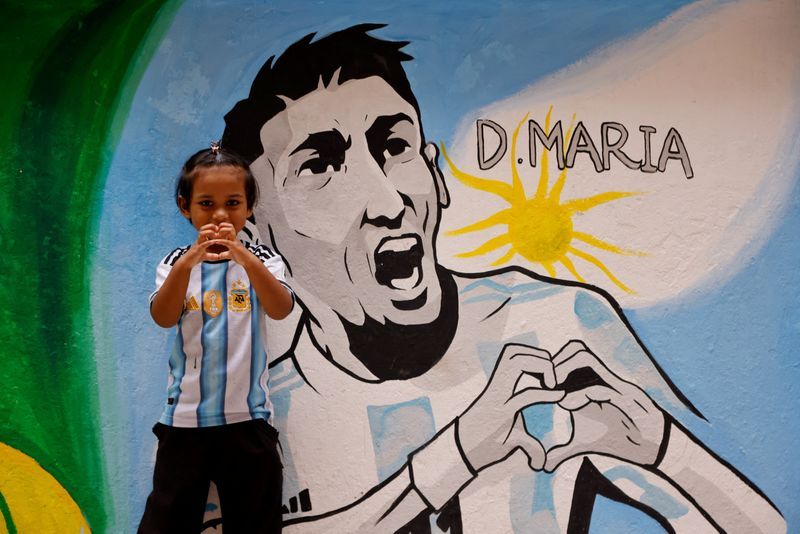
Argentina and Switzerland are about to write another chapter in their World Cup rivalry when they clash in the quarter-finals on Saturday, more than a decade after a gripping contest that turned on a single moment of brilliance in Brazil. The two nations last met in the round of 16 in Sao Paulo in 2014, a match remembered for the tension that built throughout 120 minutes before Ángel Di María's extra-time strike finally pierced Swiss resistance and carried Lionel Messi's team forward. That encounter symbolised two nations pursuing different dreams at the tournament: Argentina desperate to end a three-decade World Cup drought that weighed heavily on their football culture, and Switzerland simply seeking to break through to the quarter-finals for the first time since 1954.
The landscape of international football has shifted dramatically since that summer in Brazil. Argentina have since claimed the ultimate prize, lifting the World Cup trophy at Qatar in 2022 and establishing themselves as the tournament's dominant force. They also reached the final in 2014, meaning their recent trajectory has been one of sustained excellence at the sport's grandest stage. Messi, now 39 years old, no longer possesses the explosive athleticism that defined his peak, yet the entire Argentine project continues to orbit around his presence and experience. The captain has become less a player carrying the team on his shoulders and more a focal point of cohesion and belief, a symbol of continuity in a squad that has matured significantly.
Swiss football, by contrast, has undergone a quieter revolution. Where once they were characterised purely by defensive rigidity and a grinding approach to tournament football, Murat Yakin's current side displays greater tactical flexibility and attacking ambition. Their passage to the quarter-finals represents a historic achievement, ending a 72-year wait for a place at this stage of the World Cup. They accomplished this through a disciplined penalty shootout victory against Colombia, a victory that carried psychological weight beyond the mere three points awarded. The performance demonstrated that Switzerland no longer relies solely on defensive solidity but can grind out results through composure and nerve in crucial moments.
Remarkably, only three players span both encounters. Messi is the obvious thread connecting the two eras, but Granit Xhaka, the Swiss captain, was present in 2014 and remains central to his nation's midfield. The 33-year-old has emerged as Switzerland's most accomplished player on the global stage, commanding respect across European football. Ricardo Rodriguez, now 33, completes the trio, offering defensive experience and having witnessed Messi's evolution from a different vantage point. Both Swiss veterans have expressed genuine respect for the challenge ahead, with Xhaka acknowledging that playing against a generational talent is both a burden and a privilege, while Rodriguez paid homage to Argentina's overall quality and their most devastating weapon.
Argentina's path to the quarter-finals carried unexpected drama. They appeared vulnerable in earlier rounds, particularly in their last-16 encounter against Egypt, where they trailed 2-0 with just 11 minutes remaining before engineering an extraordinary comeback to prevail 3-2. The recovery underscored both their mental resilience and a concerning fragility in their defensive structure. Messi's post-match reflection captured the tournament's unpredictability: "We suffered a lot again, but this is the World Cup. Every game is going like this." His words revealed how the defending champions have had to navigate moments of genuine peril, suggesting that their path to potential glory will not be smooth or inevitable.
Yakin has identified specific tactical vulnerabilities in Argentina's recent performances that Switzerland believes they can exploit. The coach noted that Argentine struggles against Cape Verde and Egypt, despite eventual victories, have revealed patterns and weaknesses that a well-organised opponent might expose. This represents a significant shift in Swiss thinking: rather than approaching the match as underdogs hoping to frustrate and survive, Yakin's team sees tactical opportunities to genuinely trouble the title holders. For Switzerland, Johan Manzambi's potential return from knee injury could prove crucial, as his creative midfield presence was noticeably absent during the penalty shootout against Colombia.
Argentine coach Lionel Scaloni, meanwhile, is treating Switzerland with considerable respect, describing them as possessing "an incredible World Cup tradition" and "outstanding players." This acknowledgment reflects more than mere courtesy; it recognises that Switzerland's historical consistency at World Cups, their organised approach, and their capacity to compete effectively on football's biggest stage cannot be underestimated. Scaloni appears likely to maintain the core group that defeated Egypt, seeking continuity despite the dramatic circumstances of that victory. His cautious approach suggests he understands that the quarter-final stage magnifies every tactical detail and marginal advantage.
The contrast between the two nations' trajectories creates compelling narrative tension. Argentina arrives as defending champions with multiple major tournament victories, carrying expectations and the burden that comes with defending a crown. Switzerland, having finally breached the quarter-final barrier after 72 years, enters with momentum and the freedom that comes from exceeding historical expectations. For Argentine supporters, this is about maintaining dominance and progressing toward another final. For Swiss fans, mere quarter-final participation constitutes a significant historical accomplishment, and any further progress would represent uncharted territory.
Messi's presence shapes the entire context of this fixture. At 39, his participation in World Cups is finite, making every match carry additional weight and meaning. His teammates understand this urgency; his opponents regard him with a mixture of respect and awareness that containing him will be essential to their hopes. Yet the tournament has already demonstrated that even Argentina's greatest player cannot single-handedly overcome all challenges, as evidenced by their struggle against Egypt. This reality has perhaps liberated Argentina slightly, removing the expectation that Messi must be the difference-maker and allowing the team to function as a more balanced collective.
Swiss football has long punched above its weight at World Cups, a small nation regularly competing effectively against larger footballing nations. This quarter-final represents the culmination of long-term development and investment in player talent. Yakin has instilled a belief that Switzerland can compete with anyone, and their recent performances have validated this philosophy. Against Argentina, they will need to blend their traditional defensive discipline with greater attacking intent than in previous matches. The balance between these elements could determine whether they progress further into truly historic territory or whether Argentina's experience and championship pedigree prove decisive.
The statistical imbalance between the nations masks the potential for a closely contested match. Argentina remain favourite, their trophy-winning credentials and tournament experience providing a clear advantage. However, Switzerland's historical breakthrough to this stage, combined with Yakin's tactical clarity about Argentina's weaknesses, suggests they will approach this encounter with genuine belief rather than resignation. The memories of 2014 will linger for both sides—for Argentina as a stepping stone in their journey toward ultimate success, for Switzerland as a painful near-miss that has finally transformed into a second chance.

