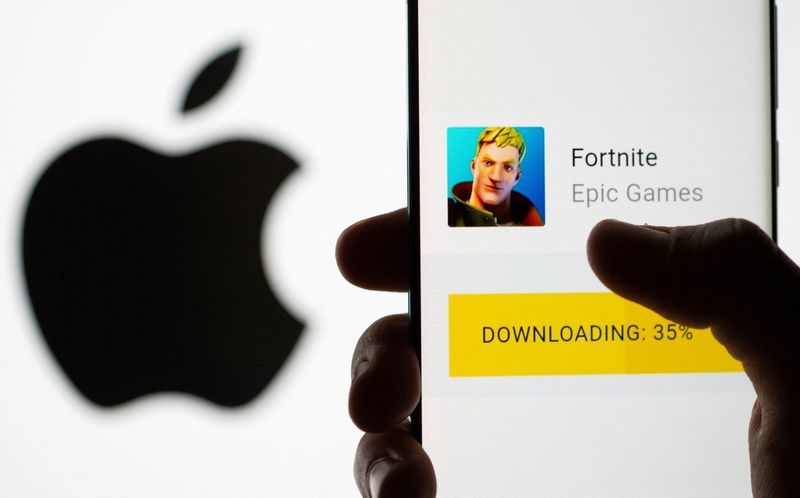
The United States Supreme Court has agreed to review Apple's attempt to overturn a contempt of court finding stemming from its protracted legal dispute with Epic Games, the developer behind the wildly popular Fortnite gaming platform. The decision, announced on Tuesday, elevates one of technology's most consequential antitrust battles to the nation's highest court, with implications that extend far beyond the two companies involved. The Supreme Court is expected to hear arguments during its next term, which commences in October, meaning a resolution could arrive within the next year or so.
At the heart of the dispute lies a fundamental question about how Apple controls digital commerce through its App Store and whether the company has complied with judicial orders to loosen those restrictions. Judge Yvonne Gonzalez Rogers of the U.S. District Court in Oakland, California found Apple in civil contempt earlier this year for allegedly violating a 2021 injunction that required the company to permit app developers to include direct links to external payment methods. The contempt finding carries serious implications for Apple's revenue model, as it suggests the company circumvented the court's authority and may face sanctions or further restrictions on its App Store practices.
The underlying antitrust case dates back to 2020, when Epic Games launched its challenge to Apple's iron grip over app distribution and payment processing on iPhones and iPads. Epic argued that Apple's insistence on using its own payment system, coupled with a mandatory 30 percent commission on all in-app purchases, constituted anticompetitive behaviour that harmed consumers and developers alike. While the original lawsuit largely went in Apple's favour, Judge Gonzalez Rogers did issue the 2021 injunction requiring Apple to allow developers to direct users toward alternative payment options, a modest but symbolically important victory for Epic.
Apple's response to that injunction reveals the crux of the current contempt dispute. Rather than simply opening its App Store payment system to competitors, Apple implemented what it characterized as reasonable compromises. The company created a mechanism for developers to include links to external payment systems but imposed a 27 percent commission on purchases made through those alternative methods within seven days of a user clicking the link. By comparison, Apple's own in-app purchase system carries a 30 percent fee. Epic promptly challenged this arrangement, arguing that the 27 percent commission essentially perpetuated Apple's stranglehold on payments and effectively nullified the injunction's purpose.
When Judge Gonzalez Rogers agreed with Epic's assessment in 2025 and found Apple in civil contempt, it marked a rare judicial rebuke of one of the world's most powerful technology companies. The contempt finding suggested that Apple had not genuinely complied with the court's earlier order but instead had designed a workaround that maintained its control over the App Store ecosystem. This determination matters considerably because contempt findings can result in escalating penalties, including fines, restrictions on business practices, or even the appointment of monitors to oversee compliance.
The San Francisco-based 9th U.S. Circuit Court of Appeals declined to overturn the contempt ruling in December but did offer Apple a narrow opening. The appellate panel agreed that Apple should be permitted to make additional arguments about what commission rates might be reasonable and appropriate for transactions involving third-party payment systems. That new proceeding has not yet commenced in the Oakland district court, leaving the final determination on acceptable commission levels unresolved.
Apple's petition to the Supreme Court frames the stakes in sweeping terms, arguing that the lower court's injunction should not apply universally to all developers but rather should be limited to Epic Games specifically. This distinction carries enormous practical weight. Apple contends that imposing restrictions that benefit millions of app developers beyond Epic could fundamentally alter how the App Store operates and generate massive compliance complications. The company has also highlighted that global regulators across multiple continents are monitoring this litigation closely as they formulate their own policies regarding app store commission rates and payment regulations.
For Malaysia and Southeast Asia, this Supreme Court case has tangible relevance. Apple's App Store is a primary distribution channel for applications throughout the region, and the rules governing its payment systems directly affect how Malaysian developers monetize their products and how consumers in the region conduct digital transactions. Any Supreme Court ruling that restricts Apple's commission rates or requires more transparent payment options could reverberate through Southeast Asian app development industries, potentially lowering costs for local businesses and giving them better access to alternative payment processors.
The Supreme Court's decision to accept the case signals that the justices view the legal and commercial questions at stake as sufficiently important to warrant their attention. The core issue—whether companies can be held in contempt for technical or partial compliance with injunctions, and how courts should calibrate remedies in technology antitrust cases—will shape enforcement approaches across multiple industries. Apple's argument that broad application of the injunction would create untenable business complications reflects a broader tension in antitrust enforcement between imposing meaningful remedies and respecting companies' operational realities.
The case also underscores the limitations of trial court remedies in complex technology disputes. Judge Gonzalez Rogers' original injunction, while seemingly straightforward in requiring alternative payment links, proved difficult to implement in ways that satisfied all parties. The Supreme Court must now grapple with whether the injunction was sufficiently clear to support a contempt finding, or whether Apple's interpretation, though narrow, represented a good-faith attempt at compliance. This distinction will influence how future antitrust injunctions in technology cases are drafted and enforced.
As oral arguments approach in October, both Apple and Epic Games will face intense scrutiny regarding their respective positions. Apple must convince the justices that its actions respected the injunction's spirit even if not its letter, while Epic must demonstrate that Apple deliberately obstructed the court's remedial purpose. The Supreme Court's decision will likely determine not only Apple's immediate legal exposure but also set precedent for how technology companies navigate compliance with antitrust orders in an increasingly regulated digital economy.

