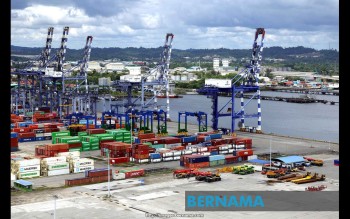
Malaysian investment securities firm Apex Securities Bhd has substantially revised upward its export growth projections for the nation next year, signalling confidence in the economy's trade momentum despite an increasingly uncertain global backdrop. The firm lifted its 2026 forecast to 26.2 per cent from an earlier estimate of 16.3 per cent, a revision that reflects the country's outsized performance in the opening seven months of this year. The upgrade aligns with Apex's broader optimistic assessment, which anticipates Malaysia's economy will expand by 5.0 per cent in 2026, positioning the country among Southeast Asia's stronger growth performers.
The electronics and electrical sector forms the bedrock of this positive outlook. Apex Securities expects this cornerstone industry to maintain its resilience throughout the second half of 2026, sustaining the momentum that has underpinned much of Malaysia's export dynamism in recent quarters. This sector's strength is not merely cyclical but reflects deeper structural shifts in global manufacturing. The emergence of artificial intelligence as a transformative technology, the accelerating global transition to electric vehicles, and the related expansion of supporting industrial segments are all expected to nurture a robust order pipeline for Malaysian producers over the medium term. These secular tailwinds suggest that export growth will not evaporate once current demand cycles normalise, providing confidence that the upgraded forecast reflects genuine economic fundamentals rather than temporary boosts.
Beyond electronics, commodity exports are anticipated to provide meaningful support to Malaysia's external trade accounts in the latter half of 2026. Apex Securities points to elevated crude oil prices as a sustained contributor to growth, particularly given the geopolitical complexities that continue to weigh on global energy markets. The securities firm highlights the potential for trade diversion stemming from disruptions in the Strait of Hormuz, one of the world's most critical shipping chokepoints. Should friction in the Middle East intensify or shipping difficulties persist, alternative sources of supply including Malaysia's hydrocarbon reserves would likely experience increased demand and higher realised prices, directly boosting the nation's oil and gas export revenues.
Palm oil, Malaysia's iconic commodity export, is expected to benefit from multiple supportive factors. Domestic demand from Indonesia for B50 biodiesel, a blend incorporating 50 per cent biodiesel, should provide a steady floor for palm oil consumption in the region. This represents a structural, policy-driven demand source rather than merely speculative buying. Additionally, Apex Securities anticipates that intensified El Niño conditions forecast for the October to December period will bring hotter and drier weather patterns to major palm oil producing regions, including Southeast Asia. Restricted supply resulting from adverse weather typically underpins firmer prices and reduced production volumes, both of which favour Malaysia as an established, mature producer. The firm notes that palm oil prices have already surged 16.8 per cent to RM4,596 per metric tonne since the beginning of 2026, demonstrating the commodity's strong momentum.
However, the upgraded forecast comes with notable caveats that warrant careful monitoring. Apex Securities cautions that export momentum may encounter headwinds as 2026 draws to a close, as the rush to stockpile goods ahead of anticipated tariff increases or supply disruptions unwinds. Front-loaded demand, particularly from trading partners seeking to lock in current pricing before potential trade barriers take effect, has artificially inflated order books in the near term. Once this demand normalisation occurs, underlying export volumes may moderate more sharply than year-on-year figures suggest. Additionally, Malaysia faces an unfavourable comparison base in the corresponding period of 2025, meaning that even if absolute export volumes hold steady, percentage growth rates will appear less impressive from a statistical standpoint.
Geopolitical developments in the Middle East represent perhaps the most material downside risk to the export forecast. A serious escalation of tensions beyond current elevated levels could severely constrain global demand for goods, eroding the trade flows that underpin Malaysia's growth projections. Regional conflicts that disrupt shipping lanes or reduce global business confidence would transmit directly to Malaysian exporters across sectors, from electronics manufacturers dependent on global supply chains to energy exporters reliant on stable shipping routes.
American trade policy constitutes another significant source of uncertainty that directly affects Malaysia's export prospects. The ongoing United States Section 301 investigation into alleged excess capacity in manufacturing sectors creates a spectre of potential tariffs that could target Malaysian products. As a developing nation with substantial manufacturing capacity in electronics and related industries, Malaysia remains particularly exposed to the outcome of this investigation. Should the United States conclude that excess capacity exists and impose countervailing duties or other trade restrictions, Malaysian exporters would face significantly higher barriers to one of their largest and most valuable markets, dampening the upside potential embedded in Apex Securities' revised forecast.

